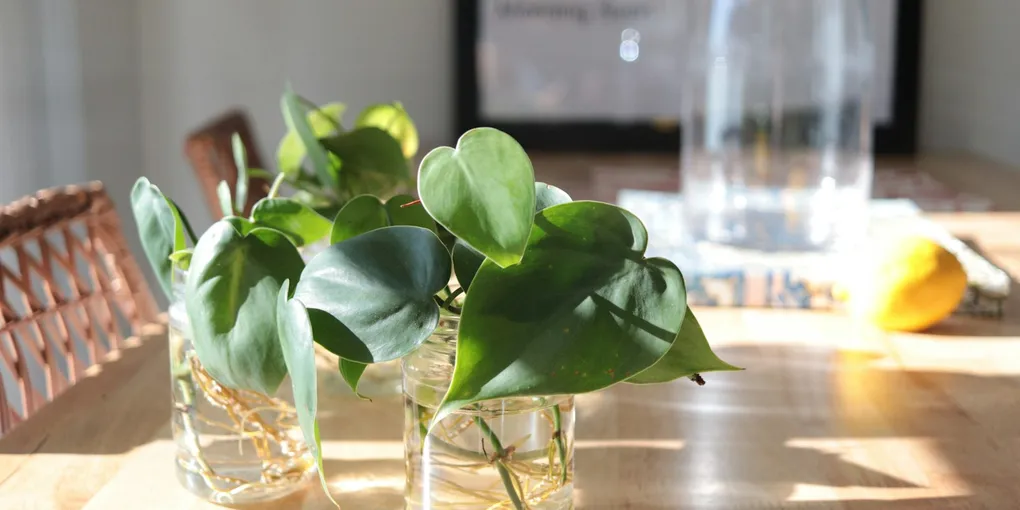
Best Houseplants to Grow in Water Without Soil
A cutting rooting in a jar on a windowsill is a familiar sight, but for a handful of houseplants, that jar doesn’t have to be a temporary stop on the way to soil — it can be the permanent home. Grown well, a plant living in water alone is genuinely low-mess and can thrive for years, as long as you understand what water culture actually needs that soil normally provides for free.
Water culture vs. propagation
These overlap but aren’t the same thing. Propagating a cutting in water is a temporary rooting stage — once roots form, the plan is to pot the cutting up in soil. Water culture means skipping that step entirely and leaving the plant in water indefinitely as its permanent growing medium. Not every plant that roots well in water also thrives left there long-term, but a specific group of forgiving, adaptable houseplants handles it well.
What a plant in water actually needs
Regular water changes. Change the water every 1-2 weeks. Standing water gets depleted of oxygen and starts to grow bacteria and algae, which shows up as cloudiness, a smell, or a slimy film on the roots — none of which happen on this timeline in soil, since soil buffers against it in a way open water doesn’t.
A container that limits light to the water. Algae needs light to grow, and a clear glass vase sitting in a bright spot is exactly the setup algae likes best. An opaque or colored container avoids the problem entirely; if you want the look of a clear vase, keep it out of direct sun and expect to rinse it out more often.
Occasional feeding. Soil holds a reserve of nutrients that plain water doesn’t. A plant left in water alone for months will eventually run through whatever nutrients it started with, so a diluted liquid fertilizer added every few weeks keeps growth steady instead of stalling out. See the best water for houseplants for what’s in your tap water to begin with, since that affects how much of a boost feeding actually provides.
Patience if you ever move it to soil. Roots grown in water are structured differently from soil roots — thinner and less equipped to take up water and oxygen the way soil roots do. A plant transitioned from long-term water culture into soil needs a gentler adjustment period and closer watering attention for the first few weeks, since those water roots are still catching up.
Best plants for permanent water culture
- Pothos — About as forgiving in water as it is in soil, and one of the most common plants people leave in water indefinitely rather than ever potting up.
- Philodendron (heartleaf varieties especially) — Handles water culture nearly as well as pothos, with the same trailing vine habit that looks good spilling out of a jar or vase.
- Lucky bamboo (Dracaena sanderiana) — Not actually bamboo, and arguably the plant most built for this — it’s sold and grown in water as standard practice rather than as an alternative to soil.
- English ivy — Roots readily and holds up well long -term in water, though it appreciates slightly more frequent water changes than pothos or philodendron.
- Spider plant — The plantlets it produces root in water easily and can be left there permanently, making it an easy way to turn one plant into several water-grown ones.
- Tradescantia (wandering dew) — Fast-growing and adaptable enough to do well in water long-term, though like ivy it benefits from more frequent changes than the toughest options above.
Common problems
Cloudy or smelly water means bacteria have built up faster than expected. Do a full water change, rinse the container out, and shorten the interval between changes going forward.
Yellowing leaves on a plant that’s been in the same water for a while is often a sign it’s run out of available nutrients rather than anything wrong with the water itself — add a diluted liquid fertilizer and see if new growth improves.
Mushy, discolored roots point to water that sat too long or a container kept somewhere warm enough to encourage bacterial growth. Trim away the affected roots, give the plant fresh water, and change it more often afterward.