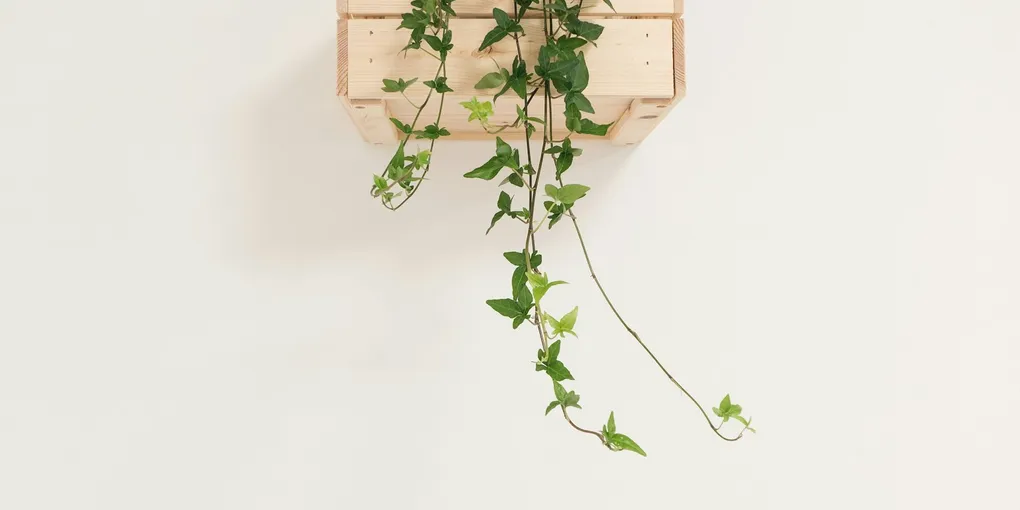
How to Care for an English Ivy
English ivy (Hedera helix) is the trailing vine you’ve seen climbing walls and fences outdoors, but it also makes a full, cascading houseplant when it gets the conditions it wants. It’s less forgiving than a pothos and more particular about humidity than most trailing plants, so a little attention to its two weak spots — dry air and inconsistent watering — goes a long way.
Light
English ivy does best in bright, indirect light. A spot near an east-facing window, or a few feet back from a south- or west-facing one, keeps growth dense and the leaves well-colored. Variegated varieties in particular need good light to hold their white or cream patterning — in low light that patterning fades and the vine grows sparse.
The plant will tolerate lower light and won’t die from it, but growth slows noticeably and the stems tend to stretch out with fewer leaves per inch, growing leggy and sparse rather than full. Moving it somewhere brighter and trimming back the longest stems encourages bushier new growth. Avoid intense direct sun, which can scorch the leaves.
Watering
Keep the soil evenly moist but not waterlogged. English ivy doesn’t want to dry out completely between waterings the way a pothos or snake plant does, but it also won’t tolerate sitting in soggy soil — check the top inch of soil and water once it starts to feel dry, rather than letting the whole pot dry out. Both extremes cause problems: underwatering leads to crispy leaves and leaf drop, while soil that stays wet invites root rot. For a general method on judging moisture by feel instead of a fixed schedule, see watering houseplants the right way.
Sudden temperature swings — a cold draft from a door, or a spot near a heating vent — can also trigger leaf drop even when watering is fine, so keep the plant somewhere with steady conditions.
Soil and pot
A well-draining potting mix is essential, since English ivy’s fondness for consistent moisture makes it easy to over-saturate the soil if drainage is poor. A standard mix amended with a bit of perlite works well, and the pot needs a drainage hole so excess water can actually leave the root zone.
Humidity
This is the other requirement that trips people up. English ivy comes from humid woodland conditions outdoors, and the dry air in most heated or air-conditioned homes is lower than it prefers. Low humidity doesn’t just show up as unhappy leaves — it’s also what invites the plant’s signature pest, spider mites, which thrive in exactly the dry, still air that a struggling ivy sits in.
Raising the humidity around the plant with a pebble tray, a humidifier, or by grouping it with other plants makes a real difference. See how to increase humidity for houseplants for the options that actually hold humidity, as opposed to misting, which fades within minutes.
Toxicity
English ivy is toxic to both cats and dogs if chewed or ingested — the ASPCA toxic and non-toxic plants database lists it as toxic — it contains compounds that can cause vomiting, drooling, and abdominal pain. Keep hanging or trailing stems out of reach of curious pets, or choose from this list of pet-safe houseplants for cats and dogs instead.
Common problems
Brown, crispy leaf tips are almost always a humidity problem rather than a watering one. Dry indoor air, especially near heating or AC vents, dries out the leaf margins first. Raising the humidity is the fix — check the soil moisture too, but don’t assume you just need to water more.
Spider mites are the classic English ivy pest, and dry air is what invites them. Look for fine webbing between leaves and stems, or a dusty, stippled look on the foliage. Increasing humidity helps prevent them, and if you already have an infestation, see how to get rid of spider mites on houseplants for treatment steps.
Leaf drop usually comes from underwatering — letting the soil dry out too much between waterings — or from a sudden change in temperature, like being moved near a drafty window or a heating vent. Steady watering and a stable spot resolve most cases.
Get the humidity and watering right and English ivy fills out into one of the fuller trailing plants you can grow indoors — a good pick alongside pothos and string of pearls if you’re building out a shelf of hanging and trailing houseplants.