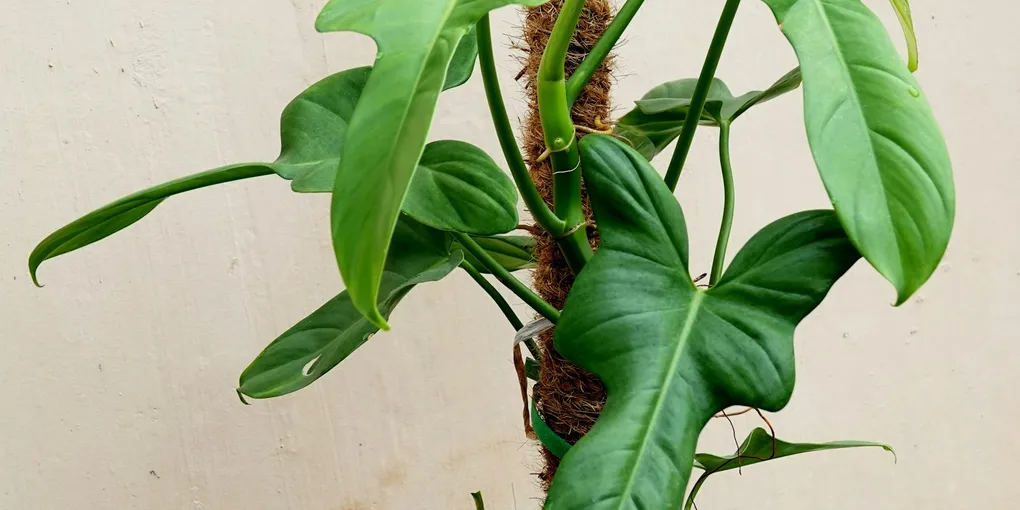
How to Care for a Philodendron Squamiferum
Philodendron squamiferum is a climbing Philodendron species instantly recognizable by its petioles — the stalks connecting each leaf to the vine are bright red and covered in coarse, bristly hairs, a texture that’s unusual enough in the genus that it’s the plant’s defining feature. The leaves themselves are deeply lobed, typically splitting into three to five finger-like segments that give mature plants a shape reminiscent of a Swiss cheese plant leaf, though squamiferum’s lobes are narrower and more pronounced. Between the fuzzy red stems and the dramatic leaf shape, it’s one of the more visually distinct philodendrons you can grow.
Light
Bright, indirect light produces the best leaf size and the most vivid red coloring on new petioles. A spot a few feet back from a south- or west-facing window, or closer to an east-facing one, works well. Direct sun scorches the leaves, while too little light leads to smaller leaves with shallower lobing and weaker, paler petiole color.
Give it something to climb
Squamiferum is a true vine and, like most climbing philodendrons, produces larger and more deeply lobed leaves once it has something to climb rather than being left to trail from a hanging pot. A moss pole gives the aerial roots something to grip, and as the plant climbs it typically rewards you with bigger leaves and tighter spacing between them.
Watering
Let the top 1-2 inches of soil dry out before watering thoroughly. This plant is fairly forgiving of a missed watering but doesn’t like sitting in soggy soil for extended stretches — consistent moisture during active growth, with a slightly drier stretch in winter when growth slows, produces the steadiest results.
Soil and pot
A chunky, well-draining aroid mix — standard potting soil cut with perlite and orchid bark — gives the roots the airflow they need. See how to make a chunky aroid potting mix for ratios. Use a pot with a drainage hole, and avoid sizing up too aggressively at repotting time, since a large volume of slow-drying soil around a modest root system is a common route to rot.
Humidity
Average household humidity is tolerated, but 50-60% or higher keeps leaves larger and glossier and reduces the odds of crispy edges. A humidifier running nearby is the most reliable way to raise it; see how to increase humidity for houseplants for other approaches.
Toxicity
Like other philodendrons, squamiferum contains calcium oxalate crystals throughout its tissue and is toxic to cats, dogs, and people if chewed or swallowed, causing oral irritation, drooling, and swelling. Keep it out of reach of pets and small children.
Common problems
Leaves with shallow lobing that don’t look deeply “fingered” usually means the plant is young or isn’t getting enough light — lobing tends to become more pronounced as the plant matures and climbs. Give it a support to climb and more light before assuming something is wrong.
Petioles losing their red color and fuzzy texture typically points to low light. Move the plant closer to a bright window; new growth should come in with more saturated red stems.
Yellowing lower leaves in small numbers is a normal part of the plant shedding old growth; widespread yellowing points to overwatering — let the soil dry out further and confirm the pot drains freely.
Crispy, browning leaf edges usually mean low humidity, sometimes combined with inconsistent watering. Raise humidity and aim for a steadier watering rhythm.
Leggy growth with long gaps between leaves signals insufficient light or a lack of climbing support. Move the plant to a brighter spot and add a moss pole if it doesn’t already have one.