How to Care for a Monstera Siltepecana
Monstera Siltepecana, sometimes called the Silver Monstera, is a climbing vine in the same Monstera genus as the far more common Monstera deliciosa, but it looks almost nothing like its famous relative when young. Juvenile leaves are narrow, silvery-blue, and satiny, with dark green venation tracing across the surface like a brushed-metal finish. It’s a slower, quieter-looking plant early on — the dramatic transformation comes later, once it starts to climb.
Light
Bright, indirect light brings out the silver sheen this plant is grown for. A spot a few feet back from a south- or west-facing window, or closer to an east-facing one, works well. In low light, the silvery cast fades toward plain green and growth gets leggy, with long gaps between leaves as the vine stretches toward whatever light it can find. Direct midday sun, on the other hand, can scorch the thin leaves, so filtered or indirect light is the target rather than a bare, unshaded window.
Watering
Let the top inch or two of soil dry out before watering again, then water thoroughly until it drains from the bottom of the pot. This plant doesn’t like sitting in soggy soil — thin roots on a fast-growing vine are quick to rot if the mix stays wet too long — but it also isn’t a drought-tolerant succulent, so don’t let it dry out completely for extended stretches. Checking the soil by finger rather than watering on a fixed schedule is the more reliable approach; see watering houseplants the right way for more on judging this by feel.
Soil and pot
A loose, chunky, fast-draining aroid mix suits this plant well — regular potting soil alone tends to compact and hold too much water around its roots. Cutting a standard mix with perlite and orchid bark, as described in how to make a chunky aroid potting mix, gives the roots the drainage and airflow they need. A pot with a drainage hole is essential, and sizing it close to the root ball rather than going too large helps the soil dry out at a predictable pace.
Humidity
Moderate to high humidity — somewhere around 50-60% — keeps growth fuller and helps prevent crispy leaf edges, though this plant is somewhat more forgiving on humidity than a true Alocasia or Calathea. Average home humidity is usually workable, but a boost noticeably improves leaf size and the vibrancy of the silver coloring. See how to increase humidity for houseplants for practical ways to raise it if your leaves are looking dull or curling at the edges.
Juvenile vs. mature leaf form
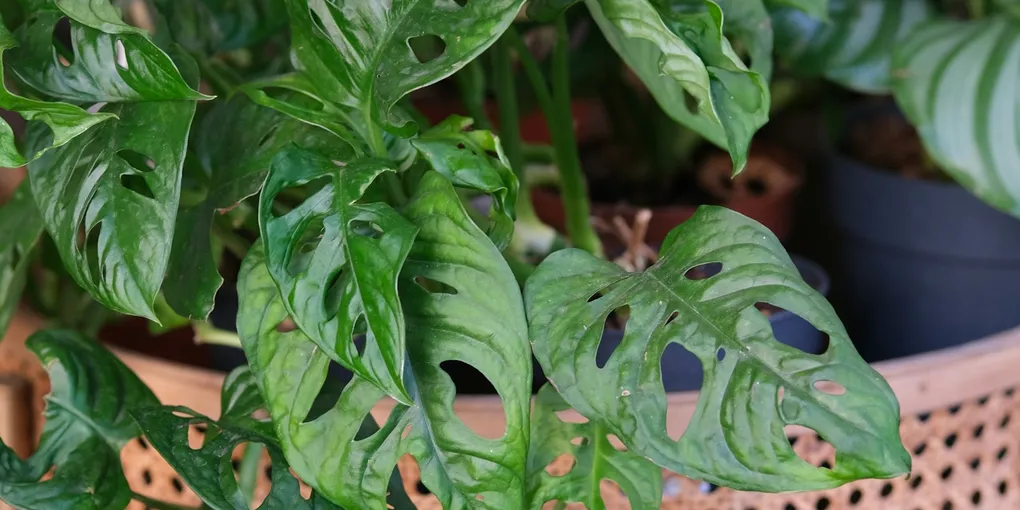
This is the plant’s defining quirk. Juvenile Monstera Siltepecana produces small, narrow, elongated leaves with that signature silvery-blue overlay and no holes or splits at all. As the plant matures and gets something to climb — a moss pole, bark pole, or wall — the leaves it pushes out get progressively larger, thicker, and greener, eventually developing the fenestrations (splits and holes) that Monstera is known for. A plant left to trail without support can stay in its juvenile form indefinitely, which is a completely valid way to grow it, but if you want to see the mature leaf form, give it a moss pole to climb. Aerial roots will grip the pole and the plant will start putting more energy into upward growth and larger leaves rather than trailing stems.
Toxicity
Monstera Siltepecana is toxic to cats and dogs. Like other aroids, it contains calcium oxalate crystals that cause oral irritation, drooling, and swelling if chewed, so keep it out of reach of pets that like to nibble on trailing vines.
Common problems
Leaves losing their silvery sheen and turning plain green almost always points to insufficient light. Move the plant closer to a bright window; more light restores the metallic cast on new growth, though older leaves generally won’t reverse.
Leggy growth with long gaps between leaves is the plant stretching toward light. Combine brighter conditions with a light prune to encourage bushier, more compact growth from lower nodes.
Yellowing leaves usually mean overwatering. Let the soil dry out further between waterings and confirm the pot drains freely before assuming a different cause.
No fenestrations even on older growth is expected if the plant hasn’t been given something to climb. Fenestrated, mature-form leaves generally only appear once the vine is climbing a pole rather than trailing.
Crispy brown edges are typically a humidity or watering consistency issue rather than a sign of disease — raise humidity and check that watering isn’t swinging between bone-dry and soaked.