How to Get Rid of Whiteflies on Houseplants
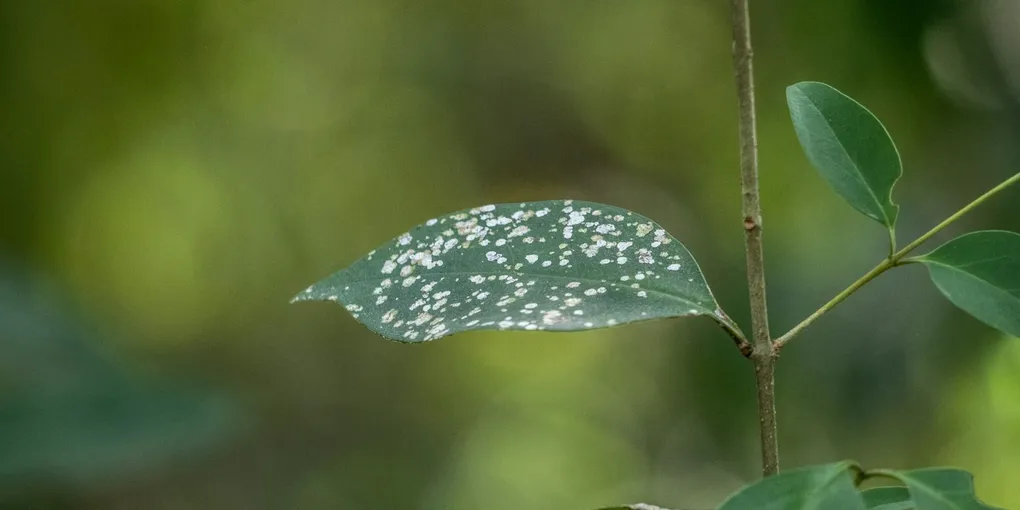
Whiteflies are easy to dismiss the first time you see them, since a few tiny white specks scattering off a leaf can look more like dust catching the light than an infestation. By the time you notice a proper cloud of them, though, they’ve usually been feeding and breeding for weeks.
What whiteflies are
Whiteflies aren’t true flies, despite the name — they’re small sap-sucking insects closely related to aphids and scale, and they feed the same way: piercing plant tissue and drawing out sap. Adults are tiny, moth-like, and covered in a fine white waxy powder, which is what gives them their color and their name.
How to identify them
A small white cloud when you disturb the plant is the giveaway most people notice first. Brush against the foliage or give the pot a light tap, and if adult whiteflies are present they’ll lift off in a scattering burst, then resettle on the leaves within a minute or two.
Tiny white specks on leaf undersides when the plant is undisturbed — this is where whiteflies rest and lay eggs, so check there specifically rather than the top of the leaf, where you’re less likely to spot them.
Sticky honeydew and sooty mold, the same combination that shows up with aphids and mealybugs. Whiteflies produce honeydew as they feed, and a sugary film on leaves or on furniture underneath the plant is often noticed before the insects themselves are.
Yellowing or wilting leaves on a heavily infested plant, from the cumulative sap loss across a large colony feeding continuously.
Why they show up
Whiteflies thrive in warm conditions and reproduce quickly once established, which is why a handful of insects can become a visible cloud within a couple of weeks. They commonly arrive on a new plant from a nursery or greenhouse, where large numbers of plants growing close together make it easy for an infestation to spread unnoticed before the plants are sold. They also move easily between houseplants that are placed close together, so a single infested plant on a crowded windowsill can seed the rest of the group.
How to get rid of them
Isolate the plant as soon as you spot whiteflies, since they fly readily between nearby plants in a way that pests like scale or mealybugs don’t.
Use yellow sticky traps placed near the plant. Whiteflies are strongly attracted to yellow, and sticky traps catch a meaningful share of the flying adults, which cuts down on breeding even before you treat the plant directly.
Vacuum or hand-vacuum adults in the early morning or evening when whiteflies are more sluggish and less likely to scatter — a handheld vacuum on low suction can pull a surprising number off the plant in one pass.
Treat with insecticidal soap or neem oil, focusing on the undersides of leaves where both adults and the immature nymph stage live. As with other sap-suckers, coverage matters more than the specific product, since these treatments only work on direct contact.
Repeat every 5-7 days for at least three rounds. Whiteflies have a fast life cycle, and eggs and nymphs that survive an initial treatment will mature into a new wave of adults within a week if you don’t follow up.
How to prevent them coming back
Inspect new plants closely, including the undersides of leaves, before placing them near your existing collection — nursery stock is one of the most common sources of a whitefly infestation. Keep sticky traps up as an early-warning system even after a plant looks clear, since they’ll catch any stragglers before a new colony can establish. Spacing plants out rather than crowding them together also slows the spread if whiteflies do turn up. For the wider range of pests that show up on houseplants and how to tell them apart, see common houseplant pests and how to get rid of them.