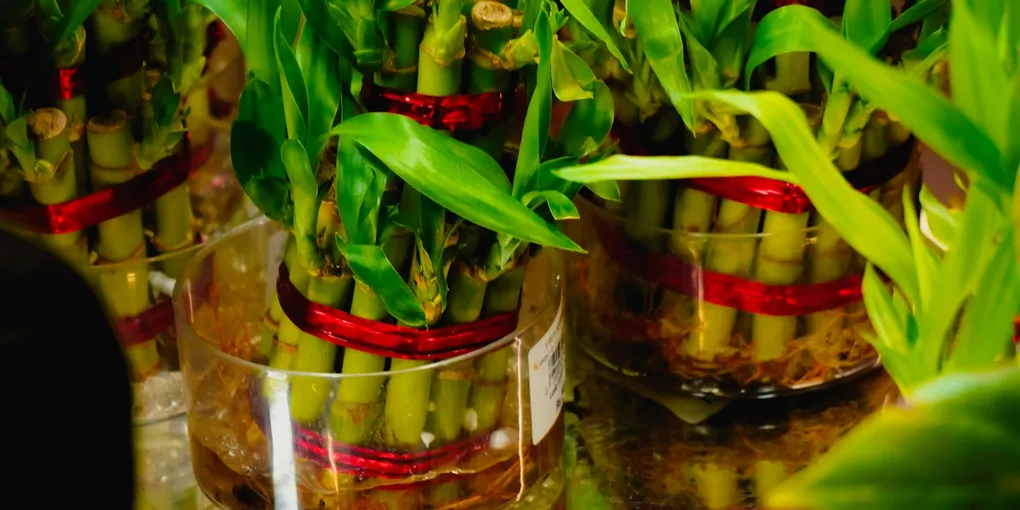
How to Care for Lucky Bamboo
Lucky bamboo isn’t bamboo at all — it’s Dracaena sanderiana, a tropical relative of the plant covered in how to care for a dracaena, trained and sold in straight canes, spirals, or braided stalks that only resemble true bamboo in shape. It’s usually sold rooted in a shallow dish of water and pebbles, though it grows just as well in soil once it’s past the stage most people buy it at. The two setups need slightly different care, which is the main thing that trips people up.
Light
Bright, indirect light is what lucky bamboo wants. A spot a few feet back from an east or north window works well. Direct sun, especially through south- or west-facing glass, scorches the thin leaves and can bleach the stalks, while very low light slows growth and makes the leaves pale.
Water (growing in water vs. soil)
Grown in water, the setup is simple: keep the roots submerged in an inch or two of water, topping it off as it evaporates. Change the water completely every 1-2 weeks rather than just topping it off, since stagnant water grows algae and bacteria that stress the roots. See best houseplants to grow in water without soil for more on this style of growing.
Water quality matters more here than with almost any other houseplant, because the roots sit in it directly instead of soil buffering the contact. Lucky bamboo is sensitive to the chlorine, chloramine, and fluoride in most municipal tap water, which shows up as yellow or brown leaf tips. Use filtered water, distilled water, or tap water left uncovered for 24-48 hours to let chlorine dissipate (chloramine won’t dissipate the same way, so filtering is more reliable if your water utility uses it). See best water for houseplants and how long can you store rainwater for plants for more on sourcing water your plants will tolerate better.
Grown in soil, water when the top inch or so of the mix dries out, the same routine as most tropical houseplants. Plants that have spent a long time in water first need a gradual transition — their roots are adapted to water and can struggle to take up moisture from soil right away, so keep the soil more consistently moist than usual for the first few weeks after moving it over.
Soil (if potted)
If you’re moving a water-grown plant into soil, or bought one already potted, use a well-draining standard potting mix and a pot with a drainage hole. Lucky bamboo doesn’t need anything special beyond that. Plants left in water indefinitely never need soil at all; it’s purely a matter of preference and how you want the roots to look.
Fertilizing
Lucky bamboo is a light feeder and easy to over-fertilize, which shows up fast as leaf tip burn. If it’s growing in water, a couple of drops of liquid houseplant fertilizer diluted to about quarter strength, added when you change the water, is plenty — once every month or two is enough. Potted plants can follow a similarly light version of a normal feeding schedule. Skip fertilizer entirely in winter when growth slows.
Toxicity
Lucky bamboo is toxic to cats and dogs if chewed or ingested, causing vomiting, drooling, and loss of appetite. Because it’s so often kept in an open dish of water on a low table or desk, it’s also an easy target for a curious pet to drink from or chew on — keep it somewhere out of reach, or see pet-safe houseplants for cats and dogs for safer alternatives.
Common problems
Yellowing stalks are usually caused by one of a few things: water quality (switch to filtered or dechlorinated water), too much direct sun, or a cane that’s simply reached the end of its natural life — older canes yellow and die back even with perfect care, and it’s normal to trim one out here and there. A stalk that’s gone fully yellow and soft won’t recover; cut it out at the base so it doesn’t affect the healthy canes nearby.
Root rot in water shows up as mushy, brown, foul-smelling roots instead of the firm white or tan roots a healthy plant grows. It’s caused by water that’s changed too infrequently or a container that never gets cleaned. Trim away the rotten roots with a clean, sharp blade, rinse the healthy roots and the container thoroughly, and start with fresh water on a regular change schedule going forward.
Algae growth in the vase turns the water green and coats the inside of clear glass containers — it’s harmless to the plant but unattractive and a sign the water’s been sitting too long, especially in bright light. Use an opaque or dark-colored container if algae keeps coming back, change the water more often, and scrub the container with a bottle brush at each change rather than just rinsing it.
Brown, crispy leaf tips point to the same chlorine and fluoride sensitivity covered above, though low humidity can also contribute. Switching water sources solves most cases.
Mold or a white film on the water or pebbles is usually a sign the water’s stagnant or the container isn’t getting cleaned at each change. Empty and scrub the container, rinse the roots and pebbles, and refill with fresh water.