How to Care for Hens and Chicks (Sempervivum)
Hens and chicks is the common name for Sempervivum, a genus of rosette-forming succulents so tough that the genus name literally means “always alive.” Unlike most popular succulents, which are native to hot, dry climates and die at the first hard frost, Sempervivum evolved in mountainous parts of Europe and can survive being frozen solid outdoors in winter. That cold tolerance is the plant’s defining trait, and it’s why you’ll most often see it growing in rock gardens, stone walls, and outdoor containers rather than on a windowsill. It also does perfectly well as an indoor succulent, as long as you can give it enough light.
Why “hens and chicks”
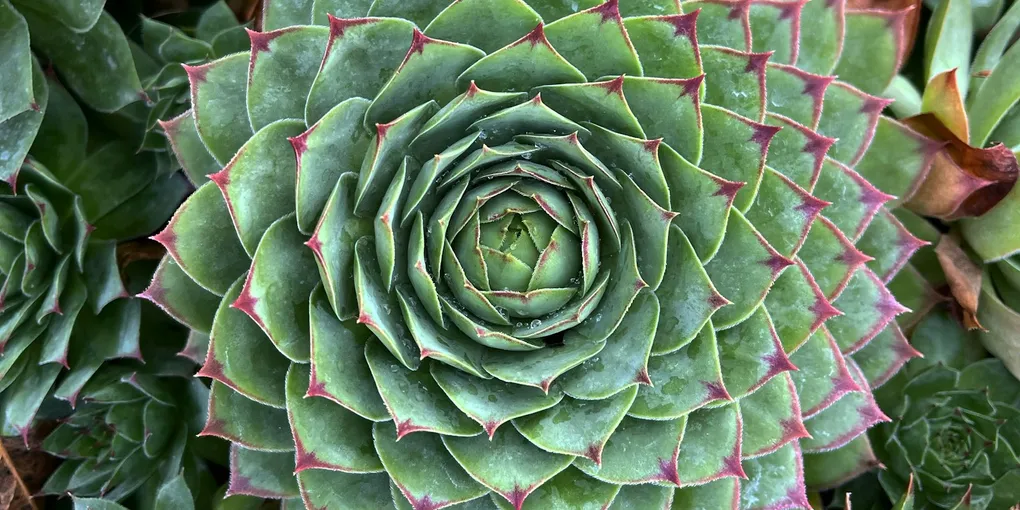
Each rosette is the “hen” — a tight, symmetrical cluster of pointed, fleshy leaves that can range from green to deep red, purple, or silvery blue depending on variety and light exposure. As the hen matures, it sends out short runners tipped with small offset rosettes, the “chicks,” which root themselves nearby and eventually form a dense mat of clones around the parent. A single plant can turn into a colony of dozens over a few years without any help from you. Individual rosettes are monocarpic — they flower once, on a tall stalk, and then die — but by that point they’ve usually produced enough chicks that the loss barely shows.
Light
Sempervivum wants full sun. Outdoors, that means as much direct sun as you can give it — six or more hours a day is ideal, and the plant’s color often intensifies (redder, more purple) under strong light and cold nights. Indoors, put it in your brightest south-facing window; see best plants for south-facing windows for what else thrives in that kind of exposure. Insufficient light is the most common reason an indoor hens and chicks becomes loose, pale, and stretched out instead of staying tight and compact.
Watering
Water only after the soil has dried out completely, and even then, don’t overdo it. Sempervivum stores water in its leaves and is built to handle long dry spells; it does not want to sit in consistently moist soil. Outdoor plants in the ground often need no supplemental watering beyond rainfall except during extended droughts. Potted plants, indoors or out, should be watered thoroughly and then left alone until the soil is bone dry again. See how to care for succulents for the general watering rhythm this plant follows, and how to fertilize succulents and cacti if you want to feed it — it needs very little.
Soil and pot
Use a gritty, fast-draining mix — a cactus/succulent blend cut with extra perlite, pumice, or coarse sand works well. Regular potting soil holds too much moisture and is one of the fastest ways to rot this plant. If you’re growing it outdoors, a rock garden or raised bed with sharp drainage suits it better than heavy garden soil. A pot with a drainage hole is non-negotiable regardless of where you keep it.
Cold hardiness and growing outdoors
Most Sempervivum varieties are hardy down to USDA zone 3 or 4, meaning they can survive winters that would kill nearly every other succulent sold as a houseplant. This makes them a good choice for outdoor container gardens in climates too cold for aloe or echeveria, and for gardeners who want low-maintenance ground cover on slopes, rock walls, or gravel beds. If you bring potted succulents indoors for winter generally, hens and chicks is one of the few that doesn’t need it — see moving houseplants outdoors for summer if you’re deciding what else can handle time outside.
Toxicity
Sempervivum is non-toxic to cats, dogs, and humans, making it a safe choice for pet-friendly gardens and windowsills. See pet-safe houseplants for cats and dogs for other options if you’re building out a collection with pets in the house.
Common problems
A loose, stretched-out rosette with wide gaps between leaves means the plant isn’t getting enough light. Move it somewhere brighter — indoors that likely means the sunniest window you have, outdoors it means less shade.
Mushy, translucent, or blackened leaves at the base point to overwatering or poor drainage. Let the soil dry out completely and repot into a grittier mix if the current one is holding too much water.
A rosette that sends up a tall flower stalk and then starts to die back is normal, expected behavior, not a sign of a problem. That rosette is monocarpic and finishing its life cycle; the chicks it has already produced will carry the plant forward.
Sunburned or bleached patches after a sudden move outdoors happen when a plant grown indoors or in shade is moved straight into strong sun. Acclimate it gradually over a week or two rather than making the jump all at once.