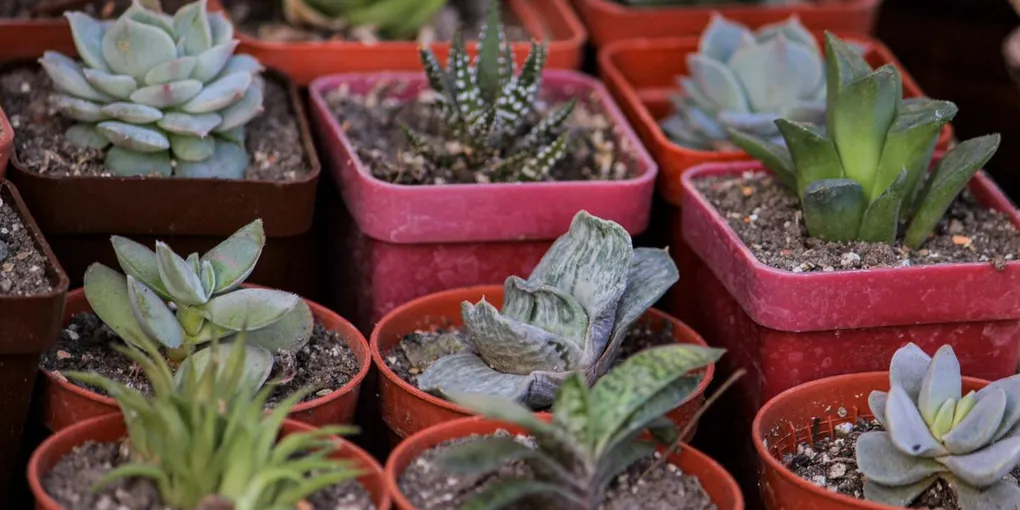
How to Fertilize Succulents and Cacti
Succulents and cacti evolved in some of the least fertile soils around — sandy, mineral-poor, fast-draining ground that would leave a leafy tropical houseplant starving. That background matters for how you feed them indoors: these are naturally slow, lean growers, and treating them like a pothos or a monstera when it comes to fertilizer does more harm than good. If you’ve gotten used to fertilizing houseplants on a regular schedule, succulents and cacti ask you to dial almost everything back.
Why less is more here
Fast, heavy feeding pushes soft, stretched growth that doesn’t match a succulent’s normal compact form, and it can scorch the fine roots these plants use to make the most of poor soil in the wild. Overfertilizing is a far more common problem with succulents and cacti than underfertilizing — see signs of overfertilizing houseplants for what that looks like in general, since most of those symptoms apply here too, just often sooner than they would on a tougher tropical plant.
What to use
A balanced, general-purpose fertilizer works fine, or one specifically labeled for cacti and succulents if you want to skip the math. Either way, dilute it to roughly half the strength (or less) of what you’d use on a regular houseplant — see how to choose the right fertilizer for the basics of reading a label and picking a formula, then cut the dose down from there. A weak solution applied too often is still better than a strong one applied rarely; consistency at a low dose beats occasional heavy feeding.
When to feed
Feed only during active growth, which for most succulents and cacti means spring and summer. Skip fall and winter entirely, even if the plant is sitting in a bright window and looks perfectly healthy — most species slow down or go semi-dormant in the cooler, lower-light months, and fertilizing during that rest period tends to push weak, pale, stretched growth instead of anything useful, along with a higher risk of root burn since the plant isn’t actively using the nutrients.
How often
Once a month during spring and summer is plenty for most succulents and cacti, and some growers get good results feeding even less often than that — every six to eight weeks. This is noticeably less frequent than a leafy tropical houseplant typically wants. If you’re ever unsure whether to feed again, waiting an extra couple of weeks is the safer call than feeding early.
Soil matters too
A fast-draining succulent or cactus mix that doesn’t hold onto excess nutrients between waterings helps prevent the buildup that a denser, moisture-retentive potting soil would trap around the roots. If you notice a crusty white or gray buildup on the soil surface or the rim of the pot, that’s often mineral or fertilizer salts left behind as water evaporates — see white crust on soil or pots for how to deal with it, and treat it as a cue to flush the soil with plain water and ease up on feeding for a while.
Common problems
Weak, leggy, or stretched growth despite good light often points to overfeeding rather than a light problem, especially if you’ve been fertilizing on a schedule closer to what a tropical houseplant would get. Cut back on frequency and dilution and let the plant return to its normal, compact growth habit.
Brown, crispy root tips or a general decline after feeding is a sign of fertilizer burn from a solution that was too strong or applied too often. Flush the soil thoroughly with plain water to help clear excess salts, and hold off on any further feeding for a month or more.
A salt crust on the soil surface usually means fertilizer or mineral buildup rather than anything actively wrong with the plant yet, but it’s worth treating as an early warning. Flush the pot with water until it runs clear from the drainage hole, and consider diluting your fertilizer further going forward.
Little to no growth over a year or more in an otherwise healthy-looking plant can point the other direction — a plant that’s been in the same old, nutrient-depleted soil for years without ever being fed or repotted. In that case, a light feeding during the next growing season, or a fresh repot into new mix, is reasonable — see signs of nutrient deficiency in houseplants for what genuine underfeeding looks like before assuming that’s the cause.