How to Care for an Anthurium Crystallinum
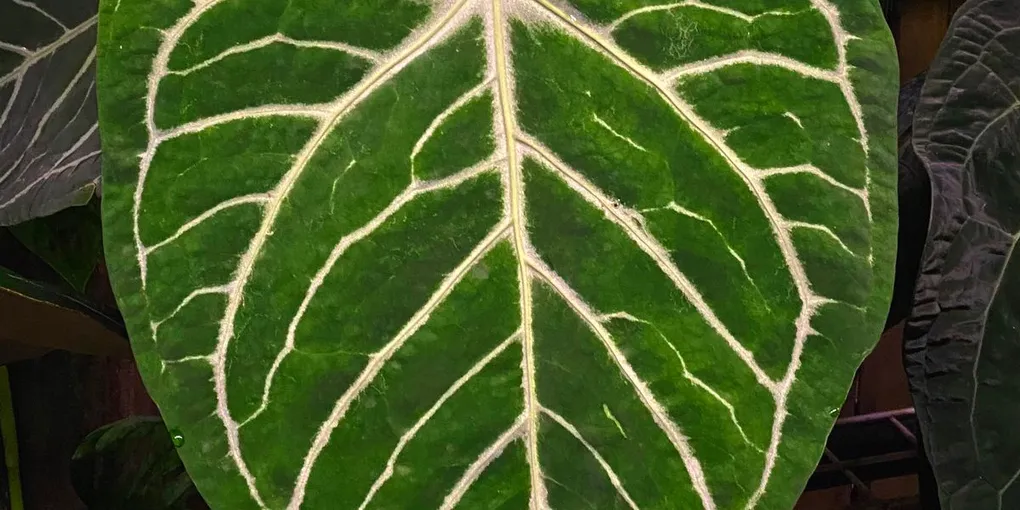
Anthurium crystallinum is grown for foliage, not flowers — large, heart-shaped leaves with a deep, velvety surface and pale silvery-white veins that stand out sharply against the dark green. It’s a step up in difficulty from the glossy-spathed anthuriums sold at grocery stores, and almost all of that added difficulty comes down to one thing: humidity.
Light
Bright, indirect light keeps this plant growing steadily and the veining crisp. A spot near an east-facing window, or a few feet back from a brighter south- or west-facing one, works well. Direct sun scorches the velvety leaf surface quickly, leaving dry, bleached patches that don’t recover, so keep it out of unfiltered midday light.
Watering
Water once the top inch or so of soil has dried out, then water thoroughly and let it drain fully. Crystallinum is sensitive in both directions — it doesn’t tolerate soil that stays wet any better than most aroids, but it also sulks and crisps at the edges if it goes too long between waterings. Consistency matters more here than with a tougher plant like a pothos, which can shrug off an irregular schedule.
Soil and pot
Use a very chunky, fast-draining aroid mix — a blend of orchid bark, perlite, and sphagnum moss works better than standard potting soil, since the roots want airflow around them, not dense wet soil. See the best soil mix for houseplants for base ratios to build from. A pot with a drainage hole is essential.
Humidity
This is the single biggest factor in whether a crystallinum thrives or just survives. It wants humidity of 60% or higher to put out new leaves reliably, well beyond what a pebble tray or occasional misting can sustain in most homes. Growers who get consistent new growth typically use a closed cabinet, a greenhouse-style grow cabinet, or a large humidity dome or terrarium setup rather than relying on ambient room humidity. See how to increase humidity for houseplants for the general methods, but treat the higher end of that range as a requirement for this plant, not a nice-to-have.
Toxicity
Like other aroids, Anthurium crystallinum contains calcium oxalate crystals and is toxic to cats and dogs if chewed, causing mouth and stomach irritation. Keep it away from curious pets, or see pet-safe houseplants for cats and dogs for safer alternatives.
Common problems
Crispy or curling leaf edges are by far the most common complaint with this plant, and they almost always trace back to low humidity rather than a watering problem. If the air around the plant is anywhere near typical household humidity, raise it before changing anything else.
Slow or stalled new growth can simply be normal — crystallinum grows more slowly than common anthuriums even under good conditions. But if it’s been many months with no new leaf at all, check both light and humidity before assuming the plant is dormant or unwell.
Root rot shows up as mushy stems near the soil line or a sudden wilt despite moist soil, and it comes from a mix that holds too much water or a pot without proper drainage. See how to identify and fix root rot for how to assess and recover an affected plant.
Faded or less distinct veining on new leaves usually points to insufficient light or a plant that’s been under-fed for a while — the silvery contrast is more pronounced on leaves that grew in good conditions than on ones produced during a stretch of low light.