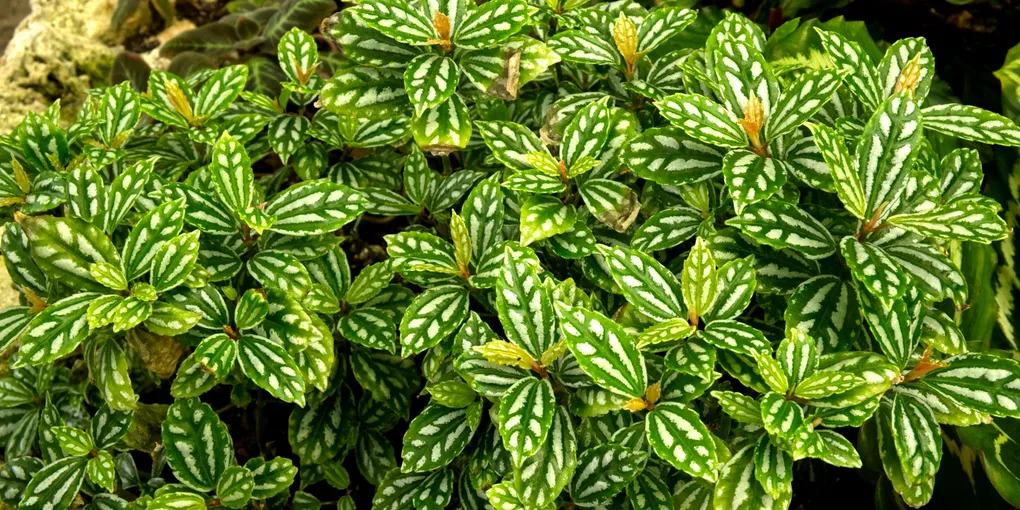
How to Care for an Aluminum Plant
The aluminum plant, botanically Pilea cadierei, gets its name from the metallic silver patches painted across each dark green leaf, as if it had been brushed with paint straight from a can. It’s a fast, bushy grower that’s forgiving of average indoor conditions, which has made it a mainstay of dish gardens and terrariums for decades. It’s a different species from the Chinese money plant — both are in the genus Pilea, but the aluminum plant grows upright with small pointed leaves rather than round coin-shaped ones, and it doesn’t produce the same pups. What it does share with its cousin is a habit of getting leggy and sparse if you let it grow untouched.
Light
Bright, indirect light is what keeps the silver markings vivid — a spot near an east-facing window, or a few feet back from a south- or west-facing one, works well. In lower light the plant will still survive, but the pattern fades toward a duller, more uniform green and the stems stretch further apart reaching for a light source. Avoid hours of direct, hot sun, which can bleach or scorch the thin leaves; a little gentle morning sun is fine, but midday sun through an unfiltered south window is not.
Watering
Keep the soil evenly moist and water again once the top inch or so has dried out — don’t let the whole pot go bone dry. Aluminum plants have thin leaves and a shallow root system, so they wilt fairly quickly when thirsty, though they usually bounce back within a few hours of a good soak. Soggy, waterlogged soil is just as much of a problem as drought, since it leads to root rot and mushy stems. For a general framework on judging moisture by feel instead of a fixed schedule, see watering houseplants the right way.
Humidity
This plant does best with humidity above what most homes offer on their own, especially in winter when heating dries the air out. Low humidity shows up as crisp, brown leaf edges and tips even when the soil moisture is fine. Grouping it with other plants, running a humidifier, or setting the pot on a pebble tray all help; see how to increase humidity for houseplants for approaches that actually raise the number around the plant rather than just around the leaf surface for a moment.
Soil and pot
A standard well-draining potting mix works well — see the best soil mix for houseplants for a mix that holds some moisture without staying soggy. Use a pot with a drainage hole; the roots are shallow and fine, and they don’t tolerate sitting in water for long. Aluminum plants also have a fairly small root system relative to their leafy top growth, so they rarely need a large pot — sizing up more than an inch or two at repotting time just leaves excess soil holding water the roots can’t use.
Pruning
Left alone, an aluminum plant stretches upward, drops its lower leaves, and ends up bare and leggy at the base within a year or two — this is close to guaranteed with this species, not a sign you’re doing something wrong. Regular pinching is the fix: pinch or snip off the growing tips of each stem every few weeks, which forces the plant to branch out below the cut instead of just growing taller. Cutting stems back by a third once they get tall and sparse also works to force a fuller flush of new growth from lower down. See how to fix a leggy houseplant for more on reading and correcting this kind of growth. Most growers replace an aluminum plant every couple of years once pruning alone can’t keep it full, using fresh cuttings to start over rather than fighting an increasingly bare, woody older plant.
Propagation
Aluminum plants root readily from stem cuttings, which is convenient since pruning already gives you plenty of material to work with. Snip a few inches off a healthy stem just below a leaf node, strip the lowest leaves, and root it in water or moist soil — roots typically show up within a couple of weeks. See how to propagate houseplants from cuttings for the full method. Taking cuttings regularly and starting fresh plants is the standard way to keep this species looking full long-term, rather than trying to keep one aging plant looking young forever.
Toxicity
Aluminum plant is non-toxic to cats and dogs, making it a safe choice for shelves or terrariums in homes with curious pets. See pet-safe houseplants for cats and dogs for more options if you’re building out a pet-friendly collection.
Common problems
Crispy, brown leaf edges almost always point to low humidity rather than a watering problem. Check your humidity setup before changing how often you water.
Leggy stems with bare lower growth and leaves clustered at the top are this plant’s default behavior without regular pinching, not a disease. Start pruning the growing tips regularly, and expect to take cuttings to refresh the plant every year or two once it’s too far gone to fix with pruning alone.
Wilting or drooping leaves usually mean the plant is thirsty and needs a soak; it should perk back up within a few hours. If it doesn’t recover after watering, or the stems feel soft and mushy, check the roots for rot from soil that’s stayed too wet.
Faded or washed-out silver pattern is a light issue, not a nutrition or watering one. Move the plant somewhere brighter and the next round of new leaves should come in with a crisper, more metallic pattern.