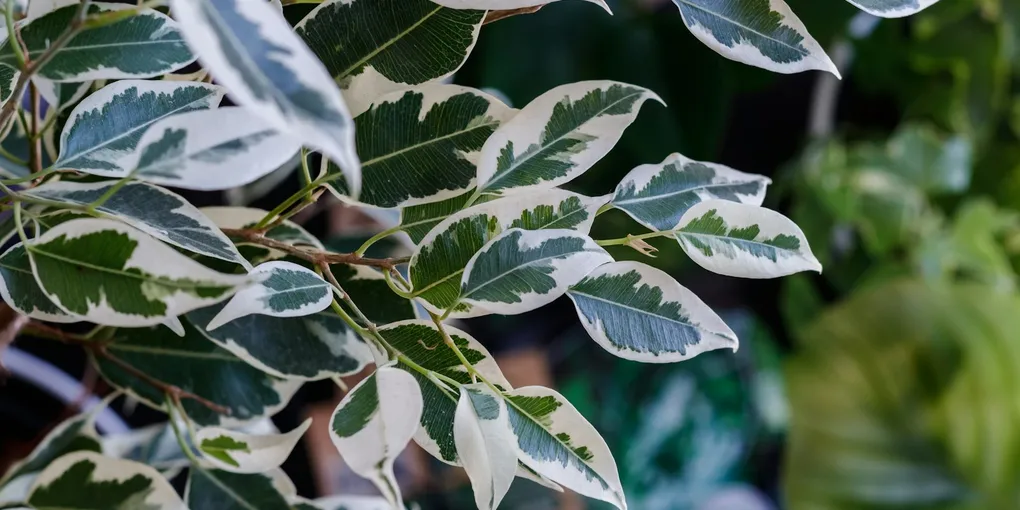
How to Care for a Weeping Fig (Ficus Benjamina)
Weeping fig (Ficus benjamina) is a classic indoor tree, with slender, arching branches and small glossy leaves that give it a graceful, weeping shape. It has a well-earned reputation for dropping leaves the moment something in its environment changes, which makes it feel finicky — but once it’s settled into a stable spot, it’s a genuinely easy plant to keep.
Light
Weeping fig wants bright, indirect light, and does best with consistent light exposure from day to day rather than a spot that shifts between bright and dim depending on the season or the weather. Some direct morning sun is fine, but harsh afternoon sun can scorch the leaves. Once you’ve found a good spot, resist the urge to move the plant around — consistency matters more to this plant than finding the theoretically perfect window.
Watering
Let the top 1-2 inches of soil dry out before watering again, then water thoroughly until it drains from the bottom of the pot. Weeping fig doesn’t like soil that stays soggy, but it also doesn’t want to dry out completely and repeatedly — aim for a steady, moderate rhythm rather than swinging between extremes. See watering houseplants the right way for judging by feel instead of a fixed schedule.
Soil and pot
A standard, well-draining potting mix works well, in a pot with a drainage hole. Weeping fig also prefers to be slightly rootbound rather than repotted often — sizing up too aggressively or too frequently can trigger the same stress-related leaf drop that moving the plant does. See how to tell if a houseplant is root bound before assuming a repot is overdue.
Why it drops leaves
Weeping fig is notorious for shedding leaves in response to change — a new location, a draft, a sudden shift in light, temperature swings, or even just the stress of being moved from a nursery to your home. This is a normal, if frustrating, response rather than a sign of disease. See how to acclimate a new houseplant for easing a recently purchased weeping fig into its new environment with less shock. Once it’s settled into a stable spot with a consistent routine, leaf drop should stop and new growth should fill back in within a few weeks.
Toxicity
Weeping fig is toxic to cats and dogs, and its sap can also irritate skin on contact. Keep it away from pets that chew on leaves, and consider gloves when pruning if you have sensitive skin. See pet-safe houseplants for cats and dogs for safer options if pets are a concern — the same caution applies to its relative, the rubber plant.
Common problems
Sudden, heavy leaf drop is almost always a reaction to a recent change — a move, a draft from a door or vent, a change in season, or a shift in watering. Identify what changed, stabilize the plant’s conditions, and give it a few weeks; leaf drop from stress usually resolves once the environment settles rather than needing any direct treatment.
Yellow leaves before they drop can be a normal part of the same stress response, or a sign of overwatering if it’s widespread rather than isolated to a few older leaves.
Brown leaf tips and edges point to low humidity or dry air, particularly in winter when indoor heating runs. See how to increase humidity for houseplants for ways to address it.
Slow, sparse growth in a plant that’s otherwise healthy is often a light issue — weeping fig needs consistently bright conditions to grow well, and a spot that’s merely adequate rather than bright will keep it ticking over without much new growth.