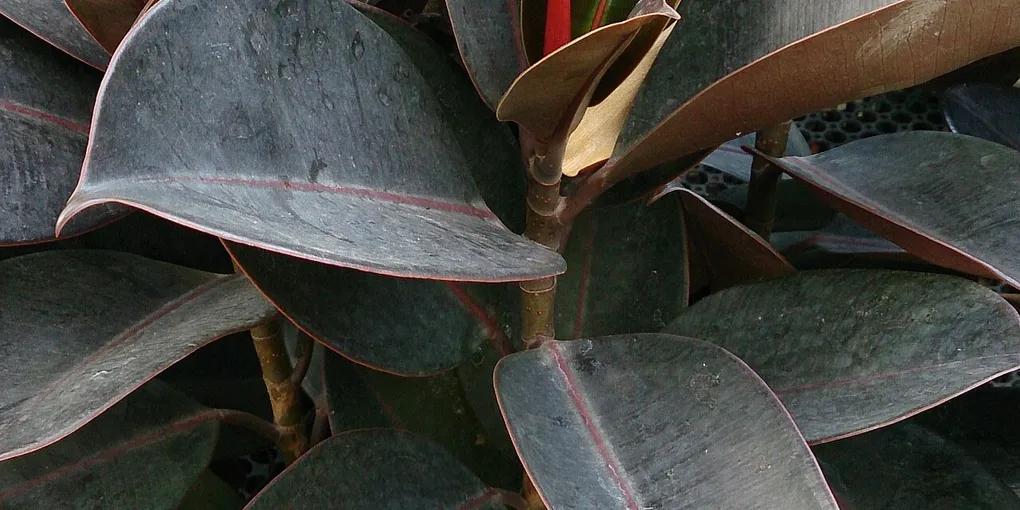
How to Care for a Rubber Plant
Rubber plants (Ficus elastica) are close relatives of the fiddle leaf fig, and it shows — the same thick, glossy, dramatic-looking leaves on a plant that can eventually reach tree size indoors. The difference is temperament. Where a fiddle leaf fig sulks over minor changes and drops leaves at the first sign of stress, a rubber plant shrugs off the same conditions and keeps growing. If you want the bold-leaf look without babysitting the plant, this is the easier version of that trade.
Light
Rubber plants want bright, indirect light, but they tolerate medium light noticeably better than a fiddle leaf fig does — growth just slows down rather than turning sparse and leggy. The exception is variegated varieties (like ‘Tineke’ or ‘Ruby’), which need more light than the solid green types to hold their cream or pink coloring. In low light, variegated leaves tend to fade back toward plain green over time.
Watering
Let the top 2 inches of soil dry out before watering again. Rubber plants are far more sensitive to overwatering than underwatering — soggy soil shows up as drooping, yellowing leaves and, eventually, root rot, while a plant that dries out too much just droops until you water it and recovers within a day. When in doubt, wait an extra day rather than watering on a fixed schedule.
Wipe the leaves
Rubber plant leaves are large, smooth, and flat, which makes them excellent dust collectors. A dusty leaf can’t photosynthesize as efficiently as a clean one, since the coating blocks light from reaching the leaf surface. Wipe them down every few weeks with a damp cloth — it’s a small habit that keeps the plant visibly glossy and functioning at full capacity. See how to clean houseplant leaves for the method that won’t damage them.
Growth and pruning
Left alone, a rubber plant will keep growing upward, often past the height most rooms can comfortably fit. Once it reaches a size you’re happy with, pruning the top back controls the height and pushes the plant to branch out lower down instead of just getting taller, which usually makes for a fuller-looking plant anyway. The cuttings you remove aren’t waste — stem cuttings from a rubber plant root readily, so see how to propagate houseplants from cuttings if you want to turn a pruning session into a new plant.
A note on the sap
If you cut or damage a rubber plant, it releases a milky white sap — this is actually where the plant gets its common name, since the sap was historically used as a source of natural rubber. That sap can irritate skin on contact, so it’s worth wearing gloves if you’re doing heavier pruning or taking cuttings. It’s also worth knowing the toxicity mechanism is different from plants like monstera or pothos, which contain calcium oxalate crystals — the rubber plant’s sap is the irritant here, and it’s mildly toxic if chewed by a cat or dog. If you’re building out a plant collection with pets in the house, see pet-safe houseplants for cats and dogs for what else to watch for.
Common problems
Yellowing, drooping leaves almost always point to overwatering rather than underwatering. Check that the pot drains properly and that you’re letting the soil dry between waterings before assuming anything else is wrong.
Leaves losing their variegation on a variegated variety usually means the plant needs more light, not less. Move it closer to a bright window.
Leggy growth with leaves spaced far apart means the plant isn’t getting enough light overall. Moving it closer to a bright window and pruning back the stretched growth will bring it back to a fuller shape.