How to Care for a Traveler's Palm
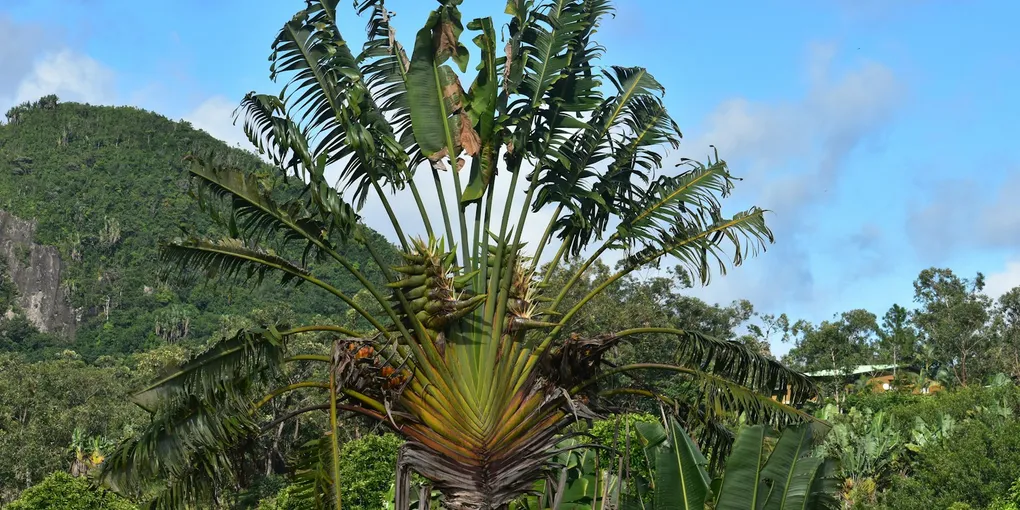
Traveler’s palm (Ravenala madagascariensis) is one of the most dramatic-looking plants you can grow, and also one of the most misunderstood — starting with its name. Despite looking like a palm and being sold as one, it isn’t a palm at all. It’s more closely related to bird of paradise and banana plants, all members of the order Zingiberales. What it actually is: a large, single-trunked plant that produces its huge, paddle-shaped leaves in a single flat plane, fanning out like a giant hand of cards. In the wild it can reach 30 feet tall; even as a houseplant, it grows large enough that most people underestimate how much room it needs before they buy one.
Space and growth habit
Before anything else, be honest about the space you have. Traveler’s palm doesn’t stay small, and its signature fan shape means it spreads wide as well as tall — a mature indoor specimen can easily need several feet of clearance on either side to display its leaves without them getting bent or torn against walls and furniture. It’s best suited to a large, bright room, a sunroom, or a conservatory rather than a typical living room corner. If you’re working with limited space, it’s worth considering a smaller relative like bird of paradise instead, which shares some of the same dramatic look at a more manageable scale.
Light
Give it as much bright light as you can. Traveler’s palm wants strong, direct-to-bright sun for most of the day — more than nearly any other common houseplant — and will grow slowly, lean, and lose its full fan shape in anything less. A south-facing window is close to the minimum for keeping one happy indoors; see best plants for south-facing windows for what else does well in that kind of light. Outdoors in warm climates, it can take full sun all day without issue.
Watering
Keep the soil consistently moist during the growing season, watering when the top inch or two dries out, and ease off somewhat in winter when growth slows. This plant doesn’t like to dry out completely for extended periods, but it also doesn’t want to sit in waterlogged soil — make sure the pot drains well and isn’t left standing in a full saucer.
Soil and pot
A rich, well-draining potting mix works well; a standard houseplant mix with some added perlite for drainage is enough. Because this plant gets large and top-heavy, use a sturdy, appropriately sized pot rather than one that’s oversized for the current root system — a pot that’s too big for the plant holds excess moisture and increases the risk of root rot. See how to choose the right pot size for houseplants for guidance, and plan on repotting as it grows rather than starting it in a container sized for its eventual mature form.
Humidity and temperature
As a tropical plant, it appreciates above-average humidity and warm, stable temperatures, and it doesn’t tolerate cold well — keep it away from drafts, cold windows in winter, and any exposure to frost. It’s not a plant to move outdoors for summer in climates with cool nights, unlike more cold-tolerant houseplants.
Toxicity
Traveler’s palm is non-toxic to cats and dogs, which is a relief given how much space and how many low leaves a mature specimen tends to have within reach. See pet-safe houseplants for cats and dogs for other safe options.
Common problems
Leaves that stay narrow, floppy, or fail to develop the full fan shape almost always trace back to insufficient light. This is the single most common issue with indoor traveler’s palms, since most homes simply can’t match the light levels it wants.
Torn or shredded leaf blades can look alarming but are largely cosmetic and not unique to indoor growing — the long paddle leaves split naturally in wind, and light splitting doesn’t harm the plant’s health.
Brown, crispy leaf edges usually point to low humidity or underwatering, especially in winter when indoor heating dries out the air. See how to increase humidity for houseplants for ways to raise it.
Yellowing lower leaves with soft, dark stems near the base suggests overwatering or poor drainage rather than a light or humidity problem. Let the soil dry out somewhat before watering again, and check that the pot isn’t sitting in standing water.