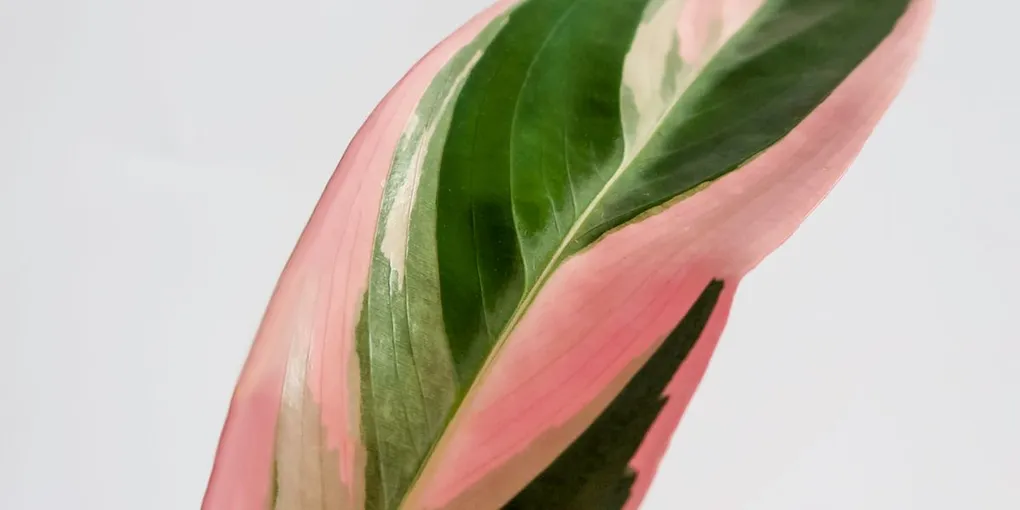
How to Care for a Stromanthe Triostar
Stromanthe Triostar (Stromanthe sanguinea ‘Triostar’) is grown for leaves striped in green, cream, and pink on top, with a solid deep magenta underside. It’s part of the prayer-plant family, Marantaceae, alongside calathea and maranta, and like its relatives its leaves lift and fold at night and lower again during the day. It also shares the family’s reputation for being fussy — if anything, Triostar asks for more precision than a typical calathea or prayer plant, and most of the complaints people have about it come down to two things: humidity and water quality.
Light
Bright, indirect light keeps the variegation looking its best. Too little light and new leaves grow back greener, with less of the pink and cream patterning; too much direct sun scorches the thin leaf tissue, especially the paler variegated sections which burn faster than solid green ones. A spot a few feet back from an east- or north-facing window, or filtered light from a sheer curtain on a brighter window, works well.
Watering
Keep the soil consistently moist — not dry, not soggy. Triostar is markedly less tolerant of a missed watering than most houseplants; letting it dry out fully tends to show up fast as crispy, curled leaf edges. Water quality matters just as much as timing here: this plant is sensitive to the chlorine, chloramine, and dissolved minerals in a lot of tap water, and that sensitivity often shows up as the same brown, crispy leaf margins that underwatering causes. Filtered water, distilled water, or rainwater is worth the extra effort if your tap water is hard or heavily treated — see the best water for houseplants for more on which sources actually make a difference.
Soil and pot
Use a light, moisture-retentive mix that still drains — a peat- or coco-coir-based potting soil amended with perlite holds even moisture without staying waterlogged. A pot with a drainage hole is essential; the plant wants steady moisture, not standing water at the roots.
Humidity
This is the single biggest factor in whether a Triostar thrives or just survives. It wants humidity well above what most homes naturally offer, and when the air is too dry, the response is almost immediate: leaf edges turn brown and crisp, and leaves curl inward to reduce moisture loss. A humidifier running nearby is the most reliable fix; grouping plants together and using a pebble tray help too, but tend to raise humidity less than people expect. See how to increase humidity for houseplants for methods that actually move the needle. If your Triostar’s leaves are constantly crisping despite consistent watering, humidity — not the soil — is almost always the missing piece.
Toxicity
Stromanthe Triostar is considered non-toxic to cats and dogs, making it a reasonable choice for plant-filled homes with curious pets, though it’s still worth discouraging chewing on any houseplant.
Common problems
Crispy, brown leaf edges and curling is the most common complaint with this plant, and it’s rarely just one cause — low humidity, hard or chlorinated tap water, and underwatering often overlap. Work through all three: raise humidity, switch to filtered or distilled water, and check that the soil isn’t drying out between waterings.
Fading variegation, with new leaves coming in greener and less patterned than older ones, points to insufficient light. Move it somewhere brighter, avoiding direct sun.
Yellowing leaves or a generally unhappy-looking plant usually comes down to watering inconsistency in either direction — soil that’s gone fully dry too often, or, less commonly, soil that’s stayed wet from overwatering and started causing root problems. Check the soil’s actual moisture level with a finger rather than guessing from the calendar, similar to the approach used for a calathea orbifolia, another Marantaceae relative that punishes guesswork the same way.