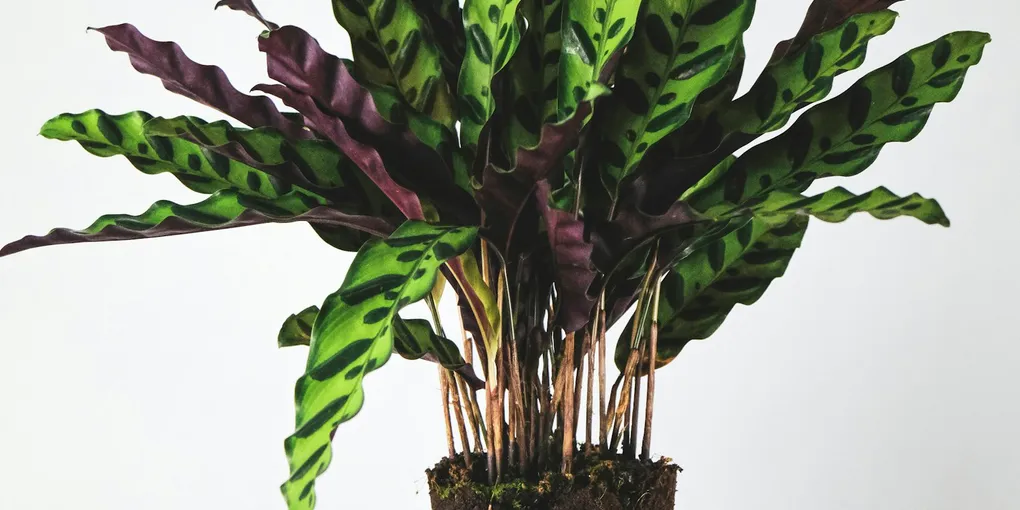
How to Care for a Rattlesnake Plant
The rattlesnake plant (Calathea lancifolia, also sold under its updated name Goeppertia insignis) is one of the more recognizable calatheas — long, narrow, wavy-edged leaves in pale green with dark oval blotches running along the midrib, and a deep purple underside that shows whenever a leaf shifts. It’s a different species from the round-leafed calathea orbifolia, but it shares the same general temperament: attractive, a little demanding, and quick to complain about dry air or harsh tap water. If you’ve kept a prayer plant before, the routine here will feel familiar.
Light
Medium to bright indirect light is the target. A few feet back from an east-facing window, or a spot with filtered light from a sheer curtain, both work well. Direct sun bleaches the pattern and can scorch the leaf edges, while too little light leads to smaller new leaves and weaker markings. If growth stalls and leaves come in pale, move it somewhere brighter — just keep it out of direct rays.
Watering
Keep the soil evenly moist but not waterlogged. Let the very top of the soil dry out slightly between waterings, then water thoroughly and let it drain. This plant doesn’t like the extremes — a pot that dries out completely will show drooping, curled leaves within a day, and one that stays soggy invites root rot. A consistent rhythm matters more than any exact schedule.
Water quality
Rattlesnake plants are notorious for reacting to the chlorine, fluoride, and dissolved minerals in ordinary tap water, usually showing up as brown, crispy patches along otherwise healthy leaf edges. If you’re watering consistently and still seeing tip and edge burn, switch to filtered, distilled, or rainwater before troubleshooting anything else. See the best water for houseplants for a full breakdown of which options actually help.
Humidity
This is usually the deciding factor between a plant that thrives and one that just survives. Rattlesnake plants want humidity noticeably above typical indoor levels — 50% or higher is a reasonable target. Bathrooms, kitchens, and grouped plant shelves tend to run more humid naturally; elsewhere, a humidifier makes the biggest difference. A pebble tray helps a little at the leaf surface but won’t raise humidity in the room. See how to increase humidity for houseplants for practical setups.
Soil and pot
Use a light, well-draining mix that still retains some moisture — a standard potting soil cut with perlite and a handful of orchid bark works well. Always use a pot with a drainage hole; this plant wants steady moisture, not standing water sitting at the roots.
Toxicity
The rattlesnake plant is non-toxic to cats and dogs, which makes it a solid pick if you want showy foliage without worrying about curious pets nibbling it. See pet-safe houseplants for cats and dogs for more options along the same lines.
Common problems
Leaves curling or rolling up is the single most common complaint, and it’s almost always the plant asking for water or humidity. Calathea leaves do shift position naturally through the day as part of their light-tracking rhythm, but a leaf that stays tightly curled for more than a day is a stress signal, not normal movement.
Brown, crispy edges or tips point to low humidity or mineral buildup from tap water more often than underwatering. Try filtered water and a humidity boost before anything else.
Yellowing lower leaves usually mean overwatering. Check that the pot drains freely and that the soil is drying slightly at the surface between waterings rather than staying wet throughout.
Faded or washed-out patterning is typically a light problem — either too much direct sun bleaching the leaves, or so little light that new growth comes in weak and less contrasted. Move the plant to a spot with strong, indirect light and watch the next few leaves for improvement.
No rattle-like pattern on new leaves is rare but can happen with low light or stress; it usually corrects itself once light and humidity are dialed in, since the plant needs enough energy to produce strong pigmentation on each new leaf.