How to Care for a Polka Dot Plant (Hypoestes phyllostachya)
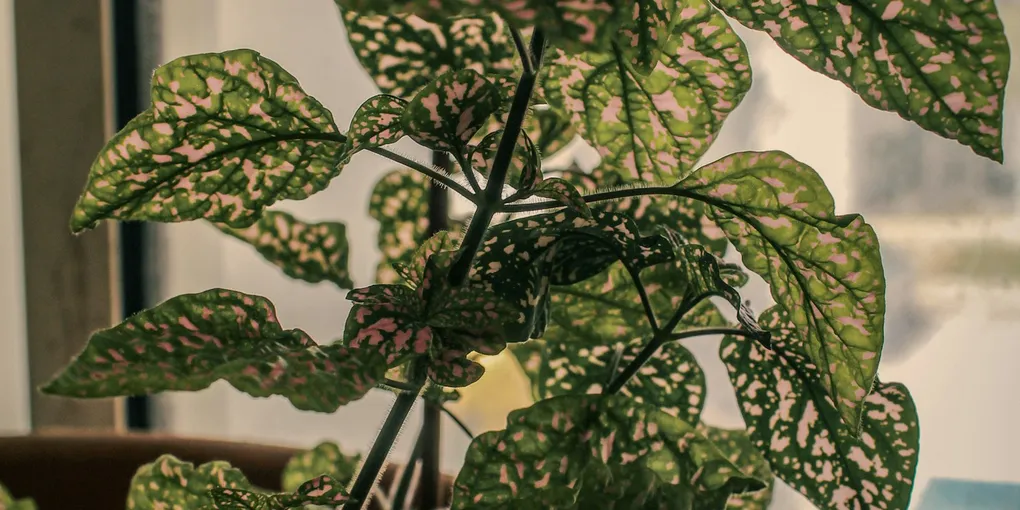
Hypoestes phyllostachya gets its common name from the leaves — green foliage splashed with irregular spots of pink, white, or red, depending on the cultivar. It’s a small, low-growing plant that’s popular on windowsills and in mixed planters, and it’s often sold alongside fittonia as a compact, colorful terrarium plant, though the two have different care needs underneath the similar look. Polka dot plant is short-lived by nature — it tends to get woody and unproductive after a year or two even with good care — and it grows fast and leggy if you don’t stay on top of pinching it back. Neither of those is a sign you’re doing something wrong; they’re just how this plant behaves.
Light
Bright, indirect light gives you the most vivid spots. Too little light and the coloring fades toward plain green, since the plant puts its energy into chlorophyll instead of the pink or white pigment that makes the spots stand out. A few hours of gentle direct sun, like an early morning east-facing window, is fine and can even deepen the color, but hot afternoon sun through a south- or west-facing window will scorch the thin leaves. See how much light do houseplants need for help judging what a given window actually provides.
Watering
Keep the soil lightly moist and water again once the top inch starts to dry out — this plant doesn’t like going bone dry the way a succulent or pothos does. Underwatered polka dot plants wilt dramatically and quickly, with the whole plant drooping within a day of missing a watering. A thorough soak usually brings it back within a few hours, but repeated wilting stresses the plant and shortens an already short lifespan, so it’s worth watering on a schedule rather than waiting for the droop as your cue. At the same time, don’t let the pot sit in standing water — soggy soil rots the roots just as fast as it does in any other houseplant.
Humidity
Average room humidity is usually enough, but this plant does noticeably better with a boost, especially if the air in your home runs dry in winter. Higher humidity helps keep the leaf edges from crisping and supports the fast, bushy growth this plant is known for. Grouping it with other plants, running a humidifier nearby, or setting the pot on a pebble tray all help — see how to increase humidity for houseplants for practical methods.
Soil and pot
A standard, well-draining potting mix works fine — nothing specialized needed. What matters more is the pot: pick one with a drainage hole, since this plant wants soil that’s consistently moist but never waterlogged, and a pot with nowhere for excess water to go makes that balance much harder to hit. Polka dot plant also has a fairly shallow, compact root system, so it doesn’t need a deep pot; a wide, shallow container suits its growth habit better than a tall one.
Pruning
Left alone, polka dot plant stretches fast, with new growth reaching upward and outward while the lower stem goes bare and woody. Pinching it back is the fix, and it’s worth doing early and often rather than waiting until the plant already looks leggy. Pinch off the growing tip of each stem just above a leaf node every few weeks — this forces the plant to branch from lower down instead of just extending the same stem, which is what keeps it bushy and full rather than tall and sparse. If your plant has already gotten leggy and thin at the base, a harder cutback usually brings it back better than light trimming does; see how to fix a leggy houseplant for the general approach. Save the pinched tips — they root easily in water or moist soil if you want more plants, since polka dot plant is easy to start over from cuttings once the parent gets too woody to save.
Toxicity
Polka dot plant is considered non-toxic to cats and dogs, making it a reasonably safe choice for homes with curious pets. See pet-safe houseplants for cats and dogs for more options if you’re building out a pet-friendly plant collection.
Common problems
Faded, mostly green leaves with dull spots almost always trace back to low light. Move the plant somewhere brighter and the next flush of leaves should come in with stronger color.
Sudden wilting is this plant’s classic underwatering signal. A good soak should perk it back up within a few hours; if it doesn’t recover, check the roots for rot instead of watering again.
Leggy, sparse stems with leaves only near the tips mean it’s overdue for a pinch. Regular pinching prevents this better than trying to fix it after the fact, but a hard cutback will still bring a leggy plant back.
Plant looking tired and woody after a year or so of otherwise good care is often just this plant reaching the end of its natural lifespan rather than anything you did wrong. Take cuttings and start a fresh plant rather than trying to nurse the old one indefinitely.