How to Care for a Fittonia (Nerve Plant)
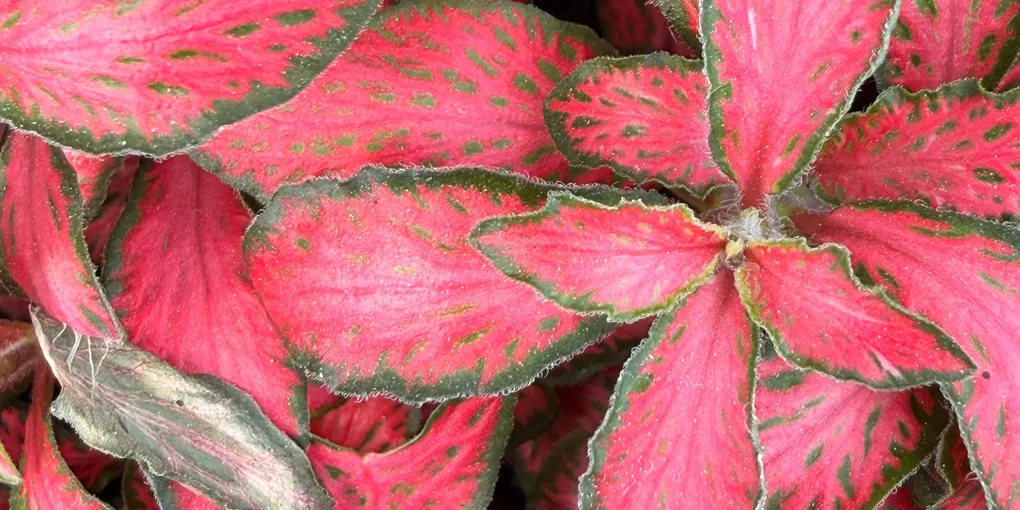
Fittonia albivenis is grown for one thing: the vein pattern. Every leaf is netted with bright pink, white, or red lines running through deep green, which is why it’s sold as the nerve plant or mosaic plant depending on the shop. It’s also famous for a party trick nobody actually wants — the moment it gets thirsty, the whole plant collapses into a flat, wilted heap, looking completely dead within hours. Water it and it’s usually standing back up within the hour. That drama is useful as a warning sign once you know to read it, but Fittonia is also one of the few common houseplants that genuinely wants to stay moist and humid rather than drying out between waterings, which trips up people used to a “let it dry out” routine.
Light
Bright, indirect light is what Fittonia wants — a spot near an east-facing window, or a few feet back from a brighter south- or west-facing one. Direct sun is a real hazard here: the leaves are thin and delicate, and even a short stretch of hot direct sun will scorch them, leaving crisp brown patches that don’t recover. Fittonia will also tolerate lower light better than most patterned houseplants, but the trade-off is a duller, less vivid pattern — the pink and red tones especially fade toward a flatter green in low light. If you want the color at its most intense, bright indirect is worth prioritizing.
Watering
This is the one place Fittonia breaks the usual houseplant rules: keep the soil consistently moist, not allowed to dry out between waterings. Most houseplants want the top inch or two to dry before the next watering; Fittonia doesn’t. Let it go dry and you’ll see the dramatic, sudden wilt this plant is known for — leaves and stems collapse flat, sometimes within a single day of missing a watering. A good soak usually brings it back within an hour or two, so an occasional wilt isn’t fatal, but treat it as a warning rather than a routine watering method. Repeated wilt-and-recover cycles stress the plant over time and shorten its lifespan, so it’s worth getting ahead of rather than waiting for the collapse each time. See watering houseplants the right way for how to judge soil moisture by feel so you can water before it wilts rather than after.
Soil and pot
Use a mix that’s well-draining but still holds onto moisture — a standard peat or coco coir based potting mix works, cut with a little perlite for drainage. A drainage hole is still important: Fittonia wants consistently moist soil, not waterlogged soil, and those are different things. Soil that’s constantly saturated rather than just damp will rot the roots even though the plant also hates drying out — the target is a sponge that’s always damp, never soggy and never bone dry.
Humidity
Fittonia needs humidity well above what a typical home offers to really thrive — this is arguably a bigger factor than watering. The RHS houseplant pages cover the same high-humidity needs for terrarium plants if you want a second take. In average dry room air, it struggles no matter how carefully you water, which is why it’s so often sold and grown in closed terrariums, glass cases, or bottle gardens where humidity stays high on its own. If you’re keeping it out in the open, running a humidifier nearby, grouping it with other plants, or placing it in a naturally humid room like a bathroom all help; see how to increase humidity for houseplants for methods that actually move the needle, and does misting help humidity if you’re relying on a spray bottle, since misting alone won’t get you there. See also the best houseplants for bathrooms if a steamy bathroom is your best available spot.
Toxicity
Fittonia is non-toxic to cats and dogs, making it a safe choice for a terrarium or shelf in a home with pets. See pet-safe houseplants for cats and dogs for more options if you’re building out a pet-friendly collection.
Common problems
Crispy, brown leaf edges are the single biggest challenge with this plant, and they almost always come down to low humidity. Check your humidity setup before anything else — this is the one issue that watering alone can’t fix.
Collapsed, flat, wilted look is Fittonia’s signature underwatering signal. Water thoroughly and it should perk back up within an hour or two; if it doesn’t recover after a good soak, check the roots for rot rather than assuming it just needs more water.
Mushy stems or a wilted look that doesn’t improve after watering points the other direction — root rot from soil that’s stayed waterlogged rather than just moist. Both underwatering and overwatering can leave the plant looking limp, so check the roots before assuming it just needs more water; firm, pale roots mean the problem is dryness, brown and mushy ones mean rot.
Leggy, stretched stems with gaps between leaves mean the plant is reaching for more light. Move it closer to a bright window and the next round of growth should come in tighter.