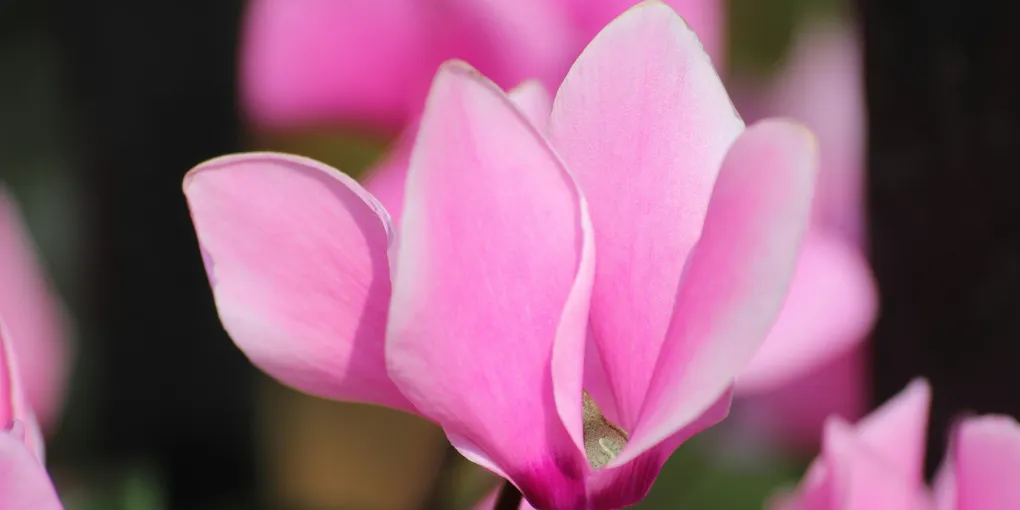
How to Care for a Cyclamen
Florist’s cyclamen (Cyclamen persicum) is the potted plant with heart-shaped leaves and butterfly-like flowers that shows up in grocery stores every winter. It doesn’t behave like a typical houseplant — it blooms in the cooler months, wants water kept off its crown, and then dies back to nothing for a while each year. None of that means it’s dying; it’s just cyclamen being cyclamen. Once you know the pattern, it’s an easy plant to keep blooming year after year.
Light
Cyclamen wants bright, indirect light — an east-facing windowsill or a spot a few feet back from a south or west window works well. Direct sun, especially through glass in the afternoon, is too harsh and will scorch the leaves or shorten the life of the blooms. In the darker winter months when cyclamen is actively flowering, move it as close to a bright window as you can without putting it in direct rays; more light during bloom season means more flowers. For a general sense of what “bright indirect” looks like in a real room, see how much light do houseplants actually need.
Watering
This is the detail that trips people up. Cyclamen grows from a tuber (a flattened, potato-like storage structure) that sits partly at or above the soil surface, and water pooling on top of that tuber or in the crown where the leaf stalks emerge causes rot fast. Water from the bottom instead: set the pot in a saucer of room-temperature water for 15-30 minutes, let the soil pull up what it needs through the drainage hole, then remove it and let it drain fully. For the method in more detail, see how to bottom water houseplants.
If you’d rather water from above, pour slowly around the edge of the pot and keep water off the tuber and foliage entirely. Either way, check the soil before watering again — cyclamen likes to stay lightly moist while actively growing and flowering, but never soggy. Letting it dry out completely causes sudden wilting, while a pot that’s constantly wet invites the rot that kills cyclamen faster than almost anything else. See watering houseplants the right way for the judgment calls that carry over to any plant.
Soil and pot
Use a well-draining potting mix — a standard peat- or coir-based mix cut with perlite is fine — in a pot with a drainage hole. Cyclamen actually does best a little snug in its pot; a container that’s too roomy holds excess moisture around the tuber for longer than the roots can use it up, which raises the odds of rot. When you repot (typically right after the dormant period, before new growth restarts), plant the tuber so the top third sits above the soil line rather than burying it completely.
Humidity
Cyclamen appreciates moderate humidity and cooler air — it’s a genuinely different environment than most tropical houseplants want. Average room humidity is usually enough, but keep it away from radiators, heating vents, and other warm, dry spots, which shorten bloom life and stress the plant. A cool room in the 50-65°F (10-18°C) range, such as an unheated hallway or a room kept cooler overnight, actually extends flowering. Skip misting the foliage, since water sitting on the leaves or crown carries the same rot risk as overhead watering.
Toxicity
Cyclamen is toxic to cats and dogs, particularly the tuber, which contains the highest concentration of irritating compounds. Ingestion can cause drooling, vomiting, and in larger amounts more serious symptoms. Keep the pot out of reach of pets that dig or chew, or choose from pet-safe houseplants for cats and dogs instead.
Dormancy and after bloom
Cyclamen’s growth cycle runs opposite to most houseplants: it grows and flowers through fall and winter, then goes dormant in spring as the weather warms. As blooms finish and leaves start yellowing on their own, cut back on watering — that’s the plant winding down, not a problem to fix. Eventually most or all of the foliage dies back and the plant can look completely dead above the soil; this is expected. Move the pot somewhere cool and dim and water just enough to keep the tuber from fully drying out, then leave it alone for a few months. New leaves emerging from the tuber in late summer or fall mark the end of dormancy — resume regular watering and bright light, and the cycle starts again.
Common problems
Yellowing leaves and dropped flowers during spring are the plant entering its normal dormancy, not a sign of decline — cut back on water and let it rest rather than trying to compensate with fertilizer or more light.
Crown or tuber rot comes from water sitting on top of the tuber or in the crown, usually from top watering or misting. Switch to bottom watering and keep the crown dry; rot that’s already set in is often unrecoverable, so prevention matters more than treatment here.
Wilting despite moist soil can also point to rot at the tuber rather than underwatering — pull the plant gently to check that the tuber is still firm, not soft or mushy, before adding more water.
No blooms, or blooms that fade quickly usually trace back to too much heat. Cyclamen kept near a heating vent or in a warm room flowers poorly and the blooms it does produce won’t last; moving it somewhere cooler and brighter is the fix, not fertilizer.
Leaves curling or looking stressed in a warm, dry room is often just the plant reacting to heat rather than a pest or watering issue — see why are my houseplants’ leaves curling if you want to rule out other causes first.