How to Build a Terrarium
A terrarium is really just a plant grown inside glass, but the glass changes the rules. Whether it’s sealed or left open determines how much humidity builds up inside, which in turn determines which plants will actually thrive rather than rot or wither. Get that one decision right first, and the rest of the build — container, layers, plant choice — mostly falls into place.
Open vs. closed
A closed terrarium — a jar or container with a lid — traps moisture inside. Water evaporates from the soil, condenses on the glass, and drips back down, creating a small self-watering micro-climate that rarely needs topping up. That makes it a good home for humidity-loving tropical plants like ferns and fittonia, which would otherwise struggle with dry indoor air. It’s a poor home for anything that wants to dry out between waterings.
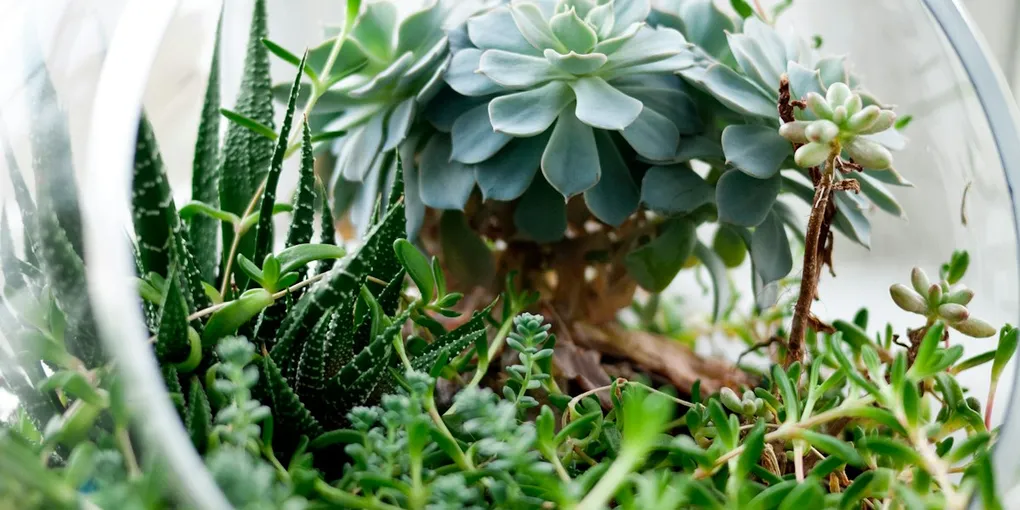
An open terrarium — a bowl, an open glass vessel, anything without a lid — lets air move through and moisture escape normally. That suits succulents, air plants, and small cacti, which need airflow around their roots and would rot quickly in the trapped humidity of a sealed jar. Decide which type you’re building before you buy a container or a single plant — mixing a closed-terrarium plant into an open one, or vice versa, is the most common reason a terrarium fails within weeks.
Choosing a container
Clear glass is what makes a terrarium a terrarium — you want to see the layers and the plants, not just look at them from above. For a closed terrarium, look for something with a lid or a narrow enough neck to trap humidity: a apothecary jar, a fish bowl with a glass lid, or a purpose-built terrarium case. For an open terrarium, a wide, shallow bowl or an open-top glass vessel works better, since it maximizes airflow and makes planting and maintenance easier.
Building the base layers
Most terrarium containers don’t have drainage holes, so the layering does the job a drainage hole normally would. Start with an inch or two of small pebbles or gravel at the bottom — this gives excess water somewhere to go besides sitting directly against the roots. An optional thin layer of activated charcoal on top of that helps keep the water from souring and controls odor, which matters more in a closed terrarium where nothing evaporates away. On top of both, add a potting mix suited to whatever you’re planting — see the best soil mix for houseplants for the general logic, though a terrarium mix should usually be shallower and lighter than what you’d use in a full-size pot.
Choosing plants
Pick small, slow-growing plants — a terrarium is a long-term commitment to a fixed amount of space, and anything that grows fast will outgrow the container within a season. For a closed, humid terrarium, small ferns, moss, fittonia, and other plants that like consistent moisture and lower light are good fits. For an open terrarium, small succulents, a single air plant tucked among rocks, or a slow-growing miniature cactus all do well without the crowding or rot risk a closed environment would create. Avoid mixing plants with very different water needs in the same container regardless of type — one will always be over- or under-served.
Planting and watering
Plant lightly rather than densely — roots need room, and a terrarium that looks sparse at first fills in fast enough once plants settle in. Water a closed terrarium sparingly at planting, then leave it alone; the sealed environment recycles what moisture is already there, and topping up too often is the fastest way to end up with a soggy, moldy mess. An open terrarium doesn’t get that benefit — treat it like any other planted container and check the soil regularly, since nothing is trapping moisture in for you. See how to increase humidity for houseplants if you’re building a closed terrarium and want to understand what’s actually happening with the water cycle inside the glass.
Common problems
Fogging or visible mold inside a closed terrarium almost always means it’s too wet. Remove the lid for a day or two to let excess moisture evaporate, then reseal and space out future waterings.
Plants rotting in a closed terrarium usually comes down to the wrong plant choice for the humidity level, or overwatering right at planting before the container has found its balance. A Venus flytrap or other plant with more specific moisture needs is worth researching individually rather than assuming any tropical plant will adapt.
Leggy, stretched growth in either type of terrarium points to insufficient light. Terrariums still need bright, indirect light to grow well — just not direct sun, which can heat a closed glass container enough to cook the plants inside it.