How to Care for a Venus Flytrap
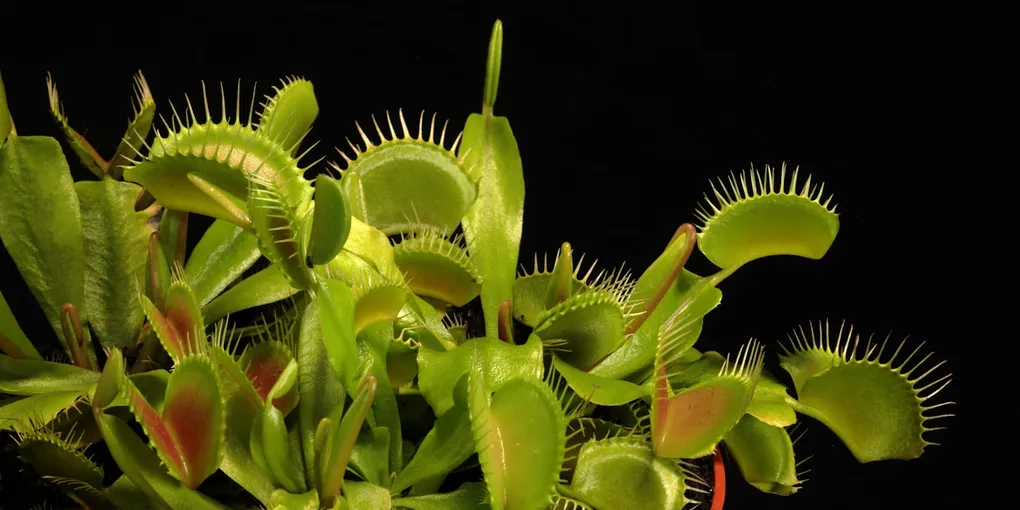
Venus flytrap (Dionaea muscipula) is one of the most recognizable houseplants there is, thanks to the hinged, snap-shut traps it uses to catch insects. It’s also one of the most commonly killed, not because it’s fragile in any general sense, but because most of what people already know about watering and feeding houseplants is exactly wrong for this one. Get a few specific things right and it’s a genuinely long-lived, low-drama plant.
Light
Venus flytrap wants as much bright light as you can give it — ideally several hours of direct sun a day, or a strong grow light if a bright enough window isn’t available. In the wild it grows in open, sunny bogs with no canopy overhead, and low light is one of the most common reasons an indoor flytrap declines: traps stay small, coloring fades to plain green instead of the reddish interior a healthy trap develops, and the plant generally weakens over time. See how much light do houseplants need for help judging whether a spot is actually bright enough, and don’t assume a windowsill that looks bright to you is bright enough for this plant specifically.
Water — and why it has to be distilled
This is the single most common way people accidentally kill a Venus flytrap. It evolved in mineral-poor bog water and is extremely sensitive to the chlorine, fluoride, and dissolved minerals in ordinary tap water — exposure builds up over time and shows up as blackened, dying leaves and a generally declining plant, even though everything else about its care looks right. Use distilled water, reverse osmosis water, or rainwater exclusively. See the best water for houseplants for more on why tap water affects sensitive plants this way — a Venus flytrap is far more sensitive than any plant mentioned there.
Watering method is also inverted from typical houseplant advice. Instead of letting the soil dry out between waterings, keep it constantly wet — the standard approach is the tray method: sit the pot in a shallow tray with about an inch of water and keep that tray topped up at all times, letting the soil wick moisture up from below rather than watering from the top. Letting a Venus flytrap’s soil dry out, even briefly, stresses the plant far more than the constantly wet soil that would rot most other houseplants.
Soil
Use a nutrient-free, acidic mix — a standard blend is straight sphagnum peat moss combined with perlite or coarse sand, in roughly equal parts. Never use regular potting soil, which contains minerals and nutrients this plant isn’t adapted to handle, and never add fertilizer to the soil or water. Venus flytraps get all the nutrients they need from digesting insects, and fertilizer in the soil can damage or kill the roots outright.
Feeding
A Venus flytrap kept somewhere with natural insect access — near an open window or outdoors for part of the year — will generally catch enough on its own without any help from you. If it’s kept somewhere with no bugs at all, you can feed it a live insect roughly the size of the trap every few weeks during the growing season, but never feed it meat, cheese, or other human food — it can’t digest those and the trap will simply rot instead of closing around a meal.
Resist the urge to trigger traps manually just to watch them close. Each trap can only close and reopen a limited number of times (generally three to five) before it stops working and dies off, and a trap that closes without catching anything to digest has burned one of those cycles for nothing.
Dormancy
Venus flytraps need a winter dormancy period to stay healthy long-term, similar to many outdoor perennials — shorter days, cooler temperatures (down to around 35-50°F/2-10°C), and reduced growth for a few months. See winter houseplant care for the general idea of easing a plant into a seasonal slowdown, though a flytrap’s dormancy needs are more specific and pronounced than most houseplants. Skipping dormancy for a year or two won’t kill the plant outright, but it steadily weakens it, and most flytraps that decline for no obvious reason after a year or more of otherwise correct care are missing this rest period.
Toxicity
Venus flytrap is non-toxic to cats and dogs, making it a safe choice even for households with curious pets — see pet-safe houseplants for cats and dogs for other safe options if you’re building out a pet-friendly collection.
Common problems
Traps turning black one at a time is usually normal, not a crisis — individual traps have a limited lifespan and naturally blacken and die after catching a few meals or after enough open-close cycles, while the plant keeps producing new ones. Trim off blackened traps with clean scissors once they’re fully dead.
Widespread blackening across the whole plant points to a bigger problem — most often tap water exposure, fertilizer in the soil, or a hard frost during dormancy. Check what’s changed recently and correct it; the plant can often regrow from the base even after losing most of its visible growth, provided the root system is still alive.
Traps that won’t reopen after being triggered without catching food are usually just at the end of their limited number of open-close cycles rather than a sign of disease — this is expected and not something to try to fix.
Weak, small traps with faded color point to insufficient light. Move the plant somewhere brighter or add a stronger grow light before assuming anything else is wrong.