Common Houseplant Myths, Debunked
Houseplant advice spreads fast because most of it sounds reasonable — a lot of these myths have a grain of truth buried in them, which is exactly why they stick around. The trouble is that a half-true rule applied confidently can do more damage than not knowing anything at all. Here’s what’s actually going on behind nine of the most common ones.
“Misting increases humidity”
Misting gives a plant’s leaves a brief damp coating, but the humidity boost lasts minutes, not hours, and doesn’t meaningfully change the air around the plant the way an actual humidity source does. It’s not harmful, and some plants enjoy the direct moisture, but if you’re misting instead of addressing real humidity needs, you’re solving the wrong problem. See does misting houseplants increase humidity for the full breakdown and what actually works instead.
“Yellow leaves always mean overwatering”
Overwatering is a common cause, but it’s far from the only one. Yellow leaves can also mean underwatering, a nutrient deficiency, natural aging of older leaves, too much direct light, or a handful of other issues. Treating every yellow leaf as an overwatering problem means you’ll sometimes water even less on a plant that’s actually thirsty or hungry. See why are my plants’ leaves turning yellow for how to actually narrow down the cause before changing anything.
“Letting tap water sit out overnight removes everything harmful”
This one only does half the job. Sitting water out for a day does let chlorine off-gas, but chloramine and fluoride — the two other common tap water additives that bother sensitive plants — don’t evaporate at all. If your water utility uses chloramine, or if you’re dealing with a fluoride-sensitive plant like a dracaena or spider plant, letting water sit out won’t fix the problem you think it’s fixing. See the best water for houseplants for what actually removes each one.
“Plants need to be watered on a fixed schedule”
A calendar reminder is a convenient habit, but it has nothing to do with how fast soil actually dries out — and that rate changes constantly with season, light, humidity, pot size, and the plant itself. The same plant might need water every 5 days in summer and every 3 weeks in winter. Watering on a fixed schedule regardless of these shifts is one of the most common ways people accidentally overwater in the off-season. See watering houseplants the right way for judging by soil feel instead.
“Repot a new plant the moment you bring it home”
Repotting is itself a stressor — disturbed roots, fresh soil, sometimes a size change all at once — and doing it on top of the stress of a move from nursery to home just stacks two adjustments together. Most plants do better given a few weeks to settle into their new environment in the pot they arrived in before you repot, unless the plant is visibly rootbound or sitting in poor soil. See how to acclimate a new houseplant for the better sequence.
“Brown leaf tips mean the plant needs more water”
Brown, crispy tips get blamed on underwatering by default, but they’re just as often caused by low humidity, mineral or fluoride buildup from tap water, or a buildup of fertilizer salts in the soil. Watering more in response to brown tips that are actually a humidity or water-quality issue doesn’t fix anything — it just adds a second problem on top of the first.
“Bigger pots help plants grow faster”
Sizing up dramatically feels generous, but a pot much larger than the current root ball holds excess moisture far from where roots can reach it, and that moisture can sit wet for a long stretch after watering. The result is often a higher root rot risk instead of faster growth. Sizing up gradually — one size up at a time — gives roots room to grow into fresh soil without leaving so much of it wet and unused. See how to choose the right pot size for houseplants for the actual sizing logic.
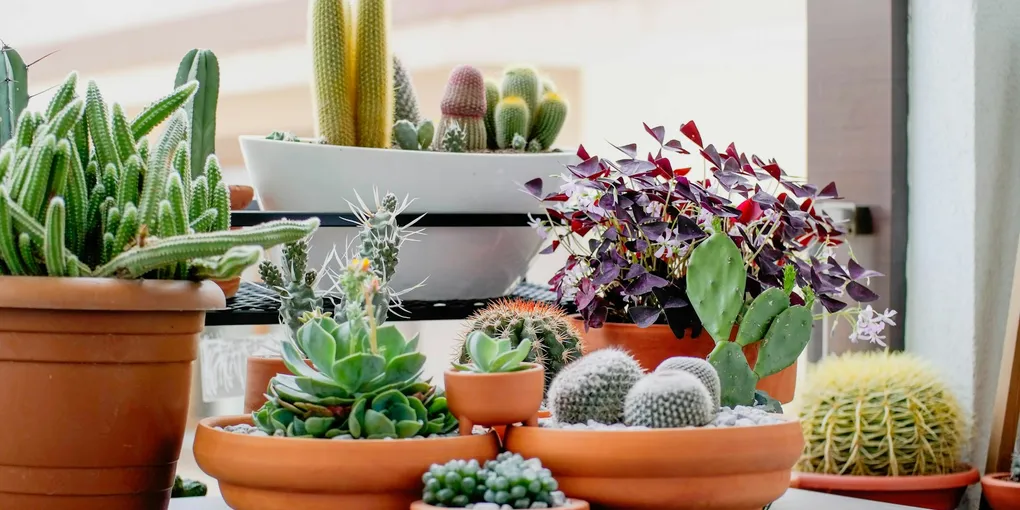
“Cacti and succulents never need water”
Their reputation for surviving neglect gets exaggerated into “don’t water them” territory, but they still need regular watering — just far less frequently than a typical foliage houseplant, and with a full dry-out in between. The common failure mode with these plants is actually underwatering them into a slow, quiet decline, not overwatering, even though overwatering is what kills them fastest when it happens. See how to care for succulents for an actual watering rhythm.
“Grouping plants together always raises humidity meaningfully”
Like misting, this has a kernel of truth that gets overstated. A cluster of two or three houseplants a few feet apart on an open shelf doesn’t raise the humidity around them in any meaningful way. Grouping only makes a real difference when plants are packed closely together in a way that traps humid air between them, or combined with an actual humidity source like a pebble tray or humidifier — the grouping alone isn’t doing the work people credit it with.
Why these myths persist
Most of these aren’t fabricated — they’re oversimplified versions of something that’s sometimes true. Misting does add moisture, briefly. A bigger pot does mean more room, eventually. The problem is treating the simplified version as a universal rule instead of understanding the underlying mechanism, which is what actually tells you when a piece of advice applies to your plant and when it doesn’t. When in doubt, look up what a specific plant actually needs rather than leaning on a generic rule that happens to be repeated often.