How to Care for a Philodendron 'Painted Lady'
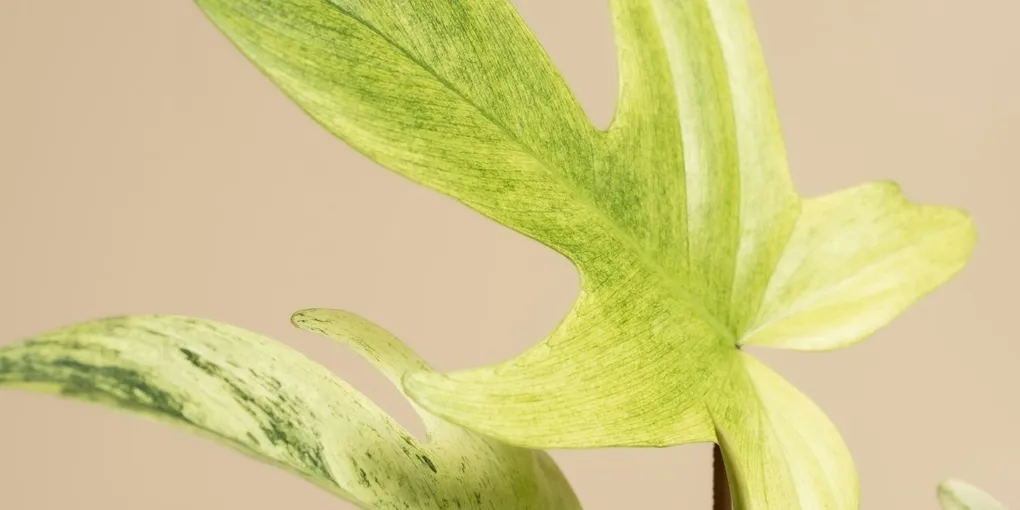
Philodendron ‘Painted Lady’ is a self-heading Philodendron hybrid, meaning it grows upright from a central crown rather than climbing or trailing. Its leaves emerge a warm lime to chartreuse green, speckled and marbled throughout with darker green flecks and streaks that give each leaf an almost hand-painted look, which is where the cultivar gets its name. It’s closely related to Philodendron Prince of Orange — both are self-heading erubescens-type hybrids with a similar growth habit — but where Prince of Orange pushes new leaves in a bold orange-copper that matures to green, Painted Lady’s new growth starts life a lime or yellow-green and stays in that lighter, mottled color range rather than passing through orange at all.
Light
Bright, indirect light is what keeps the chartreuse color saturated and the dark green marbling distinct. In lower light, new leaves come in a duller, more uniform green and lose much of the speckled contrast that makes this plant worth growing. A spot a few feet from a south- or west-facing window, or closer to an east-facing one, works well. Avoid harsh direct sun, which can scorch the lighter-colored leaf tissue faster than it would a plain green leaf — variegated and light-colored foliage generally has less natural protection than deep green leaves.
Watering
Let the top 1-2 inches of soil dry out before watering thoroughly until water runs from the drainage hole. This plant is fairly forgiving but doesn’t like sitting in soggy soil for long stretches. See watering houseplants the right way for a feel-based approach rather than a fixed schedule.
Soil and pot
A loose, well-draining aroid mix works best — standard potting soil cut with perlite and orchid bark. See the best soil mix for houseplants for ratios. Since Painted Lady is self-heading rather than a climber, a wider, shallower pot suits its rosette growth habit better than a tall one, and a drainage hole is essential either way.
Humidity
Average household humidity is generally fine, though 40-50% or higher produces glossier, larger leaves with crisper color contrast. See how to increase humidity for houseplants for practical ways to raise it if leaves look dull or edges start browning.
Fertilizer
Feed monthly with a balanced liquid fertilizer diluted to half strength during spring and summer, and skip fertilizing in fall and winter when growth slows down naturally. See how to choose the right fertilizer for more.
Toxicity
Philodendron Painted Lady is toxic to cats and dogs. It contains calcium oxalate crystals that cause oral irritation, drooling, and swelling if chewed, so keep it out of reach of curious pets.
Common problems
New leaves emerging plain green with little speckling almost always means the plant needs more light. Move it to a brighter spot before changing anything else.
Yellowing older leaves in small numbers is normal as a self-heading plant sheds its lowest, oldest leaves over time. Widespread yellowing across many leaves usually points to overwatering — let the soil dry out further and check that the pot drains freely.
Brown, crispy leaf tips or edges typically signal low humidity or inconsistent watering. Raise humidity and aim for a steadier watering rhythm.
Leggy growth with elongated stems between leaves is a light problem. Since this is a self-heading variety rather than a climber, noticeably stretched growth is a clear sign it needs brighter conditions.