How to Care for a Jelly Bean Plant
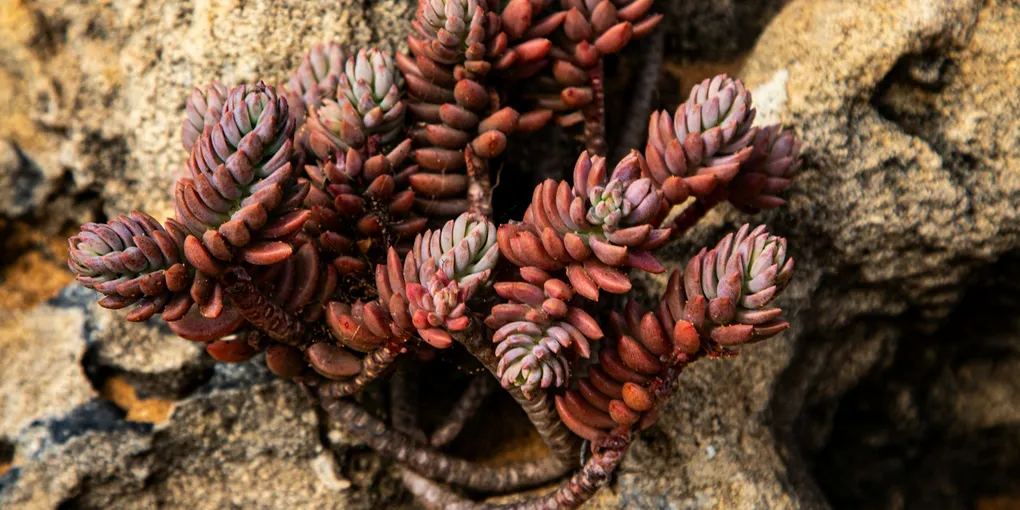
The Jelly Bean Plant (Sedum rubrotinctum), also called Pork and Beans, is a trailing succulent with plump, oval leaves that genuinely look like a handful of jelly beans scattered along its stems. In bright light, the leaf tips flush a deep coppery red or pink, while shadier growth stays mostly green. It’s an easy, forgiving succulent overall, though its leaves are notoriously prone to dropping off at the slightest bump — which happens to be the same trait that makes it one of the easiest houseplants to propagate.
Light
Bright light, including several hours of direct sun, brings out the best red coloring on the leaf tips. A south- or west-facing windowsill is ideal. In lower light, the plant stays mostly green and tends to stretch out with more space between leaves. See how much light do houseplants need for more on matching light to a plant’s needs.
Watering
Let the soil dry out completely between waterings, then water thoroughly. This is a genuinely drought-tolerant succulent, and overwatering is the most common way it runs into trouble — soft, translucent, or mushy leaves are a clear sign of too much water. See how to care for succulents for a general watering approach that works well for this plant too.
Soil and pot
A fast-draining succulent or cactus mix is essential, or regular potting soil cut generously with perlite or coarse sand. Make sure the pot has a drainage hole — standing water around the roots leads to rot quickly in a plant this sensitive to overwatering.
Temperature
Average room temperature is fine, but this plant doesn’t tolerate frost. If you move it outdoors for summer, bring it back in before nighttime temperatures drop toward freezing.
Propagation
Jelly Bean Plant propagates readily from both stem cuttings and individual leaves that fall off — this is part of why it spreads easily once established. Let a dropped leaf or cutting callus over for a day or two, then set it on top of dry succulent soil; roots and a tiny new rosette will form at the base over the following weeks without needing to be buried. See how to propagate houseplants from cuttings for more on the general process.
Toxicity
Sedum species, including the Jelly Bean Plant, are generally considered non-toxic to cats and dogs, though it’s still a good idea to discourage pets from eating any houseplant. See pet-safe houseplants for cats and dogs for more options if pet safety is a priority in your home.
Common problems
Leaves dropping off with light contact is normal for this species rather than a sign of poor care — it’s actually the plant’s main method of vegetative propagation in the wild.
Soft, mushy, or translucent leaves point to overwatering. Let the soil dry out fully and check that the pot drains freely before watering again.
Leggy growth with widely spaced leaves and less red coloring means the plant needs more light. Move it somewhere brighter, ideally with direct sun for part of the day.
Wrinkled or shriveled leaves signal underwatering. Water thoroughly and the leaves should plump back up within a few days.