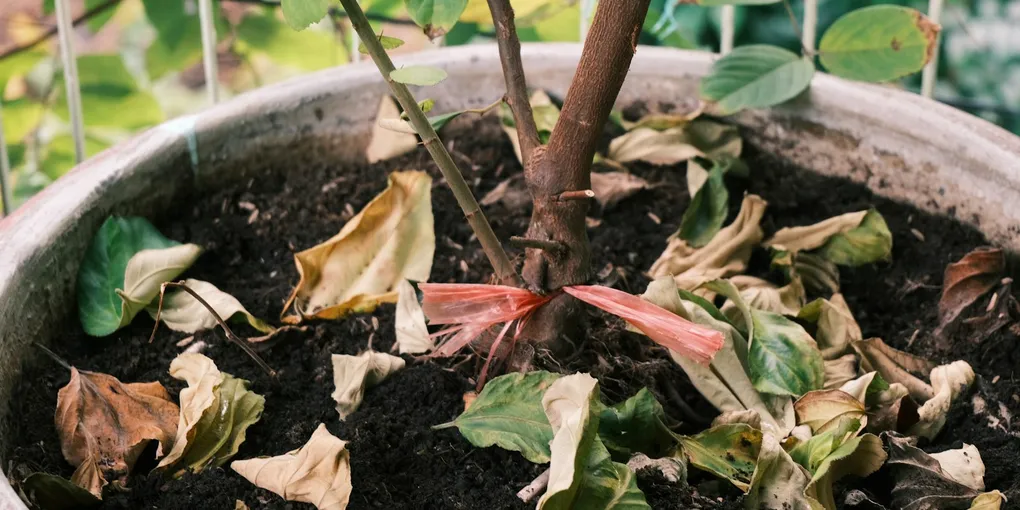
How to Revive a Dying Houseplant
A houseplant that looks like it’s dying — collapsed, dropping leaves, going brown at the edges — is stressful to look at, but it’s rarely as far gone as it looks. Most of the time there’s one identifiable cause, and most of the time there’s still enough living tissue to work with. The key is figuring out what’s actually wrong before you start cutting, watering, or repotting, since the wrong fix can finish off a plant that a right one would have saved.
First, check whether it’s actually dead
Before doing anything else, confirm how much of the plant is still alive. A plant that looks dead can still have plenty of life in its stems and roots.
Scratch test the stem. With a fingernail or the edge of a knife, scratch a small patch of bark on a main stem. Green or white tissue underneath means that section is alive. Brown, dry, and brittle underneath means that part is dead — work your way down the stem until you find live tissue, if any.
Check the roots. Gently tip the plant out of its pot and look at the root ball. Firm, white or light tan roots are healthy. Dark, mushy, or foul-smelling roots are dead or rotting — see how to identify and fix root rot for a closer look at what healthy versus rotted roots should look like and smell like.
Don’t judge by the leaves alone. A plant can drop every leaf it has and still recover from healthy stems and roots underneath. Leaves are the first thing to go under stress precisely because the plant sacrifices them to protect the rest of itself.
Work through the likely causes, in order
Root rot first. It’s the single most common reason a houseplant collapses suddenly, and it’s usually caused by soil that’s stayed wet for too long. If the roots are dark and mushy, this is almost certainly your answer — skip ahead to the triage steps below rather than troubleshooting further.
Watering pattern next. If the roots look fine, think back over the last few weeks. Wilting combined with consistently wet soil points one direction; wilting combined with bone-dry, pulling-away-from-the-pot soil points the other. See overwatering vs underwatering houseplants if you’re not sure which pattern matches what you’ve been doing.
Light mismatch. A plant slowly declining over weeks or months, rather than collapsing suddenly, is often sitting in the wrong light for its needs — too dark for what it wants, or scorching in direct sun it can’t handle. Check whether new growth is small, pale, or nonexistent, which usually points to insufficient light rather than a watering problem.
Pests. Look closely at the undersides of leaves and along stems for webbing, sticky residue, or small insects. An infestation can weaken a plant enough to look like it’s dying from something else entirely.
A recent change. A move, a draft from a door or vent, a new pot, or a shift in season can all send a plant into a stress response that looks dramatic but isn’t necessarily fatal on its own. If something changed shortly before the decline started, that’s a strong clue — and often means the fix is just time and stability rather than an aggressive intervention. Widespread yellowing around the same time is worth a look at why are my plants’ leaves turning yellow to narrow down the cause further.
Triage: what to actually do
Cut away dead and mushy material first. Using clean scissors or shears, trim back rotted roots and any mushy or blackened stem tissue until you reach firm, healthy material. Removing dead tissue stops rot from spreading into parts of the plant that are still viable.
Repot into fresh, dry soil if the roots were rotted. Old, waterlogged soil will just reinfect new roots. Use a fresh, well-draining mix and a clean pot — see how to repot a houseplant for the full process — and go easy on watering afterward until you see signs of new growth.
Move it to appropriate light if a mismatch was part of the problem, but do it gradually rather than jumping from deep shade into direct sun, which can shock an already-stressed plant further.
Hold off on fertilizer. A stressed, recovering plant can’t use the extra nutrients, and fertilizer salts on damaged roots can do more harm than good. Wait until you see clear new growth before feeding again.
Then wait. This is the hardest part. A plant recovering from a serious setback often looks unchanged for weeks before any new growth appears. Resist the urge to keep intervening — repeated repotting, moving, or watering “just in case” tends to slow recovery rather than speed it up.
When to let go of the whole plant and save what you can
If there’s no green or white tissue anywhere — every stem scratches brown, the roots are entirely dark and mushy — the plant itself isn’t salvageable, but that doesn’t always mean a total loss. Check for any small section, even a single healthy stem tip, that could be taken as a cutting. See how to propagate houseplants from cuttings for how to root one and start fresh. A plant that’s beyond saving as a whole can often still give you a second start from a single good cutting, which is usually a better use of your time than continuing to nurse a pot that has nothing left alive in it.