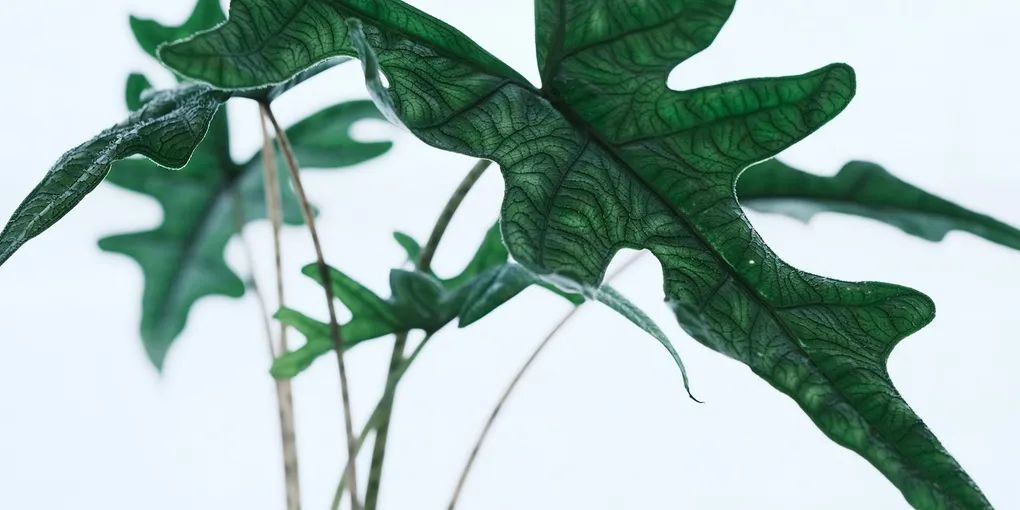
How to Care for an Alocasia
Alocasias have a reputation, and it’s mostly earned. Those arrow-shaped, deeply veined leaves on Alocasia amazonica (“Polly”) or the striped stems of Alocasia zebrina are stunning, but this is not a plant that thrives on neglect the way a pothos or snake plant does. It wants consistency, and it will sulk, drop leaves, or go dormant the moment conditions slip. None of that means you can’t keep one alive for years — it just means you should know what to expect before you’re panicking over a bare pot in January.
Light
Alocasias want bright, indirect light — more than most aroids tolerate. A spot near an east-facing window, or a few feet back from a south- or west-facing one, is ideal. Too little light and growth stalls, leaves come in small, and older leaves yellow and drop faster than new ones replace them. Direct midday sun, on the other hand, will scorch the leaves, leaving crispy brown patches. If your space only offers dim light, this is one plant where a grow light genuinely earns its keep.
Watering
Water when the top inch or two of soil has dried out, then water thoroughly until it runs from the drainage hole. Alocasias grow from a rhizome that rots easily in soggy soil, so the same overwatering mistakes that a hardier plant might shrug off can kill this one. But don’t swing too far the other way either — letting the soil go bone dry for extended periods causes the leaf edges to crisp and the plant to drop leaves in protest. Consistent, moderate moisture is the target, not a strict schedule. Always check the soil with a finger first.
Soil and pot
Use a loose, fast-draining mix — a standard houseplant soil mix cut with extra perlite or orchid bark works well, since Alocasia roots and rhizomes want airflow around them as much as they want moisture. A pot with a drainage hole is non-negotiable. Don’t oversize the pot “to give it room to grow” — Alocasias actually do better a little snug, since a large volume of soil holds moisture longer than the roots can use it, inviting rot.
Humidity
This is where Alocasias separate themselves from easier houseplants. They want humidity well above what most homes offer naturally — 50% or higher is a good target, and crispy, browning leaf edges are usually the first sign it’s too dry. A humidifier running nearby is the most reliable fix; see how to increase humidity for other options like pebble trays and grouping plants together. Misting alone doesn’t move the needle much and dries off too quickly to matter.
Winter dormancy
Here’s the part that catches people off guard: many Alocasias go dormant in fall and winter, especially as light levels and temperatures drop. Leaves yellow, droop, and eventually die back one by one, sometimes leaving nothing but a bare rhizome in the pot. This can look exactly like a dying plant, but for a lot of Alocasias it’s completely normal seasonal behavior, not a symptom of a care mistake.
During dormancy, cut back on watering significantly — the rhizome isn’t supporting active leaves and doesn’t need much moisture, and wet soil around a dormant rhizome is a rot risk. Keep it in a stable, warm spot out of cold drafts, resist the urge to fertilize, and be patient. New growth typically resumes in spring as light and temperatures increase. Don’t toss the pot just because it’s bare — check that the rhizome is still firm (not mushy or foul-smelling) before writing it off. For a broader look at how houseplants change through the cold months, see winter houseplant care.
Toxicity
Alocasias are toxic to cats and dogs (and to people, if eaten) — every part of the plant contains calcium oxalate crystals that cause intense oral irritation, swelling, and drooling if chewed. It’s rarely fatal but is genuinely unpleasant, so keep the plant well out of reach if you have pets that like to nibble leaves. If pet safety is a priority in your space, it’s worth browsing a list of pet-safe houseplants for alternatives to place at nose height.
Common problems
Crispy, browning leaf edges almost always point to low humidity, not underwatering. Check your humidity levels before you assume the soil is the issue.
Yellowing leaves during spring or summer (as opposed to expected winter dieback) usually mean overwatering or a pot that’s too large and staying wet too long. Confirm the soil is drying between waterings and that the pot drains freely.
No new growth for months during the growing season, rather than winter, often traces back to insufficient light or low humidity rather than anything wrong with watering. Move it closer to a bright window and raise the humidity before troubleshooting further.
Small brown or yellow spots with no clear pattern can be early signs of pests like spider mites, which Alocasias are somewhat prone to in dry indoor air. Check the undersides of leaves closely if spotting shows up.