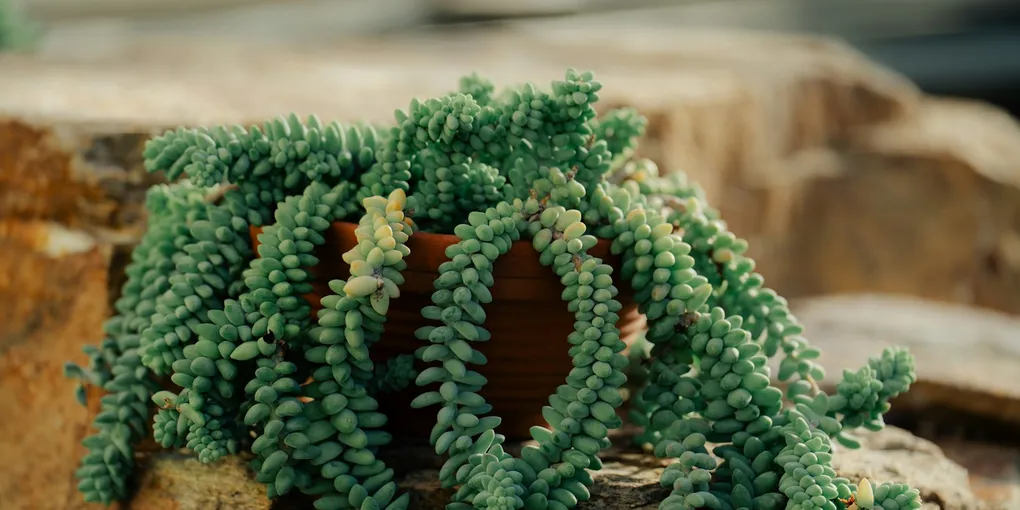
How to Care for a Burro's Tail
Burro’s tail (Sedum morganianum), also sold as donkey’s tail, is a trailing succulent covered in plump, teardrop-shaped leaves packed tightly along long, draping stems. Left to grow, those stems can trail two or three feet, making it one of the most striking hanging and trailing houseplants you can grow — provided you can keep its notoriously fragile leaves intact.
Light
Burro’s tail wants bright light, including several hours of direct sun, to keep its leaves plump and its color vivid. In lower light, the stems stretch out with leaves spaced further apart instead of growing in the dense, tightly packed rows that make this plant recognizable. A south- or west-facing window is usually ideal. If you’re moving a plant into more direct sun than it’s used to, do it gradually — a sudden jump from low light to full sun can scorch leaves that haven’t built up any tolerance.
Watering
Water like any other succulent: let the soil dry out completely between waterings, then water thoroughly. Those plump leaves are a water reservoir, which makes this plant far more tolerant of being underwatered than overwatered. Soil that stays damp is the fastest way to rot the stems, usually starting at the base where they meet the soil. See how to care for succulents for the broader watering approach this plant follows closely.
Soil and pot
Use a fast-draining succulent or cactus mix — regular potting soil holds too much moisture and will keep the roots wet longer than this plant wants. A pot with a drainage hole is essential. Because of how easily the leaves drop, it’s worth choosing a pot size and hanging spot you’re happy with from the start, since repotting or relocating the plant later means handling stems that are bound to shed leaves in the process.
Handle it as little as possible
The single biggest quirk of this plant is how easily its leaves detach. A light brush against a shelf, a doorframe, or your own hand is often enough to knock several leaves loose. This isn’t a sign of a problem — it’s just how the plant is built — but it does mean burro’s tail is best grown somewhere it won’t get bumped often, like a hanging basket out of the way of foot traffic rather than a spot on a crowded windowsill. Once you’ve settled it into a permanent home, avoid moving or repositioning the pot more than you need to.
Propagation
Burro’s tail is one of the easiest succulents to propagate, largely because it drops so many leaves on its own. A leaf that falls with its base intact (not snapped in half) will often root right where it lands if it’s resting on soil, or you can collect fallen leaves and lay them on top of a shallow tray of succulent mix. Let the leaf’s base callous over for a day or two first, then keep the soil lightly moist until you see tiny roots and a new rosette forming at the base. Stem cuttings work the same way — see how to propagate houseplants from cuttings for the general method.
Toxicity
Burro’s tail is non-toxic to cats and dogs, making it a safe choice for households with curious pets — see pet-safe houseplants for cats and dogs for other options that share that quality.
Common problems
Leaves dropping in large numbers from normal handling is expected, but widespread dropping without any contact usually points to underlying stress — check that watering and light are on track before assuming it’s just the plant’s usual behavior.
Stretched, sparse stems with leaves spaced far apart mean the plant isn’t getting enough light. Move it somewhere brighter; growth that’s already stretched won’t fill back in on its own, but new growth from a brighter spot will look noticeably denser.
Mushy, translucent leaves or a soft stem signal overwatering, often with rot starting where the stem meets the soil. Let the soil dry out fully, and cut away any soft, rotted sections back to firm, healthy tissue.
Shriveled, wrinkled leaves mean the plant has gone too long without water. A thorough soak should plump the leaves back up within a day or two if the roots are still healthy.