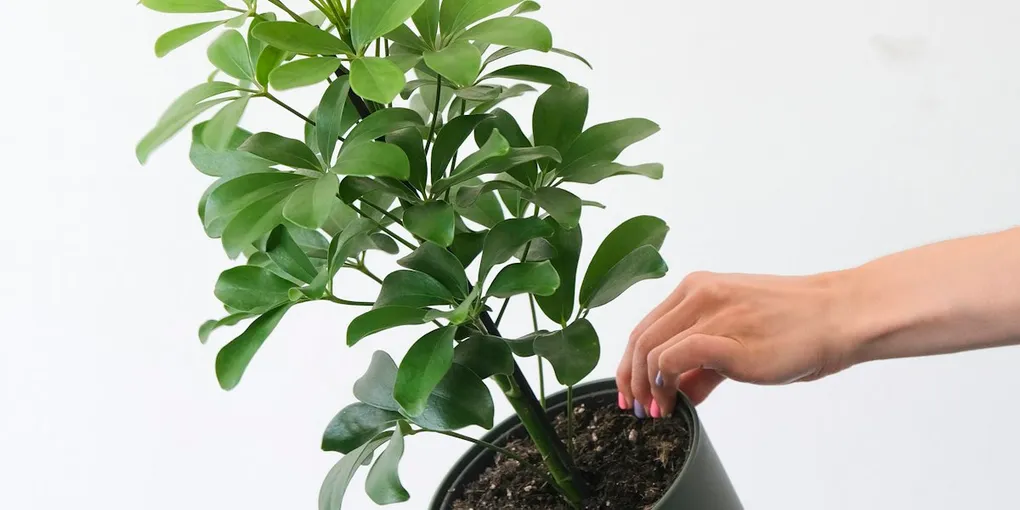
How to Care for a Schefflera (Umbrella Plant)
Schefflera arboricola, better known as the umbrella plant or umbrella tree, gets its name from the way its glossy leaflets fan out from a central point like the spokes of an umbrella. It’s a common houseplant for a reason: it’s fast-growing, easy to shape, and far more forgiving than its lush, tropical look suggests. Most problems with this plant come down to two things — not enough light, or a reaction to being moved.
Light
Schefflera wants bright, indirect light to stay compact and full, with each new set of leaflets growing in close together. It will tolerate medium light without dying, but growth gets slower and noticeably leggier, with longer gaps between leaves and a thinner, stretched-out look. A spot near an east- or west-facing window, or a few feet back from a south-facing one, is ideal. Variegated varieties need more light than solid green ones to hold their cream and yellow patterning — in lower light, new growth tends to come in plainer green. If your plant already looks stretched and sparse, see how to fix a leggy houseplant for how to bring it back to a fuller shape.
Watering
Let the top 1-2 inches of soil dry out before watering again, then water thoroughly until it runs from the drainage hole. Schefflera is more tolerant of missed waterings than it is of consistently wet soil — overwatering is the more common way people run into trouble with this plant, showing up as yellowing leaves, soft stems, or leaf drop. Check the soil with a finger rather than watering on a fixed schedule; see watering houseplants the right way for the general approach, and overwatering vs. underwatering if you’re trying to figure out which one is causing a droopy or dropping plant.
Soil and pot
Use a well-draining potting mix — a standard indoor mix cut with perlite works well — in a pot with a drainage hole. Schefflera roots that sit in soggy soil are prone to rot fairly quickly, so drainage matters more here than soil richness. It’s a fast enough grower that it can outgrow its pot within a year or two; once roots are circling the bottom or pushing up through the soil surface, it’s time to size up. See how to repot a houseplant for the process, and go up only one pot size at a time.
Humidity
Schefflera handles average indoor humidity fine and doesn’t need the pampering that something like a calathea does. In very dry air, though — especially near heating vents in winter — you may see brown, crispy edges developing on the leaves. Normal household humidity is enough for most homes; if your air is particularly dry, a humidifier or grouping it with other plants helps.
Toxicity
Schefflera is mildly toxic to cats and dogs — the ASPCA toxic and non-toxic plants database lists it as toxic. It contains calcium oxalate crystals that cause oral irritation, drooling, and vomiting if chewed or ingested — it’s rarely life-threatening, but it’s unpleasant enough that it’s worth keeping out of reach of pets that like to chew on leaves. If you’re choosing plants with a pet household in mind, pet-safe houseplants for cats and dogs covers safer alternatives.
Common problems
Sudden leaf drop after bringing the plant home or moving it to a new room is a stress response to the change in light, humidity, or airflow, not a sign of a sick plant. Schefflera can be sensitive to relocation the same way a lot of tropical houseplants are. Keep conditions stable and avoid moving it again while it adjusts — new growth is the sign it has settled in.
Leggy growth with long bare stems between leaves means the plant isn’t getting enough light. Move it somewhere brighter and prune back the stretched growth — schefflera branches readily after a hard pinch or cut, so pruning is also the main tool for keeping it bushy and full rather than tall and thin.
Yellowing leaves with soft stems point to overwatering. Let the soil dry out more between waterings and check that the pot actually drains; if the stems are mushy near the soil line, check the roots for rot.
Brown, crispy leaf edges usually mean low humidity, inconsistent watering, or a buildup of mineral salts from tap water. Try more consistent watering first, since erratic swings between bone-dry and soaked are often the real culprit even when the air seems humid enough.