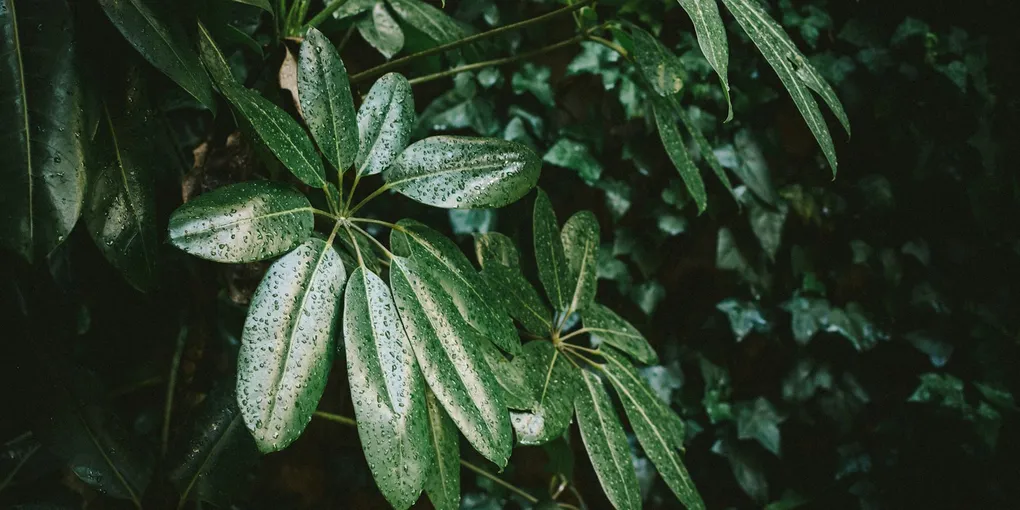
How to Care for a Ming Aralia
Ming aralia (Polyscias fruticosa) grows finely divided, lacy dark green leaves on a woody stem that thickens and branches with age into a small, sculptural tree — closer in look to a bonsai than to most houseplants. It rewards patience and a stable spot, but it’s also one of the pickier plants you can bring home: drafts, temperature swings, and even just being moved to a new room can trigger sudden leaf drop that has nothing to do with how well you’re watering or feeding it.
Light
Ming aralia wants bright, indirect light, and tolerates some gentle direct sun without much trouble. Too little light is one of the more common reasons for leggy, sparse growth and increased leaf drop — see how much light do houseplants need for help judging whether a given spot is bright enough.
Watering
Let the top inch or so of soil dry out before watering again. This plant is sensitive at both ends: soggy, waterlogged soil leads to root rot, but ming aralia is also notably touchy about drying out completely, and tends to protest an underwatering slip by dropping leaves more dramatically than most houseplants would over the same mistake. Aim for a steady, moderate rhythm rather than letting the pot swing between bone-dry and soaked.
Soil and pot
A standard, well-draining potting mix works well, in a pot with a drainage hole. Since this plant already reacts badly to inconsistent watering, a mix that drains reliably — rather than staying wet for days after a normal watering — takes some of the guesswork out of keeping it happy.
Humidity
Ming aralia is tropical in origin and appreciates humidity above what a typical home offers. Dry air is a common contributor to leaf drop and crisping leaf edges, alongside the temperature issues below. See how to increase humidity for houseplants for practical ways to raise it, especially in winter when indoor heating dries the air further.
Temperature stability matters more than usual
This is the trait that catches people off guard. Ming aralia is unusually sensitive to drafts, sudden temperature swings, and simply being relocated — a plant that’s perfectly healthy can drop a startling number of leaves within days of being moved near a door, an AC vent, or even just to a different room. In temperament, it behaves a lot like a weeping fig: the fix is rarely a change to watering or feeding, but rather finding one stable spot away from drafts and temperature swings and leaving the plant alone there.
Toxicity
Ming aralia is mildly toxic to cats and dogs if chewed, typically causing GI upset. Keep it out of reach of pets that like to nibble leaves — see pet-safe houseplants for cats and dogs for safer alternatives if that’s a concern in your home.
Pruning and shape
Part of this plant’s appeal is how well it takes to pruning — trimming stems encourages branching and helps maintain the compact, tree-like silhouette that makes ming aralia popular as a bonsai-style houseplant in the first place. See how to prune houseplants for technique, and don’t be afraid to shape this one; it responds to pruning better than it responds to being left to grow unchecked.
Common problems
Sudden leaf drop is by far the most common complaint, and it’s almost always a reaction to a draft, a temperature change, or a recent move rather than a watering or feeding mistake. Identify what changed, settle the plant into a stable spot, and give it a few weeks — new growth should resume once conditions are consistent again.
Leaf drop paired with dry soil points to underwatering specifically; this plant reacts to a dry-out more visibly than most, so don’t wait for obvious wilting before watering.
Soft stems or a sour smell at the soil line signal overwatering and possible root rot — cut back on frequency and check that the pot is actually draining.
Leggy, sparse growth with long gaps between leaves usually means insufficient light. Move it somewhere brighter and prune back leggy stems to encourage bushier regrowth.