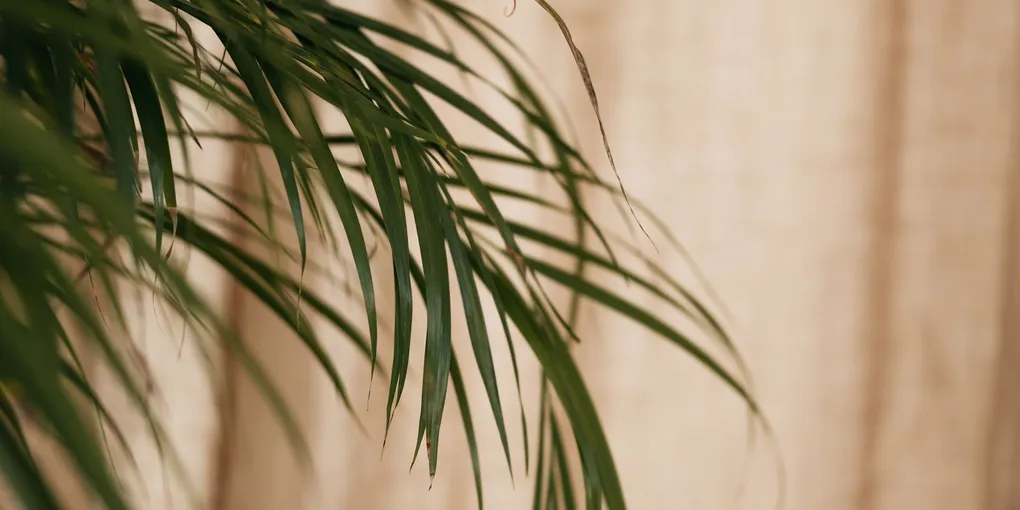
How to Care for a Majesty Palm
Majesty palm (Ravenea rivularis) grows along riverbanks in Madagascar, where its roots sit in consistently damp soil and the air around it is warm and humid year-round. Sold as a compact tabletop plant, it can eventually reach 6-10 feet indoors, with long, arching, feathery fronds that give it a lush, jungly look few other houseplants match. It’s also one of the more demanding palms to keep alive inside — most of the difficulty comes down to one thing: it’s being asked to live in conditions that don’t resemble a riverbank at all.
Why majesty palm struggles indoors
Unlike tougher indoor palms such as the areca palm, majesty palm didn’t evolve to tolerate the dry, dim conditions of a typical home. It wants more light, more humidity, and more consistent moisture than most houses naturally provide, and it doesn’t have much tolerance for going without any of the three. That’s why so many majesty palms decline within a few months of coming home from the nursery — not because they’re inherently short-lived, but because the gap between what they need and what a living room offers is bigger than with most other houseplants. None of this makes it a bad plant to grow; it just means you need to be more deliberate about light, water, and humidity than you would with an easier palm.
Light
Give majesty palm the brightest indirect light you can. A spot a few feet back from a south or west-facing window, or right in front of an east-facing one, is close to ideal. Direct sun through unfiltered glass can scorch the fronds, but low light is the more common killer — in dim conditions this palm gets leggy, thins out, and eventually declines outright. See how much light do houseplants need for more on matching the plant to what your space can actually offer.
Watering
Keep the soil consistently moist, not wet and not dry. This is a different approach than the “let it dry out between waterings” advice that applies to most houseplants — majesty palm comes from a habitat where its roots rarely experience real drought, and it shows stress quickly when the soil dries out completely, with fronds browning and crisping at the tips. At the same time, the roots still need oxygen, so the soil shouldn’t stay saturated either. Check the top inch of soil regularly and water as soon as it starts to feel dry, rather than waiting for it to dry out fully.
Water quality matters here too. Majesty palm is sensitive to the fluoride, chlorine, and mineral salts in tap water, and buildup from it is a frequent cause of brown, crispy tips. If you’re watering consistently and still seeing tip burn, switch to filtered, distilled, or rainwater — see best water for houseplants for a full breakdown of which sources cause problems.
Humidity
High humidity isn’t optional for this plant. Dry indoor air, especially in winter with the heat running, is one of the fastest ways to bring on brown frond tips and to invite spider mites, which thrive in exactly the dry conditions majesty palm dislikes. Run a humidifier nearby, group it with other humidity-loving plants, or set it on a pebble tray — misting alone won’t raise humidity meaningfully for long. See how to increase humidity for houseplants for which methods actually move the needle.
Soil and pot
Use a rich, well-draining potting mix that still holds moisture well — a standard houseplant mix amended with some compost or coco coir works better here than a fast-draining succulent-style blend. The pot needs a drainage hole regardless, since even a moisture-loving plant like this one will develop root rot if water has nowhere to go. Majesty palm also doesn’t like being disturbed at the roots often, so repot only when it’s clearly root bound, and size up gradually rather than jumping to a much larger pot.
Fertilizing
Feed with a balanced liquid fertilizer, diluted to half strength, roughly once a month during spring and summer, and skip fertilizing in fall and winter when growth slows. Majesty palm is prone to nutrient deficiencies, particularly of magnesium and potassium, which show up as yellowing or discolored older fronds even when watering and light are on track.
Toxicity
Majesty palm is non-toxic to cats and dogs, making it one of the better large statement plants for a pet household, provided you can meet its higher care demands. See pet-safe houseplants for cats and dogs for more options along the same lines.
Common problems
Brown, crispy frond tips are the most common complaint, and they usually come from one of three causes: soil allowed to dry out completely, low humidity, or mineral and fluoride buildup from tap water. Address whichever applies — existing brown tips won’t green back up, but you can trim them off with clean scissors for appearance.
Yellowing fronds, especially on older growth, often point to a nutrient deficiency rather than a watering problem in this plant, though soggy soil from a pot without drainage can also cause it. Rule out drainage and overwatering first, then consider a feeding schedule if the soil situation checks out.
Spider mites take hold readily in the dry air majesty palm is often kept in. Look for fine webbing and pale, stippled fronds, and treat while also raising humidity, since dry air is what let the infestation start in the first place.
Fronds dying back one at a time from the bottom up is normal as the plant ages — older fronds naturally decline and can be trimmed off at the base once fully brown. It only becomes a concern if new growth at the top isn’t keeping pace, which usually means light or water is insufficient.