How to Care for a Lipstick Plant
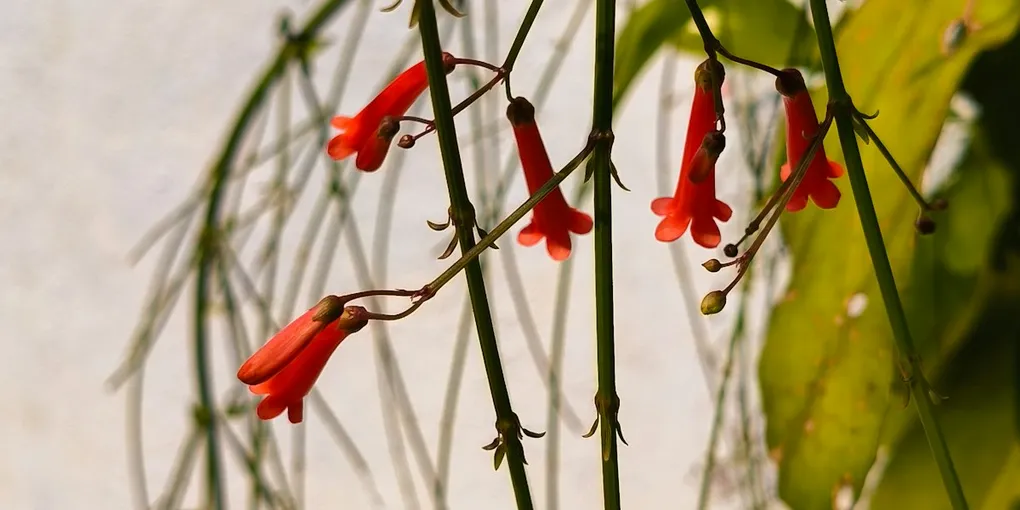
Lipstick plant (Aeschynanthus radicans) is a trailing tropical epiphyte named for its tubular red or orange flowers, which emerge from dark, tube-like calyxes that look like tiny tubes of lipstick before the bloom slides out. It’s grown for those flowers as much as its glossy, cascading foliage, but getting it to actually bloom depends on giving it more light and a bit more seasonal rhythm than most trailing houseplants need.
Light
Lipstick plant needs bright, indirect light — more than it’s often given. A spot near an east- or west-facing window, or a few feet back from an unobstructed south-facing one, works well. Too little light and the plant will survive and even trail nicely, but it rarely flowers; if you’ve had one for a while without a single bloom, insufficient light is the most likely reason.
Watering
Keep the soil evenly moist during the growing season, watering once the top inch or so has dried out, but never let the pot sit in standing water — lipstick plant doesn’t tolerate soggy soil any better than it tolerates drought. In winter, ease off and let it dry out a bit more between waterings; a slightly drier, cooler rest period over winter actually helps trigger blooming the following season. For a general feel-based approach to timing waterings, see watering houseplants the right way.
Soil and pot
Use a light, well-draining potting mix — a standard mix amended with extra perlite or orchid bark works well, since this plant is an epiphyte in the wild and doesn’t want its roots sitting in dense, wet soil. A pot with a drainage hole is essential. Because it grows as a trailing vine, a hanging basket suits it better than a floor pot, letting the stems cascade rather than pool on the soil surface. See best hanging and trailing houseplants for other plants that do well the same way.
Humidity
Lipstick plant is a tropical epiphyte and appreciates humidity well above average household levels — dry air is a common reason for crispy leaf edges or dropped buds. Grouping it with other plants, running a humidifier, or setting the pot on a pebble tray all help; see how to increase humidity for houseplants for more options.
Getting it to bloom
Blooming depends on three things: bright enough light, a modest cool and slightly drier rest in winter, and a mature enough plant — a young cutting may need a year or two to fill out before it flowers at all. After a bloom cycle finishes, a light prune tidies up spent flower stems and encourages the plant to branch out and grow bushier rather than leggy; see how to prune houseplants for the general technique. For other flowering options if you’re still working on getting this one to cooperate, see best flowering houseplants to grow indoors.
Toxicity
Lipstick plant is generally considered non-toxic to cats and dogs, making it a reasonable choice if you’re building out a collection of pet-safe houseplants. As with any houseplant, it’s still worth discouraging pets from chewing on it.
Common problems
No blooms despite otherwise healthy growth almost always comes down to insufficient light or skipping the cooler, slightly drier winter rest that helps trigger flowering. Move it somewhere brighter and give it a proper dormant period before assuming something else is wrong.
Leaf drop or sudden bud drop is usually a reaction to a sudden temperature swing or a cold draft — from an air conditioner vent, a drafty window, or being moved outdoors too early in the season. Keep the plant away from sudden temperature changes and it should recover with its next flush of growth.
Long, bare, leggy vines mean the plant isn’t getting enough light or hasn’t been pruned back in a while. Move it brighter and trim leggy stems just above a leaf node to force bushier growth from lower down.