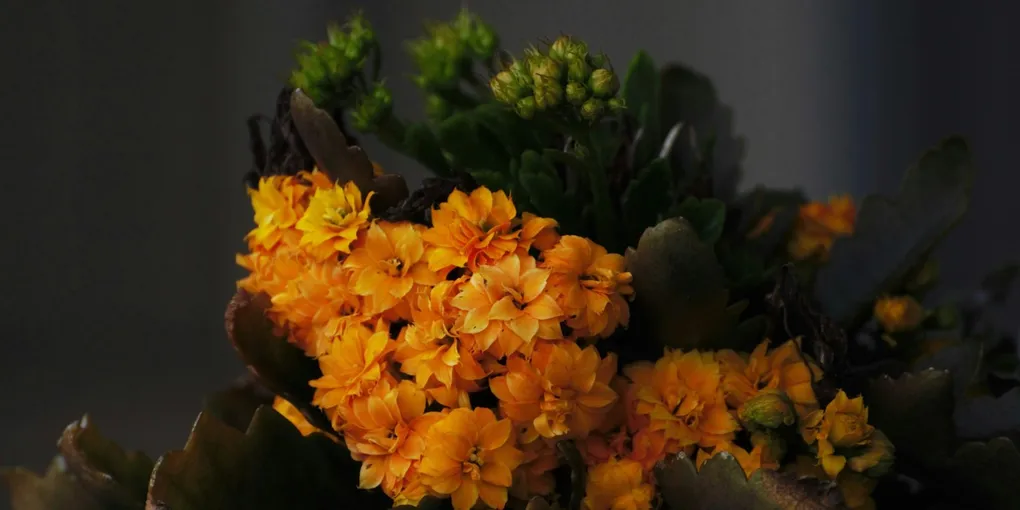
How to Care for a Kalanchoe
Kalanchoe (most commonly Kalanchoe blossfeldiana, often sold under the name Flaming Katy) is a flowering succulent that packs dense clusters of small, long-lasting blooms on top of thick, waxy leaves. It’s usually sold already in bloom, which makes it an easy impulse buy — the harder part is keeping it thriving, and getting it to flower again, after that first round of blooms fades.
Light
Kalanchoe wants bright, indirect light for most of the year, with some direct morning sun being fine. Like other succulents, it stores water in its leaves and needs enough light to use that stored moisture efficiently — too little light and the plant stretches out with sparse, weak growth instead of the tight, compact form it has naturally.
Watering
Water like you would a succulent: let the soil dry out most of the way between waterings, then water thoroughly. Kalanchoe’s thick leaves hold a reserve of moisture, so it tolerates missed waterings far better than it tolerates soil that stays consistently wet. Overwatering is the most common cause of problems with this plant — see how to care for succulents for the general approach this plant follows closely.
Soil and pot
Use a fast-draining succulent or cactus mix, or a standard potting mix cut with extra perlite. A pot with a drainage hole is essential, since kalanchoe’s roots are quick to rot in soil that doesn’t dry out between waterings.
Getting it to rebloom
Kalanchoe is a short-day plant, meaning it sets flower buds in response to long, uninterrupted periods of darkness — roughly 14 hours of darkness a night for about six weeks is what triggers reblooming. This is easy to get by accident in fall when natural daylight hours shrink, but if your plant sits somewhere that gets artificial light at night (a living room with the lights on in the evening, for example), it may need to be moved to a spot with a genuinely dark night, or covered, to bloom again. Once spent flowers fade, deadhead them and cut back the flowering stems to encourage the plant to put energy into next year’s buds rather than seed production.
Toxicity
Kalanchoe contains cardiac glycosides and is toxic to cats and dogs if ingested, with effects ranging from vomiting and diarrhea to, in serious cases, heart rhythm problems. Keep it out of reach of pets — see pet-safe houseplants for cats and dogs for safer alternatives if you have curious animals in the house.
Common problems
Leggy, stretched growth with fewer flowers almost always means the plant isn’t getting enough light. Move it somewhere brighter; for an already-leggy plant, cutting back the longest stems encourages bushier new growth. See how to fix a leggy houseplant for the general approach.
Soft, yellowing leaves or a mushy stem point to overwatering. Let the soil dry out fully before watering again, and check that the pot actually drains — standing water at the roots is usually the underlying cause.
No reblooming after the first flush of flowers is the most common frustration with this plant, and it’s almost always a light-cycle issue rather than a feeding or watering problem — see the reblooming section above for the fix.
Shriveled, wrinkled leaves signal underwatering, though this is less common than overwatering issues with kalanchoe. A thorough watering should plump the leaves back up within a day or two if the roots are still healthy.