How to Care for a Jewel Orchid
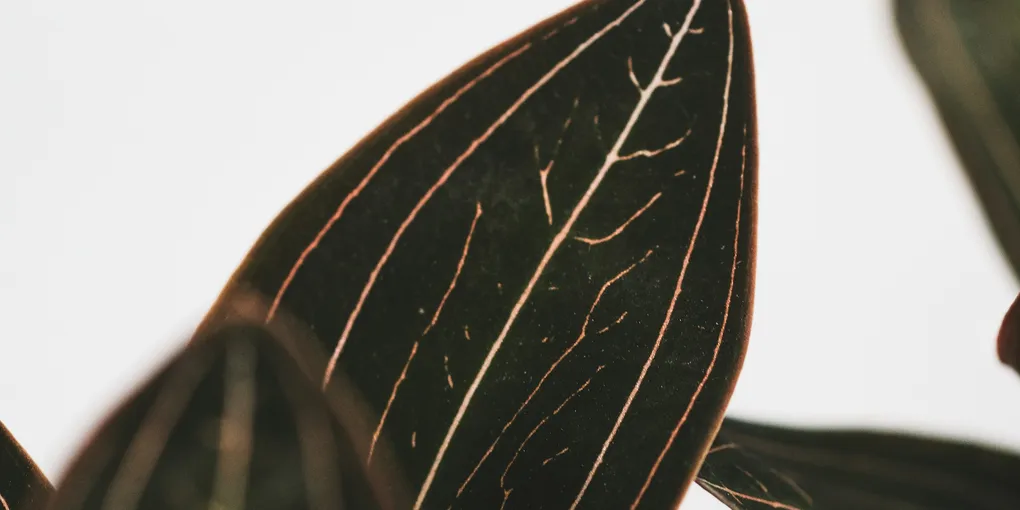
Most orchids get grown for their flowers. The jewel orchid gets grown for its leaves. Ludisia discolor, the most common species sold under this name, has deep maroon-black foliage striped with fine coppery-pink veins that catch the light almost like velvet — the flowers it eventually sends up are small and white, a pleasant bonus rather than the point. That foliage-first appeal also means jewel orchid care looks nothing like the orchid care most people already know.
It grows in soil, not bark
This is the detail that trips people up. Jewel orchid is a terrestrial orchid — in the wild it creeps along the forest floor in leaf litter, rather than clinging to tree bark the way an epiphytic orchid does. If you’ve kept a Phalaenopsis before, forget most of what you learned about chunky bark mixes and airy roots hanging in the open. A jewel orchid wants a real, moisture-retentive potting mix, much closer to what a regular foliage houseplant would use, and potting it in orchid bark the way you would a Phalaenopsis will leave it chronically underwatered.
Light
Jewel orchid wants low to medium, indirect light — it’s adapted to the dim understory of a forest floor, not a bright windowsill. A spot a few feet back from an east or north window works well, or a location that gets bright ambient light without direct sun reaching the leaves. Direct sun will scorch the thin foliage and wash out the color that makes this plant worth growing in the first place. It’s a genuinely good option if you’re working with a room that doesn’t get much light; see the best low-light houseplants for other plants that tolerate similar conditions.
Watering
Keep the soil evenly moist, not soggy and not allowed to dry out completely. Jewel orchid’s thin roots and creeping growth habit don’t store water the way a succulent or even a typical epiphytic orchid does, so long dry spells stress it quickly — but constantly waterlogged soil rots the roots just as fast. Water when the top of the soil starts to feel dry to the touch, rather than waiting for it to dry out several inches down. See watering houseplants the right way for how to judge moisture by feel instead of a fixed schedule. Always water with room-temperature water and let any excess drain away — never let the pot sit in standing water.
Soil and pot
Use a loose, moisture-retentive mix rather than the bark or moss you’d pot a typical orchid in — a standard peat- or coco coir-based potting mix cut with some perlite for drainage works well, similar to what suits other shade-loving foliage plants. A shallow, wide pot suits jewel orchid’s habit better than a deep one, since it grows outward along the surface with shallow roots rather than sending roots deep down. Whatever pot you use, make sure it has a drainage hole — this plant wants consistent moisture, not standing water.
Humidity
Jewel orchid appreciates humidity well above what most homes offer on their own, typically 50% or higher. Low humidity shows up fastest at the leaf edges, which turn crisp and brown even when the soil is watered correctly. A humidifier nearby, a pebble tray, or grouping it with other humidity- loving plants all help; see how to increase humidity for houseplants for practical setups. Because it tolerates low light so well, a jewel orchid also does nicely in an enclosed terrarium or a naturally humid bathroom, where both its light and humidity needs are easy to satisfy at once.
Toxicity
Jewel orchid is considered non-toxic to cats and dogs, making it a reasonably safe pick for homes with curious pets. See pet-safe houseplants for cats and dogs for more options if you’re building a pet-friendly collection.
Common problems
Crispy, browning leaf edges almost always point to low humidity, sometimes combined with underwatering. Check both before assuming anything else is wrong.
Faded, dull leaf color usually means too much light, not too little — the deep, iridescent color this plant is grown for washes out under direct or overly bright sun. Move it somewhere dimmer and new growth should come in darker.
Mushy, blackened stems or a foul smell from the soil signal rot from soil that’s stayed too wet for too long. Cut away any affected stems, let the mix dry out more between waterings, and make sure the pot is actually draining.
Leggy, sprawling growth with long bare stretches between leaves is normal to some degree — jewel orchid naturally creeps and trails — but stems reaching hard toward a light source usually mean it needs a bit more ambient light. It also roots easily from stem cuttings, so leggy growth is a good excuse to propagate a few and fill the pot back out.