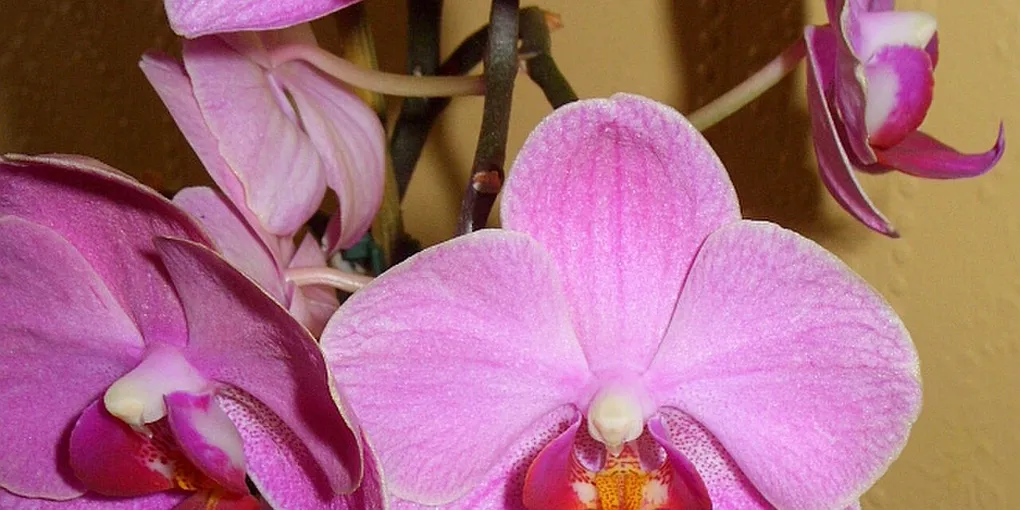
How to Care for a Phalaenopsis Orchid
Orchids have a reputation for being fussy, expert-only plants, and that reputation is mostly undeserved — at least for the one you’re most likely to actually own. The Phalaenopsis, or moth orchid, sold in grocery stores and garden centers everywhere, is one of the easier houseplants to keep alive once you understand the one thing that makes it different from everything else on your windowsill: it doesn’t grow in soil.
It’s epiphytic, not a soil plant
In the wild, Phalaenopsis grows attached to tree bark, not rooted in ground. Its roots evolved to hang in open air, absorbing moisture and nutrients from rain and humidity — which is why healthy orchid roots look green when wet, not just white or brown like typical roots. That’s also why nurseries pot them in chunky bark or sphagnum moss instead of potting soil: the roots need airflow, not the dense, water-retentive soil mix a pothos or philodendron would want. Potting a Phalaenopsis in regular soil is one of the fastest ways to kill it — the mix stays wet too long and the roots suffocate and rot.
Light
Phalaenopsis wants bright, indirect light — an east-facing window is close to ideal, giving gentle morning sun without the harsh, hot afternoon light that can scorch the leaves. A few feet back from a south or west window works too, as long as the light is filtered by a sheer curtain or distance. Direct hot sun will bleach or burn the leaves; too little light and the plant will hold onto its leaves but simply refuse to rebloom.
Watering
This is where most people overcomplicate things — or undercomplicate them in the wrong direction. The popular “one ice cube a week” method that comes printed on nursery tags is oversimplified at best: it delivers a small, cold, inconsistent trickle of water that doesn’t actually saturate the roots, and the cold can stress a tropical plant that’s used to warm rain.
A better approach is to soak the roots thoroughly, roughly once a week: run room-temperature water through the pot in a sink for 15-30 seconds, or set the whole pot in a bowl of water for 10-15 minutes, then let it drain fully before setting it back in place. Never let the pot sit in standing water.
Between waterings, judge by the roots instead of a calendar — they’ll tell you more than any fixed schedule can:
- Plump and green or silvery-green: well hydrated, no water needed yet.
- Silvery-white and papery: dry, time to water.
- Brown and mushy: rotted, usually from watering too often or a pot with no drainage.
It’s a more reliable gauge than a fixed schedule, and it’s one of the few houseplants where you can actually see the roots well enough to check.
Humidity
Phalaenopsis is a tropical plant at heart and appreciates 40-60% humidity, noticeably higher than most homes provide on their own. It won’t necessarily die in drier air, but flowers will last longer and new growth will look healthier with some help. If your home runs dry, especially in winter, a few practical ways to raise humidity go a long way for orchids specifically.
Getting it to rebloom
Once the flowers on a spike fade and drop, don’t panic and don’t necessarily cut the whole spike off. Cut it back to just above one of the small nodes (the little brown bumps along the stem) below where the flowers were. Sometimes a new branch will grow from that node and produce another round of blooms; if it doesn’t sprout within a couple of months, cut the spike back to the base instead.
Reblooming takes patience — often several months between flushes — and depends more on consistent light and a bit of a temperature drop at night than on anything you do to force it. A plant that isn’t flowering isn’t necessarily unhealthy; as long as the leaves are firm and green, it’s simply resting.
Common mistakes
- Potting in regular soil. The single most common way people kill a Phalaenopsis. Repot only into fresh orchid bark or moss, and only when the current medium has broken down (usually every 1-2 years) — see repotting without stressing the plant for the general technique.
- Overwatering. Far more Phalaenopsis die from constantly wet roots than from underwatering. If you’re unsure, wait — check for root rot before you water again.
- Ignoring the roots. The roots, not the leaves, are the best early warning system for whether your watering routine is actually working.
Treat a Phalaenopsis like the epiphyte it is — airy roots, thorough soakings instead of sips, bright indirect light — and it’s a far more forgiving plant than its reputation suggests.