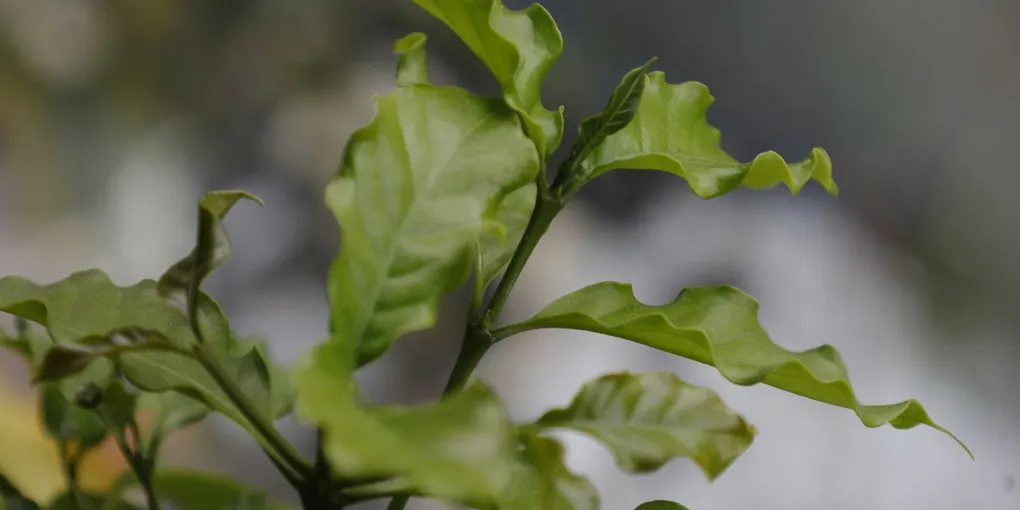
How to Care for a Coffee Plant
Coffee plant (Coffea arabica) is grown indoors mostly for its glossy, dark green foliage rather than for a usable harvest — a houseplant rarely gets enough light or space to produce beans worth roasting. What it does offer is fast, attractive growth and a lush, tropical look, provided you can give it the steady moisture and humidity it wants.
Light
Coffee plant wants bright, indirect light. A few hours of gentle morning sun is fine, but harsh direct sun, especially in the afternoon, will scorch its leaves. In light that’s too low, growth slows noticeably and the plant can start to look thin and sparse instead of full. A spot a few feet back from a bright window, or right in an east-facing one, usually works well.
Watering
Keep the soil consistently moist — this isn’t a plant that wants to dry out completely between waterings the way a pothos or succulent does. Water when the top inch of soil starts to feel dry, and water thoroughly enough that it drains from the bottom of the pot. At the same time, don’t let the plant sit in standing water, since soggy, waterlogged soil causes root problems just as readily as it would in any other houseplant. See watering houseplants the right way for a feel-based approach that works well for a plant like this one that dislikes both extremes.
Soil and pot
Coffee plant prefers a slightly acidic, well-draining potting mix. A standard houseplant mix with some added peat or coco coir works well, since coffee plants come from acidic tropical soils in the wild. Whatever mix you use, make sure the pot has a drainage hole — the plant’s preference for consistent moisture makes good drainage more important, not less, since there’s less margin before “moist” tips over into “waterlogged.” See the best soil mix for houseplants for the general principles behind building a mix like this.
Humidity
As a tropical plant, coffee plant appreciates humidity above what most homes offer naturally, especially in winter when indoor heating dries the air out. Brown, crispy leaf edges are the most common sign that humidity is too low. A pebble tray, a nearby humidifier, or grouping it with other humidity-loving plants all help — see how to increase humidity for houseplants for the full range of options.
Toxicity
Coffee plant leaves, and especially the beans, contain caffeine, which is toxic to cats and dogs if ingested — symptoms can include vomiting, an elevated heart rate, restlessness, and in larger amounts more serious effects. Keep the plant out of reach of pets that chew on foliage, and see pet-safe houseplants for cats and dogs for safer alternatives if you have curious animals in the house.
Common problems
Brown, crispy leaf edges usually point to low humidity or minerals building up from hard tap water. Raising humidity helps with the first cause; for the second, see the best water for houseplants and consider flushing the soil periodically with plain water to clear accumulated salts.
Yellow leaves, especially several at once, are typically a sign of overwatering — soil that’s staying wet rather than drying slightly at the surface between waterings. Ease off on frequency and confirm the pot is actually draining.
Leaf drop often follows a cold draft, a spot near an air conditioning vent, or the stress of being recently moved or repotted. Coffee plant is sensitive to sudden environmental changes, so a stable spot away from drafts and temperature swings goes a long way toward preventing it.
Slow, leggy growth is generally a light problem — move the plant somewhere brighter, short of direct sun, and growth should fill back in within a few weeks.