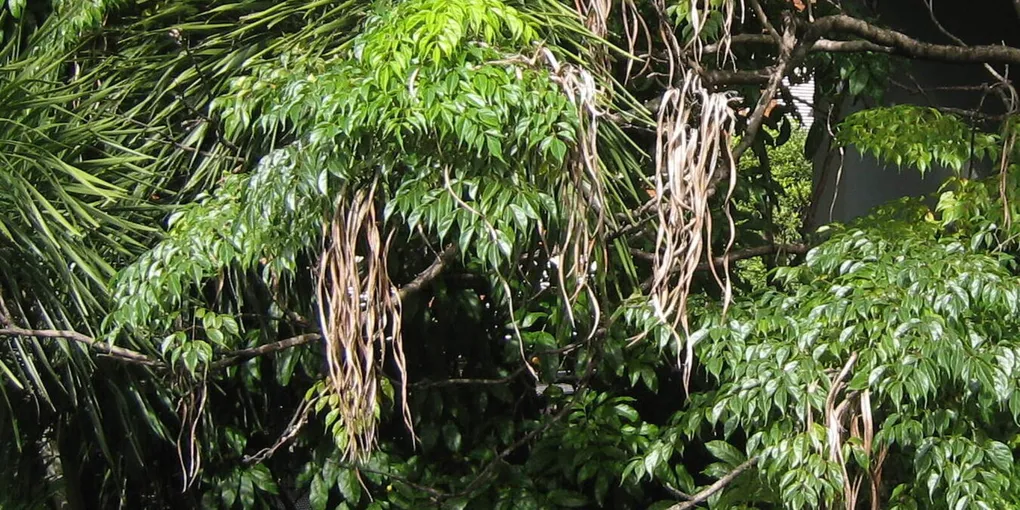
How to Care for a China Doll Plant
China doll plant (Radermachera sinica) grows glossy, finely divided compound leaves on a woody stem that fills out into a dense, rounded canopy — often sold as a braided or single-trunk “mini tree” for tabletops and desks. It looks similar in habit to a ming aralia, and shares that plant’s biggest quirk: it has a reputation for dropping leaves dramatically in response to almost any change, which has more to do with its temperament than with anything you’re doing wrong.
Light
China doll plant wants bright, indirect light, with a few hours of gentle direct sun tolerated if it’s not the harsh midday kind. In light that’s too low, growth turns sparse and leggy, and the plant is more prone to shedding leaves it can’t support. See how much light do houseplants need for help judging whether your spot is bright enough.
Watering
Let the top inch or two of soil dry out before watering again. This plant doesn’t tolerate extremes well in either direction — soggy soil leads to root rot, but letting the pot go completely bone-dry is one of the more common triggers for sudden leaf drop. Aim for a consistent rhythm rather than swinging between soaked and parched; see overwatering vs underwatering houseplants if you’re not sure which way you’re erring.
Humidity
Native to subtropical China and Taiwan, China doll plant appreciates humidity higher than the average home offers. Dry indoor air, especially from winter heating, is a common contributor to crispy leaf edges and leaf drop. See how to increase humidity for houseplants for practical ways to raise it around the plant.
Soil and pot
A standard, well-draining potting mix works well, in a pot with a drainage hole. Since this plant already reacts badly to inconsistent moisture, a mix that drains freely — rather than staying wet for days — removes one more variable that could push it toward leaf drop.
Fertilizing
Feed with a balanced liquid houseplant fertilizer diluted to about half strength once a month during spring and summer, when the plant is actively putting out new growth. Skip fertilizing in fall and winter, when growth slows and unused nutrients can build up in the soil. For more detail on picking and timing a fertilizer, see how often to fertilize houseplants.
Toxicity
China doll plant is generally considered non-toxic to cats and dogs, which makes it a more forgiving choice than many popular houseplants for households with curious pets. That said, any plant material can cause mild stomach upset if a pet eats enough of it, so it’s still worth keeping out of easy reach. See pet-safe houseplants for cats and dogs for more options if you’re building out a pet-friendly plant collection.
Common problems
Sudden, dramatic leaf drop is the defining complaint with this plant, and it’s almost always a stress response rather than a sign of disease. Drafts, being moved to a new spot, a change in light, a trip home from the nursery, or a temperature swing near a door or AC vent can all set it off. The leaves often fall in large numbers over just a day or two, which understandably alarms people — but if the stem and remaining leaves still look healthy, the plant usually recovers once it’s settled into a stable spot and left alone. Resist the urge to move it around chasing a “better” location during this period; more moving means more dropping.
Leaf drop paired with dry, shriveled soil points to underwatering specifically. This plant telegraphs a missed watering more visibly than many others, so don’t wait for obvious wilting.
Yellowing leaves with soggy soil signal overwatering or poor drainage. Cut back on frequency and confirm the pot is actually draining rather than sitting in trapped water.
Brown, crispy leaf edges usually trace back to low humidity, especially during winter when indoor heating dries the air.
Leggy growth with sparse leaves is typically a light problem. Move the plant somewhere brighter, and once it’s stable, feel free to prune leggy stems back — China doll plant responds well to pruning and will fill back in with fuller growth. See how to prune houseplants for technique.