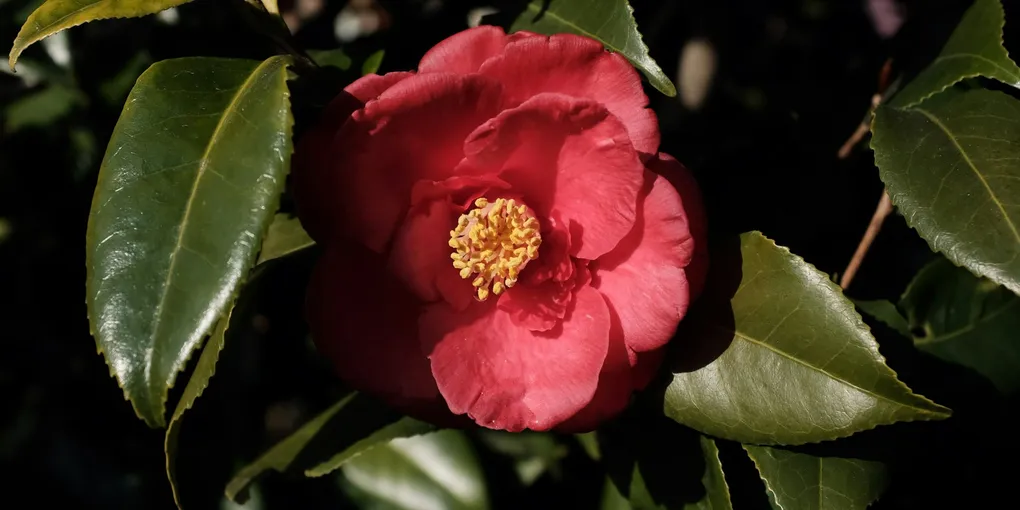
How to Care for a Camellia
Camellias (Camellia japonica and Camellia sasanqua) are the flowering shrub gardeners in mild climates plant outdoors, but they also do well in large pots on a cool patio or in a bright, unheated sunroom. They’re often mistaken for azaleas — both are acid-loving evergreens with similar leaves — but camellias have their own quirks, especially around temperature. A camellia that’s too warm or gets moved at the wrong time will drop every bud it was about to open, which is the single most common complaint from people growing them in containers.
Light
Camellias want bright light but not harsh, direct sun for most of the day. Morning sun with afternoon shade is the sweet spot — hot afternoon sun can scorch the leaves and stress the plant right when it’s trying to set buds. Dappled light under a larger tree, or an east-facing spot outdoors, works well. Indoors, place the pot in front of the brightest window you have; a camellia kept too dark gets leggy and flowers poorly. For more on reading light levels in general, see how much light do houseplants actually need.
Temperature and bud drop
This is the detail that trips up more camellia owners than anything else. Camellias set their flower buds over summer and fall for a winter or early spring bloom, and those buds are sensitive to sudden changes in temperature, light, or moisture. Moving a budded plant indoors too early, relocating it to a different spot in the house, or keeping it somewhere warm and dry (like near a heating vent) commonly causes the buds to shrivel and fall off before they open. Camellias actually prefer it cool — ideally 45-65°F once buds have formed, which is why an unheated sunroom or a cool porch works better than a heated living room. Once you find a spot the plant is happy in during bud season, avoid moving or rotating it if you can help it. If you bring a potted camellia outdoors for summer, transition it gradually rather than all at once — see moving houseplants outdoors for summer for how to acclimate a plant without shocking it.
Watering
Camellias like soil that’s consistently moist but never waterlogged — they don’t tolerate drying out completely any better than they tolerate sitting in water. Check the top inch or two of soil and water when it starts to feel dry, rather than sticking to a fixed schedule. Both under- and overwatering can trigger bud drop on top of the usual root damage, so consistency matters more here than with a lot of houseplants. For the general principles behind judging by feel, see watering houseplants the right way.
Camellias are also sensitive to hard, alkaline tap water, which gradually pushes soil pH away from the acidic range they need. If your tap water is hard, rainwater or filtered water is worth the extra effort — see hard water vs. soft water for houseplants for how to tell which you have.
Soil and pot
Camellias are acid-loving plants, much like azaleas and blueberries, and need a soil pH around 5.5-6.5. Use a potting mix formulated for acid-loving plants (often sold as azalea/camellia mix), or build your own from a peat- or pine-bark-based mix that drains well. Regular all-purpose potting soil is usually too alkaline and too dense, both of which cause slow decline. Whatever mix you use, the pot needs a drainage hole — camellia roots rot quickly in soil that stays saturated. When feeding, use a fertilizer formulated for acid-loving plants, and skip it during the plant’s bud-forming stretch in late summer and fall, since a push of new growth right before bloom time can also contribute to bud drop.
Humidity
Average room humidity is usually fine for a potted camellia — it isn’t as humidity-demanding as a tropical houseplant. Very dry indoor air, especially in winter with the heat running, can cause crisp brown leaf edges and adds to the stress behind bud drop, so a pebble tray or humidifier nearby doesn’t hurt if your home runs dry.
Toxicity
Camellias are considered non-toxic to cats and dogs, making them a reasonably safe choice for a patio or sunroom shared with pets. For more options if you’re building out a pet-friendly plant collection, see pet-safe houseplants for cats and dogs.
Common problems
Buds forming but falling off before opening is almost always temperature or moisture stress — a sudden move, a spot that’s too warm, or inconsistent watering right as buds are developing. Find a stable, cool spot and leave the plant alone once you do.
Yellowing leaves with green veins usually points to an iron or nutrient deficiency caused by soil pH that’s crept too high. Switch to an acid-plant fertilizer and check whether your water source is the culprit.
Brown, scorched leaf patches typically mean too much direct afternoon sun. Move the plant somewhere with gentler morning light instead.
Sooty black coating on leaves is usually mold growing on honeydew left behind by scale insects or aphids. Treat the pest problem first and the mold clears on its own.
Root rot and a generally wilted plant points to soil that’s staying too wet, compounded by a pot without drainage or a mix that’s too dense. Repot into a well-draining, acidic mix and let excess water actually escape the pot after every watering.