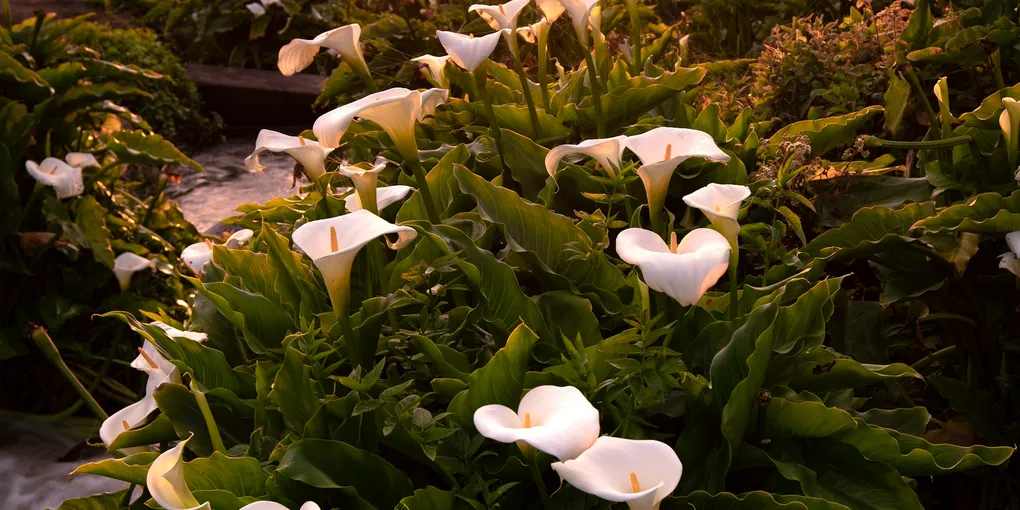
How to Care for a Calla Lily
Calla lily (Zantedeschia) is grown for its single, funnel-shaped bloom — a waxy spathe wrapped around a central spadix, in white, yellow, pink, or deep purple depending on the variety. Indoors it’s usually grown in a pot from a rhizome (a thick underground stem, similar to a ginger root) rather than started from seed. The bloom is the part people notice, but the part that actually determines whether it comes back next year is how you treat the plant once it stops flowering.
Light
Give a potted calla lily bright, indirect light — a spot near an east or west window, or a few feet back from a south-facing one. It can take a couple hours of direct morning sun without harm, but hot afternoon sun through glass will scorch the leaves and fade the blooms faster than they’d otherwise last. Too little light is the more common problem indoors: a calla lily kept in a dim corner will produce weak, floppy growth and few if any flowers. If you’re not sure how your space measures up, see how much light do houseplants actually need for a general read on what “bright indirect” looks like in practice.
Watering
While actively growing and flowering, calla lily wants consistently moist soil — it’s more tolerant of wet conditions than most houseplants, closer in habit to a peace lily than to a succulent. Water when the top inch of soil starts to dry, and don’t let the pot sit completely dry for long during this phase. That said, “moist” isn’t “waterlogged” — a pot that never drains and stays soggy at the bottom will rot the rhizome, so this only works with a pot that actually drains. For the underlying principles, watering houseplants the right way covers the habits worth building regardless of species.
Soil and pot
Use a loose, well-draining potting mix — a standard houseplant mix with some perlite worked in is fine — in a pot with a drainage hole. Calla lily rhizomes are planted a couple inches deep, horizontally, with the “eyes” (the small growth points, similar to a potato) facing up. A pot only slightly larger than the rhizome is enough to start; sizing up too far leaves excess soil holding moisture the roots aren’t using yet, which raises the risk of rot before the plant is established. If you’re moving a rhizome into a larger container as it matures, how to repot a houseplant covers the general process.
Humidity
Average room humidity is fine for calla lily; it isn’t a plant that demands the high humidity a tropical understory species would. It’ll tolerate the dry air of a typical heated or air conditioned home without much complaint. If your air is extremely dry, you might see slightly crispy leaf edges, but this is a minor issue compared to getting the watering and dormancy cycle right.
Toxicity
Like many aroids, calla lily contains calcium oxalate crystals throughout the plant, especially concentrated in the rhizome. Chewing on any part causes immediate mouth and throat irritation, drooling, and swelling in pets or people, and eating the rhizome specifically can cause more serious digestive upset. Keep the pot away from pets and kids who might chew on it, and store unplanted rhizomes somewhere they can’t be reached. For safer options, see pet-safe houseplants for cats and dogs.
Dormancy
This is the part that catches people off guard. After blooming, a calla lily naturally winds down: the flowers fade, growth slows, and the leaves gradually yellow and die back until the plant looks like nothing but dirt and a bare pot. That’s not the plant dying — it’s the rhizome storing energy for a rest period, the same way a bulb goes dormant between seasons. Once most of the foliage has died back on its own, stop watering almost entirely and let the soil dry out. Move the pot somewhere cool and dark, or simply set it out of the way, for six to eight weeks. When new shoots start pushing up from the soil, resume regular watering and move the pot back into bright light — that’s the cycle starting over. Forcing continuous watering and light through this resting phase, expecting a calla lily to just keep growing like a typical houseplant, is one of the more common ways people accidentally rot a healthy rhizome.
Common problems
Yellowing leaves after the bloom fades are the plant entering dormancy on schedule, not a sign of a problem — cut back on water and let it rest rather than trying to keep it green.
Mushy, foul-smelling rhizome is rot, almost always from soil that stayed wet too long, either from overwatering during active growth or from continuing to water through dormancy. A rhizome that’s gone soft usually can’t be saved.
No flowers typically comes down to insufficient light or a rhizome that hasn’t built up enough energy yet — a rhizome that just finished a full dormant rest is far more likely to rebloom than one that was rushed or watered through winter.
Yellowing leaves during active growth (as opposed to after blooming) points to overwatering rather than dormancy — check that the pot drains freely and that you’re letting the topsoil dry between waterings.
Drooping or collapsed stems usually mean the soil dried out too far during active growth. Water thoroughly; healthy plants recover within a day, but stems that stay limp after watering may indicate rot at the base instead.