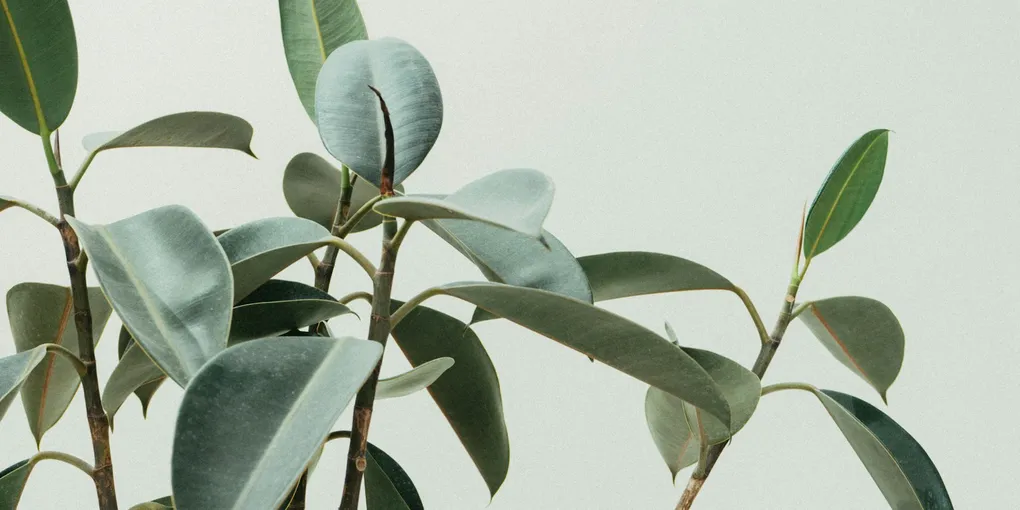
How to Care for a Ficus Tineke
Ficus Tineke (Ficus elastica ‘Tineke’) is a variegated cultivar of the classic rubber plant, with glossy, ovate leaves marbled in cream, light green, and dark green, often with a pink blush along new growth and midribs. Aside from its variegation, it shares the same tough, adaptable reputation as standard rubber plants — it’s a forgiving houseplant overall, with one important exception: the pale sections of its leaves need considerably more light than solid green tissue to stay vivid and avoid reverting.
Light
Bright, indirect light is essential — more than a solid-green rubber plant needs. A spot near an east-facing window, or a few feet back from a south- or west-facing one, keeps the variegation crisp. In lower light, new leaves tend to come in greener with less cream and pink, since the plant prioritizes chlorophyll-bearing tissue when light is limited. Direct, hot midday sun can still scorch the leaves, so aim for bright but filtered light rather than harsh direct sun.
Watering
Let the top 1-2 inches of soil dry out before watering thoroughly until water runs from the drainage hole. Rubber plants are fairly tolerant of a missed watering but don’t like sitting in soggy soil for extended periods. See watering houseplants the right way for a feel-based approach.
Soil and pot
A standard, well-draining potting mix works well — this plant isn’t especially picky about soil composition. Make sure the pot has a drainage hole, and avoid sizing up too aggressively when repotting.
Humidity
Average household humidity is fine for this plant, though a bit of extra humidity keeps leaves glossier. See how to increase humidity for houseplants if you want to give it a boost, especially during dry winter months.
Cleaning
Because the leaves are large, glossy, and a major part of this plant’s visual appeal, dust buildup shows up clearly and can dull the variegation’s contrast. Wipe leaves down periodically with a damp cloth. See how to clean houseplant leaves for the best method.
Toxicity
Ficus Tineke is toxic to cats and dogs, and its sap can also irritate skin on contact. Keep it out of reach of pets, and consider gloves when pruning or propagating.
Common problems
New leaves coming in mostly green usually means the plant isn’t getting enough light. Move it to a brighter spot to encourage more cream and pink in new growth.
Yellowing leaves typically point to overwatering. Let the soil dry out further before the next watering and confirm the pot drains freely.
Brown, crispy leaf edges often signal underwatering or low humidity. Check the soil moisture first, then consider raising humidity if watering seems consistent.
Leaning or lopsided growth happens when the plant reaches for a light source from one side. Rotate the pot regularly to encourage more even growth.