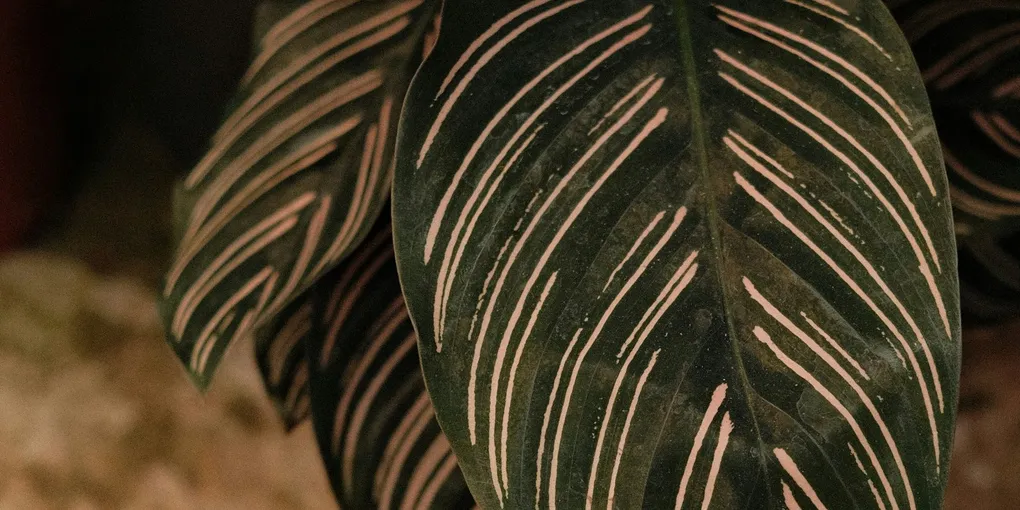
How to Care for a Calathea White Fusion
Calathea White Fusion is one of the most visually dramatic members of the Calathea family, with leaves splashed in white, cream, and green and a rich purple underside that shows whenever the leaves fold up at night. That striking variegation comes at a cost, though — White Fusion is widely considered one of the fussiest, most humidity- and water-quality-sensitive Calatheas around, prone to browning, crisping, or reverting toward plainer green if conditions slip even a little. If you want a similarly patterned but noticeably easier plant, Calathea Makoyana is a good, less demanding alternative that shares the family’s ornamental appeal without quite as many strings attached.
Light
Medium to bright indirect light works best. A spot a few feet from an east- or north-facing window, or set back from a brighter south- or west-facing one, keeps the variegation looking its best without risking scorch. Direct sun is a real problem here — the white and cream sections have little to no chlorophyll, so they burn faster and more visibly than the green portions of the leaf. Too little light, on the other hand, can cause new growth to come in with less white variegation and more solid green, since the plant favors chlorophyll-rich tissue when light is scarce.
Watering
Keep the soil evenly moist but never waterlogged — let the top inch dry out before watering again, then water thoroughly. Consistency matters more here than with most houseplants: this plant reacts poorly to both drying out completely and sitting in soggy soil, and swinging between the two is a fast way to get crispy, browning leaf edges. Water quality matters too. White Fusion is notably sensitive to the chlorine, fluoride, and dissolved minerals in most tap water, which tend to show up as brown tips and margins over time. See best water for houseplants and hard water vs. soft water for houseplants for guidance on what to use instead — filtered water, distilled water, or water left to sit out overnight are all reasonable options.
Soil and pot
Use a loose, well-draining mix that still retains some moisture — a standard potting soil cut with perlite and a bit of orchid bark works well, giving roots both drainage and something to hold onto between waterings. A pot with a drainage hole is essential, since this plant’s roots are quick to rot in stagnant, waterlogged soil.
Humidity
High humidity is close to non-negotiable for keeping this plant’s leaf edges intact. Aim for 60% or higher if you can manage it — noticeably above what most homes offer without help. Low humidity is the single most common cause of the crispy, browning leaf margins this plant is known for. A humidifier running nearby is the most reliable fix; see how to increase humidity for houseplants for other practical options, since occasional misting alone rarely keeps up with what this plant wants.
Toxicity
Calathea White Fusion is non-toxic to cats and dogs, which makes it a solid choice if you want dramatic variegated foliage in a pet-friendly household without the calcium oxalate concerns that come with aroids like Alocasia or Monstera.
Common problems
Brown, crispy leaf edges are the most common complaint with this plant, and they’re usually caused by some combination of low humidity, tap water minerals, or inconsistent watering. Work through humidity first, then switch to filtered or distilled water if the problem persists.
Leaves reverting to more solid green with less white variegation typically happens when light is too low. Move the plant to a brighter (but still indirect) spot to encourage more variegated new growth.
Curling or drooping leaves can signal either underwatering or a sudden temperature swing — Calatheas are sensitive to cold drafts and sit poorly near heating vents or drafty windows.
Yellowing leaves usually point to overwatering. Let the soil dry out a bit more between waterings and make sure the pot drains freely rather than sitting in standing water.