How to Care for an Alocasia Stingray
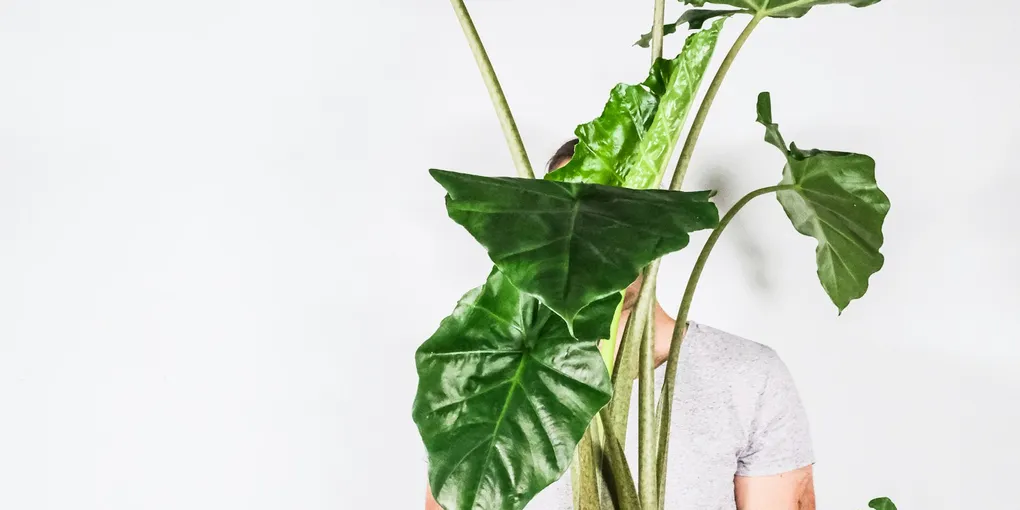
Alocasia Stingray (a hybrid of Alocasia macrorrhiza and Alocasia lauterbachiana) is one of the more unusual-looking members of the Alocasia family. Its leaves are elongated with a long, drawn-out tip and wavy margins, giving each leaf the silhouette of a stingray gliding through water — a striking departure from the rounder, more compact leaves of a velvet Alocasia like Alocasia Black Velvet. It also grows considerably larger than those smaller collector varieties, more in line with a standard elephant ear, so plan on giving it real floor space as it matures.
Light
Bright, indirect light is ideal. A spot a few feet back from a south- or west-facing window, or closer to an east-facing one, keeps growth steady without risking leaf scorch. Direct sun will burn the thin leaf tissue, leaving bleached or crispy patches, while too little light leads to smaller leaves and noticeably slower growth — this plant can get large, but only with adequate light to support it.
Watering
Water when the top inch or two of soil has dried out, then water thoroughly until it runs from the drainage hole. Alocasia Stingray likes consistent moisture more than most other houseplants, but it’s still vulnerable to root rot if the soil stays soggy for extended periods. Check the soil by finger rather than sticking to a rigid schedule, and see watering houseplants the right way for more on reading the signs before you water.
Soil and pot
Given its eventual size, this plant benefits from a loose, chunky, fast-draining aroid mix that still holds enough moisture to keep up with a larger root system. Cutting a standard potting mix with perlite and orchid bark, as described in how to make a chunky aroid potting mix, strikes that balance. A pot with a drainage hole is essential, and you’ll need to size up as the plant grows — unlike smaller Alocasias, Stingray won’t stay happy in a tight pot indefinitely once it starts putting out its larger, mature leaves.
Humidity
Moderate to high humidity, ideally 50-60% or more, keeps the leaves fuller and reduces crispy edges. It’s somewhat more tolerant of average home humidity than smaller velvet Alocasias, but it still does noticeably better with a boost. See how to increase humidity for houseplants for practical ways to raise it, especially during dry winter months when indoor air drops sharply.
Support and size
As Alocasia Stingray matures, its leaves and petioles get long and heavy, and a mature plant can reach several feet tall and wide. Give it a sturdy, well-balanced pot so it doesn’t tip over as top growth increases, and don’t be surprised if you eventually need to repot into a larger container to keep pace with root growth. This is not a plant that stays desk-sized — treat it more like a floor plant in the making.
Toxicity
Alocasia Stingray is toxic to cats and dogs. Like other Alocasias, it contains calcium oxalate crystals that cause oral irritation, swelling, and drooling if chewed, so keep it away from pets that like to chew on leaves.
Common problems
Crispy or curling leaf edges usually point to low humidity, especially in winter when indoor air is driest. Raise humidity before assuming anything else is wrong.
Yellowing lower leaves are typically a sign of overwatering — let the soil dry out further between waterings and confirm the pot drains freely.
Smaller-than-expected leaves without the characteristic elongated shape often means the plant isn’t getting enough light. Move it closer to a bright window; the distinctive stingray shape becomes more pronounced as the plant matures under good light.
Leaf drop after a move or repot is a common stress response. Keep conditions stable afterward, and new growth should resume once the plant settles back in.