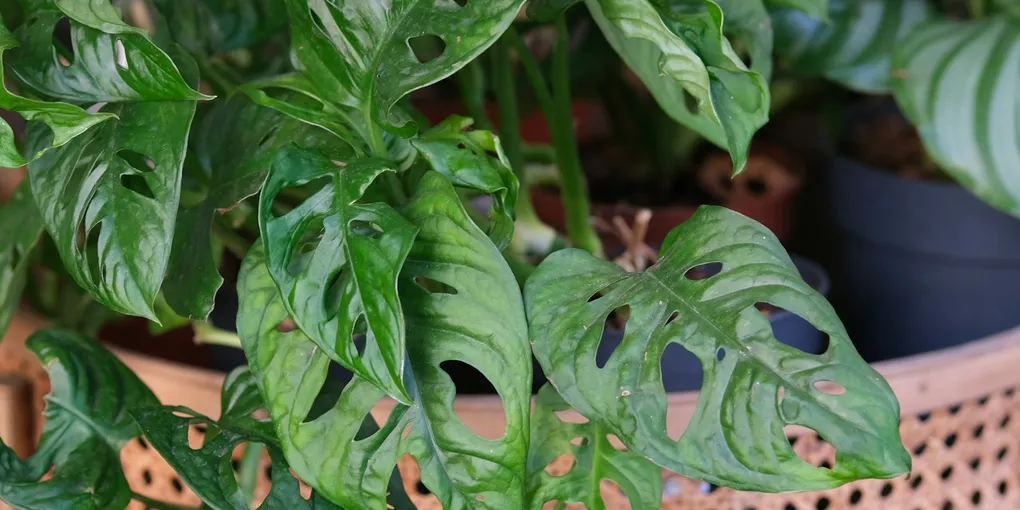
Monstera Deliciosa vs. Monstera Adansonii: What's the Difference?
Plant shops love to slap a plain “Monstera” tag on anything with holes in the leaves, which is how so many people end up with a Monstera adansonii thinking they bought the famous split-leaf one, or vice versa. Both are aroids, both have fenestrated (perforated or split) leaves, and both get lumped under the same common nickname — but they’re genuinely different species with different mature sizes, different hole patterns, and different space requirements.
Size and mature appearance
This is the fastest way to tell them apart once a plant has some age on it. Monstera deliciosa is the big, famous one — the “Swiss cheese plant” that shows up in every mid-century-modern interior photo, with leaves that can grow past two feet across on a mature specimen. Give it years, ideal light, and (usually only outdoors or in a greenhouse) the right conditions, and it can even produce a genuinely edible fruit, which is where the species name “deliciosa” comes from.
Monstera adansonii stays far more compact. Its leaves top out around 6-8 inches, and the whole plant grows as a slender, fast vine rather than the thick, semi-woody climbing stem deliciosa eventually develops. If you’re working with a small apartment or a shelf rather than a floor statement piece, adansonii is the one that fits.
Leaf holes: the detail people get wrong
Both plants have fenestrated leaves, but the pattern is different, and it’s the single most reliable way to identify a plant you’re not sure about.
- Monstera adansonii leaves are covered in distinct oval or round holes scattered across the entire leaf surface, with the outer edge of the leaf staying mostly intact. A young adansonii can show these holes on its very first few leaves.
- Monstera deliciosa develops deep splits that cut in from the edge of the leaf, in addition to holes further inside. Critically, a young deliciosa’s first leaves come in solid, heart-shaped, with no splits at all — splitting only appears as the plant matures and gets enough light, so a small unsplit Monstera is far more likely to be a juvenile deliciosa than an adansonii, since adansonii shows its characteristic holes right away.
If you’re standing in a shop trying to figure out which one you’re looking at: scattered oval holes across the whole leaf with intact edges means adansonii; deep cuts running in from the leaf margin means deliciosa (or a young deliciosa that just hasn’t started splitting yet).
Growth habit
Deliciosa starts out relatively upright before it eventually vines, and its stem is thick enough to support real weight as it climbs. Adansonii is a true vine from the start — thinner, wirier, and quick to send out long trailing growth. That difference in growth habit is also the biggest factor in how you display each one.
Care differences
Both want the same bright, indirect light and similar watering — let the top couple of inches of soil dry out before watering again, with adansonii preferring to stay lightly moist slightly more than deliciosa does. Both are aroids that appreciate a chunky, well-draining mix and benefit from something to climb, since fenestration and leaf size in both species improve when the plant is climbing rather than sprawling. A moss pole or trellis works for either one.
The real difference shows up if you don’t give them support. Adansonii tolerates being left in a hanging basket to trail rather than climb far better than deliciosa does — it still looks good and grows reasonably well as a trailing plant, which is why it’s such a common pick for hanging and trailing displays. Deliciosa left without support will keep growing, but it tends to sprawl into a leggier, less impressive shape and produces smaller, less-split leaves than a climbing plant would.
The verdict
If you have the floor space and want a plant that eventually becomes a room’s focal point, get the deliciosa and give it a sturdy pole to climb. If you’re working with limited space, want something for a hanging basket or a shelf, or just want faster, lower-commitment growth, adansonii is the better fit. Both are forgiving enough for someone past total-beginner status, and neither demands much beyond bright indirect light, a chance to dry out between waterings, and eventually something to climb.