How to Care for an Aeonium
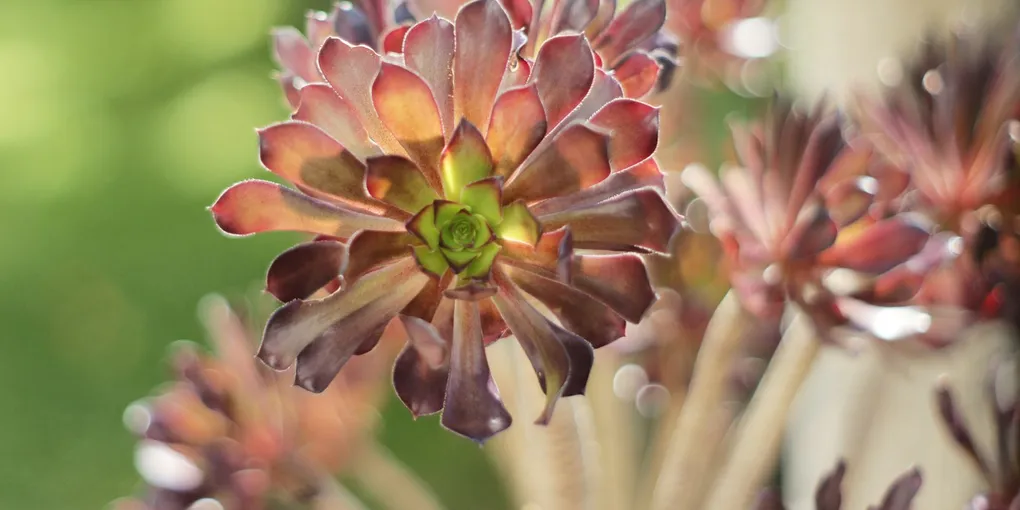
Aeonium is a rosette-forming succulent, but unlike stemless rosette succulents such as echeveria, its rosettes sit atop visible stems or branches, giving mature plants a small, sculptural, almost tree-like shape. Many popular cultivars — including the near-black ‘Zwartkop’ — have striking dark purple or near-black coloring that deepens with strong light. The other thing that sets Aeonium apart is its growth cycle: native to the Canary Islands and the Mediterranean, it grows through the cooler, wetter months and goes dormant in summer heat, the reverse of how most houseplants and most other succulents behave.
Understanding the growth cycle
This reversed cycle is the single most important thing to know about growing Aeonium well. It puts out new growth during fall, winter, and spring, then largely stops during the heat of summer, sometimes drawing its leaves into a tighter, closed rosette as a way of conserving moisture through the dormant stretch. Watering and feeding should track this cycle rather than the calendar approach that works for most other plants — water and feed more during its active winter growing season, and cut back significantly once it goes dormant for summer.
Light
Give Aeonium as much bright light as you can, including direct sun for at least part of the day. Strong light is what keeps the rosette tight and compact rather than loose and stretched, and it’s also what brings out the deepest color in dark-leaved cultivars — a plant kept in low light will often revert toward plain green. An unobstructed south- or west-facing window works well indoors; outdoors, most varieties tolerate full sun once acclimated, though a little afternoon shade in very hot climates helps prevent scorching.
Watering
Water during the active growing season (fall through spring) once the soil has dried out, then cut back sharply during summer dormancy — this is the point where most Aeonium problems start. A dormant plant that keeps getting watered on a normal schedule is very prone to stem and root rot, since it isn’t using that water the way it would during active growth. See how to fertilize succulents and cacti for feeding timing that follows the same seasonal logic.
Soil and pot
Use a fast-draining cactus or succulent mix, and make sure the pot has a drainage hole. Because mature Aeonium develops visible stems and can get top-heavy as it branches, a slightly wider or heavier pot helps keep it stable, especially for older, multi-branched specimens.
Humidity
Ordinary indoor humidity suits this plant fine; it doesn’t need any special humidity adjustments in either its growing or dormant phase.
Toxicity
Aeonium is generally considered non-toxic to cats and dogs, making it a reasonably low-risk choice if pets have access to your plants — though as with any plant, it’s still worth discouraging chewing.
Common problems
Rot at the base of a stem, especially in summer is almost always overwatering during dormancy. Ease off watering through summer and only resume a normal schedule once new growth picks back up in fall.
A loose, stretched rosette with wide gaps between leaves signals insufficient light. Move it somewhere brighter; the current rosette won’t tighten back up, but new growth will form more compactly.
Dark cultivars turning green usually means the plant isn’t getting enough direct light. More sun should restore the deeper color in new growth, though older leaves may not change back.
A rosette that closes up and stops producing new leaves in summer is often just normal summer dormancy rather than a problem — this is the plant’s expected seasonal response to heat, and growth should resume in fall.
Leggy, bare stems below the rosette happen naturally as the plant ages and the rosette rises on its stem; this is normal growth habit rather than a sign something’s wrong.
If you’re weighing Aeonium against other rosette succulents, echeveria is a useful comparison — it forms a similar-looking rosette but stays stemless and follows the more typical summer-growing, winter-dormant cycle most succulents share.