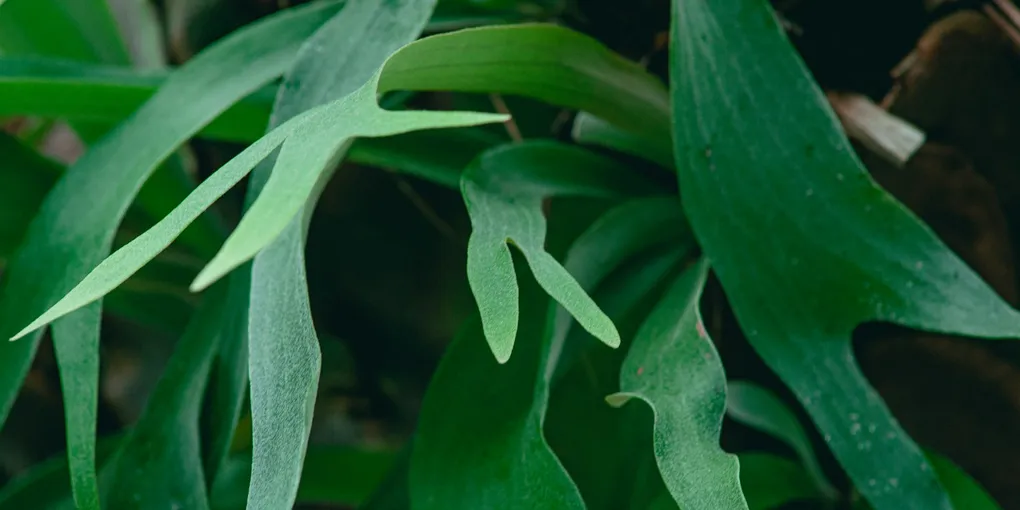
How to Care for a Staghorn Fern
Staghorn fern (Platycerium) doesn’t fit the usual houseplant mold. It’s an epiphyte — in the wild it grows clinging to tree bark rather than rooted in soil — and most of its care, from how it’s displayed to how it’s watered, follows from that. If you’re used to potted houseplants, a few things here will feel unfamiliar at first.
Two kinds of fronds
Staghorn fern grows two distinct types of leaves, and understanding the difference matters more for this plant than for almost any other. The flat, round, plate-like fronds at the base — called shield or basal fronds — press against whatever the plant is mounted on and anchor the root mass. The showy, antler-shaped fronds that give the plant its name are the fertile fronds, and they’re what most people picture when they think of a staghorn fern. Both matter; don’t assume the plainer basal fronds are just background growth to be tidied up.
Mounting vs. a hanging basket
Traditionally, staghorn ferns are mounted on a board or slab of wood or cork: the root mass is wrapped in sphagnum moss, pressed against the mount, and secured with wire, fishing line, or garden twine until the roots grip the surface on their own, usually within a few months. This is the classic, dramatic way to display one, and it mimics how the plant grows in nature.
If mounting sounds like more commitment than you want, a well-draining hanging basket with a loose, chunky, orchid-bark-style mix works too and is easier for a beginner to manage, though it won’t have quite the same look as a mounted specimen. Either way, avoid a plant sitting in dense, water-retentive potting soil — that’s the fastest way to rot the roots of a plant built to grow on bark, not in dirt.
Light
Staghorn fern wants bright, indirect light. Direct sun scorches the fronds, especially the thin, newer growth, while too little light produces weak, floppy fronds that don’t hold their shape. A few feet back from a bright window is usually the sweet spot.
Watering
This is the biggest departure from typical houseplant care. Rather than pouring a little water onto soil, a mounted staghorn fern is usually watered by soaking — dunk the entire root mass in a sink or bucket of room-temperature water for 10 to 20 minutes, then lift it out and let it drain fully before rehanging it. Do this roughly once a week, more often in a dry or warm space, less often if humidity is high. A basket-grown plant can be watered more conventionally, but should still dry out somewhat between waterings rather than staying constantly wet.
Humidity
As a tropical epiphyte, staghorn fern appreciates humidity well above typical room levels. A bathroom with decent light is often a good spot — see best houseplants for bathrooms — or use a humidifier or regular misting between soakings. See how to increase humidity for houseplants for more ways to raise it if your space runs dry.
Fertilizing
Feed lightly and infrequently. In the wild, this plant draws minimal nutrients from debris that collects around its roots rather than from rich soil, so a diluted, balanced fertilizer applied during the soak water or misted on every month or two during the growing season is plenty — more than that risks burning the roots.
The shield fronds turning brown is normal
This trips up more new owners than anything else: as a staghorn fern matures, its older shield fronds naturally turn brown, papery, and dry-looking. That’s not the plant dying — it’s by design. The dead-looking basal fronds continue to protect the roots and root mass underneath even after they’ve browned, and removing them can expose and damage the roots they’re shielding. Leave them in place unless a frond is actively rotting or mushy rather than dry and papery.
Common problems
Limp, drooping fronds almost always mean the plant has gone too long without its soak — check how long it’s been since the last watering and give it a thorough dunk.
Rot at the base or a mushy root mass points to the opposite problem: not enough drying time between soaks, or a mount that’s staying wet in a low-airflow spot. Let it dry out more fully before the next soak and make sure air can circulate around the mounted roots.
Scorched or bleached patches on the fronds mean the plant is getting more direct sun than it can handle — move it to a spot with bright but indirect light, similar to what works well for a Boston fern or a bird’s nest fern, two other humidity-loving ferns with gentler light needs than direct sun.
Removing the browning shield fronds out of concern that they look dead is a common mistake covered above — resist the urge, since they’re doing their job even as they brown and dry out.