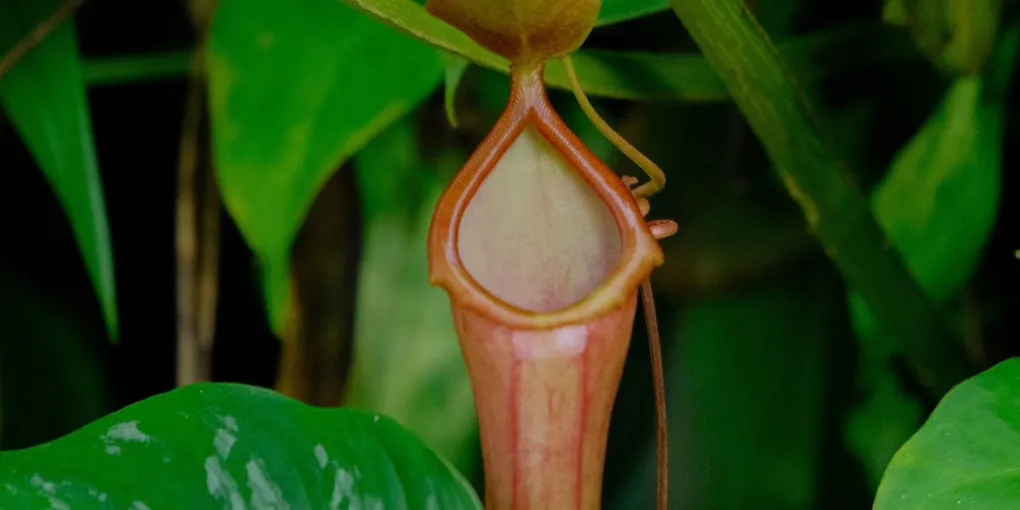
How to Care for a Pitcher Plant
“Pitcher plant” covers two very different carnivorous plants, and it’s worth knowing which one you have before anything else. This guide covers Nepenthes, the tropical vining pitcher plant that produces hanging, cup-shaped traps and is what most houseplant growers mean by the name. Sarracenia, the North American trumpet pitcher plant, grows upright from a bog rather than trailing, and needs a cold winter dormancy outdoors — its care is different enough that the advice below doesn’t apply to it.
Light
Nepenthes wants bright, indirect light, with a little gentle direct sun tolerated by most varieties. Insufficient light is one of the most common reasons a Nepenthes stops producing pitchers and just grows plain vine instead — the plant can survive in a dim spot, but it won’t bother making traps if it isn’t getting enough energy to spare. If your plant has gone quiet on pitchers, checking the light is the first thing to try.
Watering
Keep the growing medium consistently moist — this plant doesn’t tolerate drying out the way a succulent does. What matters even more than frequency is water quality: use distilled water, stored rainwater, or reverse-osmosis water rather than tap water. Nepenthes evolved in nutrient-poor bogs and is sensitive to the minerals and salts that build up in soil from tap water over time. See the best water for houseplants for more on why this matters and which options work best.
Soil and pot
Skip standard potting soil entirely — it holds far more minerals and nutrients than this plant’s roots can tolerate. Use a low-nutrient, well-draining mix instead, typically a blend of sphagnum moss, perlite, and orchid bark. A pot with a drainage hole is still necessary, since the mix should stay moist, not waterlogged.
Humidity
High humidity is often the single limiting factor for growing Nepenthes well indoors. In its native rainforest habitat, humidity rarely drops far below 60-70%, and average household air falls well short of that. A terrarium, greenhouse cabinet, or humidity tent around the plant makes a bigger difference here than almost anything else you can do. See how to increase humidity for houseplants for practical setups, and compare notes with a Venus flytrap, another carnivorous plant with similarly particular water and humidity needs.
Feeding
Nepenthes gets most of its nutrients from digesting insects that fall into its pitchers, not from the soil. Don’t feed it standard houseplant fertilizer through the roots — the salts in most fertilizers can damage roots that evolved for nutrient-poor conditions. If a pitcher isn’t catching anything on its own indoors, an occasional small insect (a pantry moth or cricket, for example) dropped into a pitcher is plenty; there’s no need to fertilize otherwise.
Toxicity
Pitcher plants are safe to have around cats, dogs, and kids. The trapping mechanism is built for insects — nothing about the plant is toxic or harmful if touched or even chewed on, beyond the plant’s own displeasure at being nibbled.
Common problems
No new pitchers, just vine growth is the most common complaint with this plant, and it almost always comes down to insufficient light or humidity rather than a watering or feeding problem. Move it somewhere brighter and more humid before troubleshooting anything else.
Pitchers turning brown and drying up is normal for older pitchers reaching the end of their natural lifespan — each one lasts a few months before fading as the plant puts energy into new growth. If new pitchers are browning quickly rather than old ones, low humidity is the more likely cause.
Weak growth or root problems despite consistent watering often trace back to tap water or fertilizer mineral buildup in the mix. Switch to distilled or rainwater going forward, and consider flushing the growing medium with a generous amount of distilled water every so often to clear out accumulated salts.