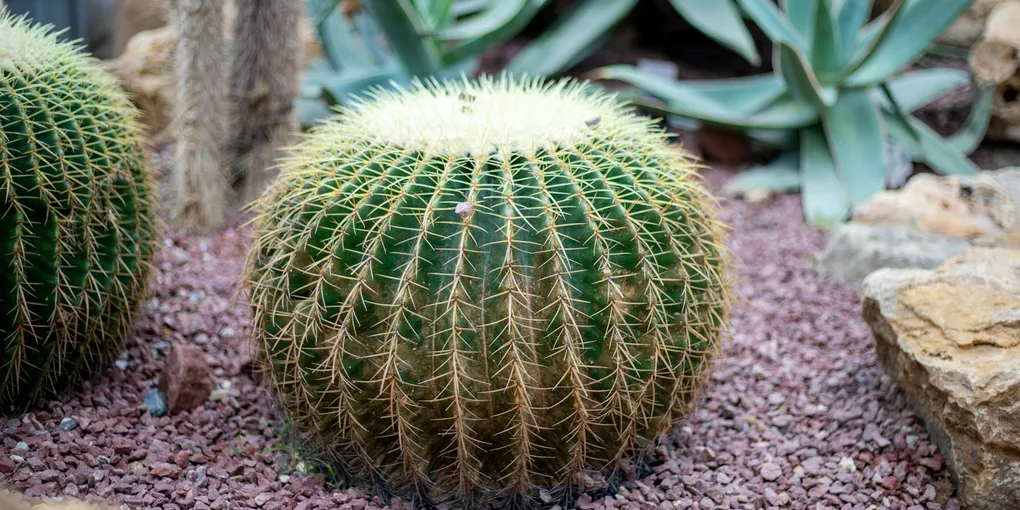
How to Care for a Golden Barrel Cactus
The golden barrel cactus (Echinocactus grusonii) is one of the most recognizable cacti around, grown for its near-perfect round shape and the dense ribs of golden-yellow spines that cover it. In its native habitat it can eventually reach a couple of feet across, but indoors it grows slowly enough that a young plant will stay a manageable size for years. It’s an easy plant to keep alive as long as you can give it the one thing it demands more than almost any other houseplant: intense, direct sun.
Light
This is about as sun-hungry as houseplant cacti get. A true south-facing window is close to the minimum for keeping the golden coloring vivid and the growth compact — anything less and the cactus tends to stretch, fade to a duller green, and lose the tight, symmetrical shape that makes it attractive in the first place. If you don’t have a bright south-facing spot, supplemental grow lights placed close to the plant are worth considering. See best plants for south-facing windows for other plants that share this same appetite for hard, direct light, and move a golden barrel outdoors for summer if you can — full sun on a patio or balcony will do more for it than any indoor windowsill.
Watering
Water deeply, then let the soil dry out completely before watering again. Golden barrel cacti are extremely drought tolerant and store water in their thick, ribbed bodies, so the far more common mistake is watering too often rather than too rarely. In spring and summer, that might mean watering every couple of weeks; in fall and winter, when growth slows or stops almost entirely, cut back to once a month or even less. If you’re ever unsure, wait longer — a golden barrel can go a long time without water and recover fine, but sitting in damp soil for even a few weeks can rot the roots. See how to fertilize succulents and cacti for feeding this plant during its active growing season, since it needs very little and overfeeding causes its own problems.
Soil and pot
Use a gritty, fast-draining mix — a cactus and succulent blend, ideally cut with extra pumice, perlite, or coarse sand so water moves through quickly and doesn’t linger around the roots. A terracotta pot helps too, since it wicks moisture out of the soil faster than plastic or glazed ceramic. Always use a pot with a drainage hole; this plant’s tolerance for drought only works if excess water actually has somewhere to go. Because it’s such a slow grower, it doesn’t need repotting often — a size up every few years, moving into a pot only slightly larger than the last, is usually enough.
Handling and placement
The spines on a golden barrel cactus are sharp, rigid, and genuinely painful if you back into them or brush past carelessly — this isn’t a plant to tuck next to a walkway, a chair, or anywhere kids or pets regularly pass through. When you do need to handle it, for repotting or moving it outdoors for the season, use thick leather gloves, a folded towel, or a strip of rolled-up cardboard or newspaper wrapped around the body to get a grip without touching the spines directly. Give it a spot with a wide berth on all sides.
Toxicity
Golden barrel cactus is not toxic if ingested by cats, dogs, or people. The risk it poses is entirely physical, from the spines, rather than chemical — so the handling and placement notes above matter more here than they would for a mildly toxic plant.
Common problems
A pale, washed-out, or greenish-yellow color instead of vivid gold usually means the plant isn’t getting enough direct sun. Move it to the brightest spot available, ideally direct south-facing light, and the color should deepen with new growth over time (older, already-formed spines and skin won’t change color retroactively).
Stretched, elongated, or lopsided growth is another sign of insufficient light — the cactus is reaching toward whatever light source it can find. Rotate the pot regularly if it’s leaning toward a window, and increase overall light levels if possible.
Soft, dark, or mushy patches at the base point to overwatering and root or stem rot. Stop watering immediately, check that the pot drains freely, and let the soil dry out completely; badly rotted sections usually can’t be saved, but catching it early can save the rest of the plant.
Corky, brown, scab-like patches on the skin are usually old damage or a natural response to inconsistent watering rather than an active problem — cosmetic, and not something that needs treatment. See how to care for a star cactus for another slow-growing, sun-loving cactus with similar care needs if you’re building out a desert cactus collection.