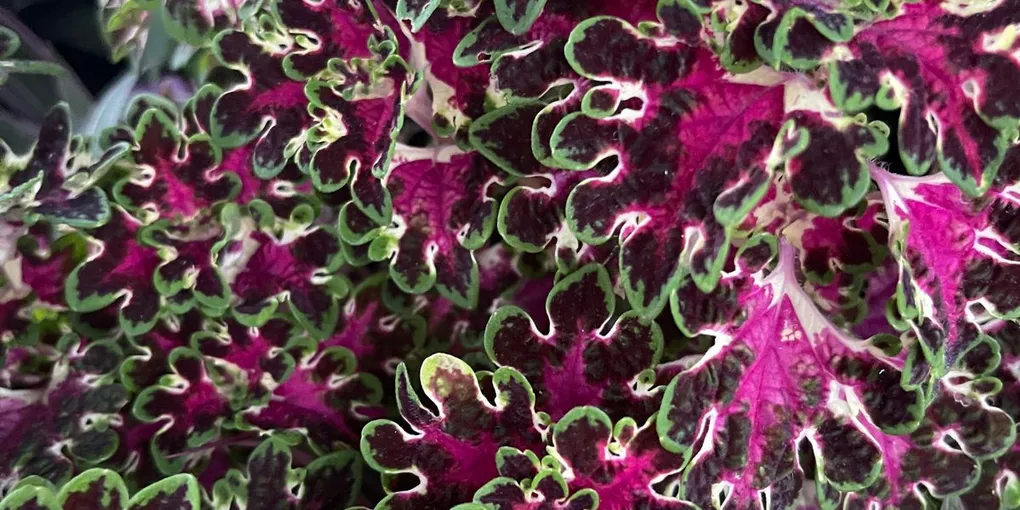
How to Care for a Coleus
Coleus (Coleus scutellarioides, also sold as Plectranthus scutellarioides or Solenostemon) is grown for one reason: leaves patterned in almost impossibly vivid combinations of red, pink, purple, yellow, and green, often on the same plant. It’s commonly treated as an outdoor annual, but there’s no reason it can’t live indoors year-round if you give it what it actually needs — mainly, a lot more light than most foliage houseplants ask for.
Light
Coleus needs bright light to hold its color, and in most homes that means supplementing what a typical bright window provides. A few hours of gentle direct sun, or a spot right against a south- or west-facing window, keeps the patterning sharp and the plant compact. In lower light, the colors fade toward plain green and the stems stretch out looking for more — this is the most common reason an indoor coleus stops looking like the plant you bought. See how much light do houseplants need if you’re not sure what your space actually provides.
Watering
Keep the soil consistently moist. Coleus doesn’t tolerate drying out completely for long — it wilts fast and dramatically when thirsty, with the whole plant drooping within a day of the soil going dry. The good news is it usually recovers quickly once watered, often within a few hours, so an occasional missed watering isn’t fatal. Still, it’s better to stay ahead of it than to rely on the wilt as your reminder, since repeated wilting stresses the plant over time.
Soil and pot
A standard, well-draining potting mix is all coleus needs. Use a pot with a drainage hole — consistent moisture doesn’t mean the roots should ever sit in standing water, and soggy soil at the bottom of the pot will rot them just as fast as it would in any other houseplant.
Pruning and pinching
Coleus grows fast, and left alone it gets tall and leggy rather than full. Pinch back the growing tips regularly — just above a leaf node — to encourage branching and keep the plant bushy. See how to prune houseplants for the general technique. If it sends up small blue or purple flower spikes, pinch those off too unless you want them; once a coleus starts flowering it puts less energy into foliage, and the leaves are the whole point of growing this plant.
Propagation
Coleus roots easily and quickly from stem cuttings. Snip a few inches below a node, strip the lower leaves, and set the cutting in a glass of water — roots typically show up within a week or two, often faster than most houseplants. See how to propagate houseplants from cuttings for the general method. Because it’s this easy and this fast-growing, coleus is a good plant to keep propagating fresh cuttings from rather than nursing an older, leggier plant indefinitely.
Toxicity
Coleus is mildly toxic to cats and dogs, causing mouth and stomach irritation if chewed. It’s not among the more dangerous houseplants, but it’s still worth keeping out of reach of a curious pet — see pet-safe houseplants for cats and dogs for safer alternatives if that’s a priority. If you want an equally easy but even more forgiving plant, check nearly indestructible houseplants for beginners.
Common problems
Leggy growth with faded, washed-out color is almost always a light problem, not a nutrient or watering one. Move the plant somewhere brighter and pinch back the stretched growth — new leaves will come in more compact and more vividly colored.
Wilting usually just means the plant is thirsty. Check the soil first; if it’s dry, water thoroughly and the plant should perk back up within a few hours. Wilting despite moist soil points to root rot instead, usually from a pot that doesn’t drain.
Crispy edges or leaf drop can follow a missed watering, a sudden move, or a cold draft. Coleus reacts quickly to stress, but it also recovers quickly once the cause is fixed.
Flower spikes taking over isn’t harmful to the plant, just usually not what you want if you’re growing it for foliage. Pinch the spikes off as soon as you notice them to keep the plant putting its energy into leaves instead.