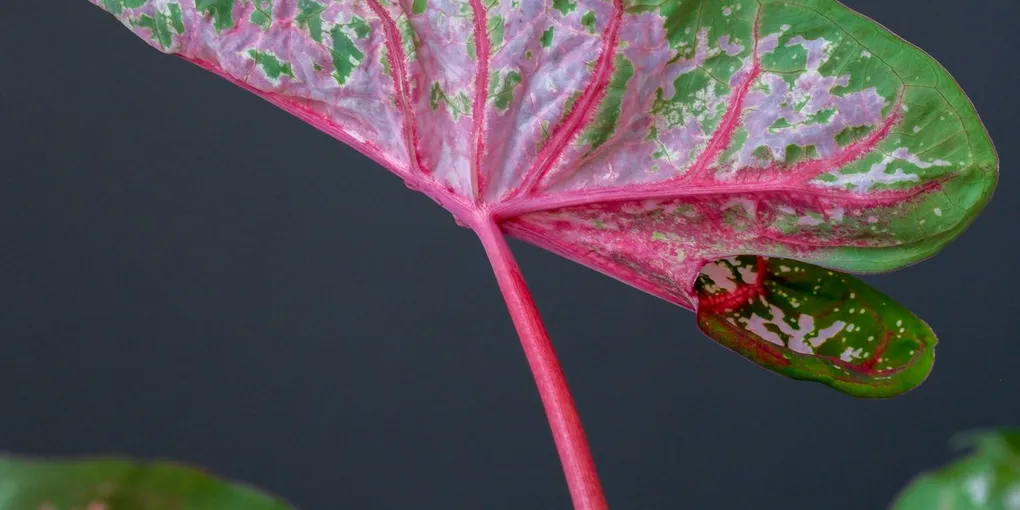
How to Care for a Caladium
Caladiums are grown for one thing: leaves. Large, thin, heart-shaped, and patterned in combinations of white, pink, red, and green that look almost hand-painted, they bring a splash of color that most foliage plants can’t match. Unlike most houseplants, a caladium grows from a tuber, and that changes the care conversation in one important way — this is a plant that’s supposed to die back and go dormant for part of the year, which trips up a lot of new owners into thinking they’ve killed it.
Light
Caladiums want bright, indirect light. Some varieties, especially those with more green in the leaf, tolerate lower light better than the highly patterned white and pink cultivars, but none of them want direct sun — it scorches the thin leaves quickly. See how much light do houseplants need for how to judge what counts as bright indirect light in your space.
Watering
Keep the soil consistently moist during the growing season, but never soggy. Caladium leaves are thin and wilt fast when the soil dries out, though they usually recover with a good watering if it hasn’t happened repeatedly. A pot with good drainage matters, since the tuber underneath is vulnerable to rot in soil that stays waterlogged.
Soil and pot
A light, well-draining potting mix works best — one that holds some moisture without staying wet. A pot with a drainage hole is essential, both for the leaves’ sake and to protect the tuber sitting below the soil line.
Humidity
Caladiums appreciate humidity above what most homes naturally have. In dry air, the thin leaves crisp at the edges or curl even when watering is on schedule. Grouping plants together or running a humidifier helps close the gap — see how to increase humidity for houseplants for methods that work.
Dormancy
This is the part that catches people off guard. Caladiums naturally die back for part of the year — the leaves yellow, wither, and eventually disappear entirely, leaving what looks like an empty pot of soil. If this happens gradually, especially as light levels or temperatures drop, it’s very likely normal dormancy rather than the plant dying. The tuber is still alive underneath. Cut back on watering once the leaves are mostly gone, let the soil stay just barely moist to dry, and keep the pot somewhere warm. New growth typically emerges again once conditions warm up, often after a rest period of a couple of months. The distinction that matters: gradual, all-around yellowing and dieback late in the season is dormancy; sudden collapse, mushy stems, or a foul smell from the soil is not, and points to rot instead.
Toxicity
Caladiums are toxic to cats and dogs. Like other aroids, the leaves contain calcium oxalate crystals that cause mouth and throat irritation, drooling, and stomach upset if chewed. Keep it away from pets that like to nibble on leaves, or choose from pet-safe houseplants for cats and dogs instead.
Common problems
Leaves dying back gradually is most often normal seasonal dormancy, not a sign of poor care — see the dormancy section above before assuming something’s wrong.
Crispy or curling leaf edges point to low humidity, especially if watering has otherwise been consistent.
Yellowing leaves with soggy soil, or a sudden collapse rather than a gradual fade, suggests overwatering and possible tuber rot rather than dormancy. Cut back on watering and check that the pot is draining properly. Yellowing can also simply be an older leaf reaching the end of its natural lifespan, which is normal in small amounts — a pattern of stunted or discolored new growth is more likely tied to a nutrient issue; see signs of nutrient deficiency in houseplants if new leaves are consistently coming in pale or undersized.