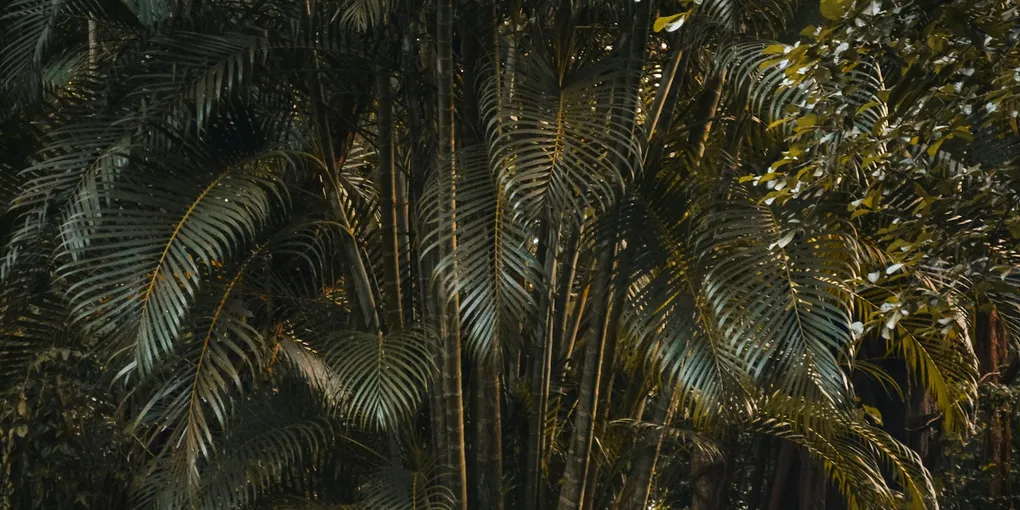
How to Care for a Bamboo Palm
Bamboo palm (Chamaedorea seifrizii) gets its name from its thin, cane-like stems, which grow in dense clumps and are ringed like bamboo, even though the two plants aren’t related. It’s a small, clumping palm native to the understory of Mexican and Central American forests, which is exactly why it’s such a forgiving houseplant: understory plants evolved to grow under a forest canopy, filtering low light rather than sitting in full sun, so a bamboo palm tolerates the dim corners of a home far better than most palms sold for indoor use.
Light
Bamboo palm does well in medium to bright indirect light and is one of the more shade-tolerant palms you can buy. It won’t thrive in a genuinely dark corner, but it doesn’t need direct sun either — a spot a few feet back from an east or north window works well. Too much direct sun, especially through south- or west-facing glass, scorches the fronds. See best low-light houseplants for other options if you’re furnishing a room without strong natural light.
Watering
Keep the soil lightly, consistently moist — not soggy, not fully dried out. Bamboo palm is less drought-tolerant than desert-adapted houseplants and will drop fronds or develop crispy brown tips if it dries out too often between waterings. Water when the top inch or two of soil feels dry, and make sure the pot drains fully rather than sitting in a saucer of standing water, which leads to root rot just as reliably as underwatering leads to crisping.
Humidity
This palm comes from humid forest floors and appreciates humidity well above the 30-40% typical of most homes. Low humidity, particularly from indoor heating in winter, is one of the most common causes of brown, crispy frond tips. A humidifier nearby, a pebble tray, or grouping it with other plants all help — misting alone does very little. See how to increase humidity for houseplants for the full range of options.
Soil and pot
A standard, well-draining potting mix works fine; it doesn’t need the gritty, fast-draining blend succulents require. What matters more is a pot with a drainage hole and soil that isn’t allowed to become compacted, since bamboo palm’s roots are fairly fine and don’t push through dense, waterlogged soil well. Repot every couple of years, or when you see roots circling the drainage hole, into a pot only one size up.
Fertilizer and water quality
Bamboo palm, like many palms, can be sensitive to fluoride and the salts that build up from tap water and synthetic fertilizer, which show up as brown tips even when watering and humidity are otherwise fine. If you notice tip burn that doesn’t improve, try switching to filtered, distilled, or rain water for a few waterings, and fertilize lightly rather than heavily during the growing season only.
Toxicity
Bamboo palm is non-toxic to cats and dogs, which combined with its air-purifying reputation makes it a popular choice for households with pets. See pet-safe houseplants for cats and dogs and best air-purifying houseplants for more plants in the same category.
Common problems
Brown, crispy tips on otherwise healthy fronds are usually caused by low humidity, fluoride or mineral buildup from tap water, or inconsistent watering. Address humidity first, since it’s the most common cause, and switch water sources if the problem persists.
Yellowing fronds, especially older lower ones can be a normal part of the plant shedding its oldest growth, but widespread yellowing points to overwatering or a nutrient issue. Check that the soil isn’t staying wet before assuming it’s a fertilizer problem.
Fine webbing between leaflets and stippled, dull-looking fronds are signs of spider mites, which favor the dry indoor air this palm already dislikes. See how to get rid of spider mites on houseplants for treatment, and raise humidity afterward to make the environment less hospitable to them.
Slow growth or a sparse, thin-looking clump is often just this palm’s naturally slow growth rate rather than a problem — bamboo palm is not a fast grower, and a few new canes a year from a mature plant is normal.