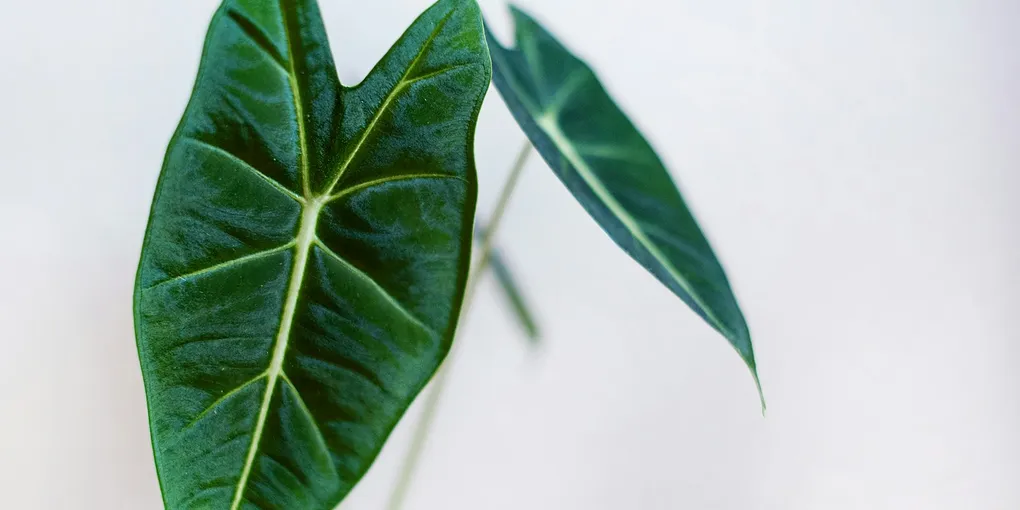
How to Care for an Alocasia Silver Dragon
Alocasia Silver Dragon is a cultivar of Alocasia baginda, part of the wider Alocasia family known for dramatic, textured foliage. Its leaves are silvery-grey with a quilted, embossed surface and dark green venation tracing across the top — closely related to Alocasia Dragon Scale, which shares the same species and a very similar leaf texture, but leans more toward a soft silvery-grey cast rather than Dragon Scale’s deeper green. Side by side, the two are easy to tell apart by color alone even though the care they need is nearly identical.
Light
Bright, indirect light is what keeps the silvery cast looking its best. Position it a few feet back from a south- or west-facing window, or closer to an east-facing one. Too much direct sun will scorch the thin, quilted leaf surface, leaving pale, crispy patches that don’t heal, while too little light dulls the silver tone toward flat grey-green and slows new growth considerably.
Watering
Let the top inch of soil dry out before watering again, then water thoroughly until it drains from the pot. This plant doesn’t like sitting in soggy soil for long — its rhizome is prone to rot in consistently wet conditions — but it also shouldn’t be allowed to dry out completely for extended periods. Check the soil by finger rather than on a fixed schedule, and when unsure, err toward underwatering, since a wilted Alocasia recovers faster than a rotted one.
Soil and pot
Use a loose, chunky, fast-draining aroid mix — a standard potting soil on its own holds too much water around the roots of any Alocasia. Cutting a basic mix with extra perlite or orchid bark, as described in how to make a chunky aroid potting mix, gives the roots the drainage they need. Keep the pot close in size to the root ball rather than sizing up aggressively, since Alocasias generally do better in a slightly snug pot.
Humidity
Alocasia Silver Dragon wants humidity noticeably higher than the average home offers — aim for 60% or more if you can manage it. Low humidity shows up quickly as crispy, curling leaf edges, and it’s the most common reason this plant struggles even when watering and light are otherwise fine. A humidifier running nearby is the most dependable fix; see how to increase humidity for houseplants for practical setups, since occasional misting won’t sustain the humidity this plant wants.
Dormancy
Like other Alocasias, Silver Dragon can drop all its leaves and go dormant, particularly over winter or after a stressful move or repot. This looks alarming, but the rhizome underground is often still alive and capable of resprouting. Cut back watering significantly during a dormant period — a dormant rhizome doesn’t need much moisture, and wet soil around it is a real rot risk. Keep the pot warm, skip fertilizer, and give it time. See winter houseplant care for more on how houseplants generally slow down through the colder months.
Toxicity
Alocasia Silver Dragon is toxic to cats and dogs — its leaves contain calcium oxalate crystals that cause oral irritation, swelling, and drooling if chewed. Keep it out of reach of pets that like to nibble on leaves.
Common problems
Crispy or curling leaf edges almost always mean low humidity. Raise it before assuming a watering issue.
Yellowing lower leaves typically point to overwatering — let the soil dry out further between waterings and confirm the pot drains freely.
Fading or flat-looking silver color is usually a light problem. Move the plant closer to a bright window; new growth should come in with a more pronounced silvery cast.
Total leaf drop is often dormancy rather than a dying plant, especially in winter. Check that the rhizome still feels firm before assuming the worst, and hold off on heavy watering until new growth appears.