How to Care for Baby Tears (Soleirolia soleirolii)
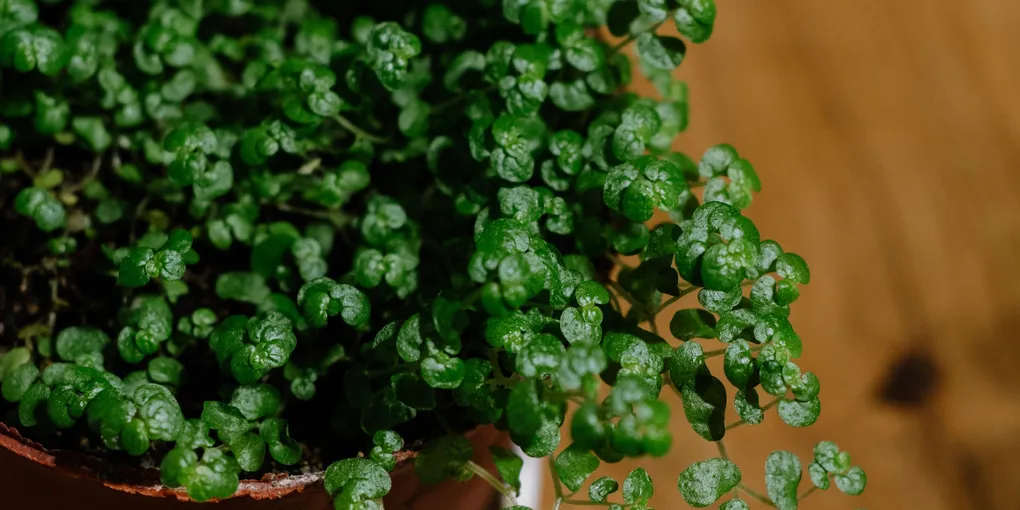
Baby tears (Soleirolia soleirolii) grows as a dense, low mat of tiny round leaves packed so tightly it looks more like moss than a flowering plant, which is exactly why it’s a terrarium and fairy-garden staple. It spreads fast, roots wherever a stem touches soil, and drapes nicely over the edge of a pot or a piece of driftwood. It’s also one of the more dramatic wilters in the houseplant world — let it dry out and the whole mound will collapse into a flat, sad-looking mess within hours. The good news is it’s just as quick to recover once watered, so a single missed watering usually isn’t fatal, just alarming.
Light
Baby tears wants bright, indirect light. A spot near an east-facing window, or a few feet back from a brighter south- or west-facing one, works well. Avoid direct sun — the leaves are tiny and thin, and hot direct light will scorch and crisp them fast, especially in a closed terrarium where heat builds up under glass. It will tolerate medium light too, just with slower, less dense growth; in low light the mat starts to thin out and gaps appear between the trailing stems.
Watering
This is the trait baby tears is known for: it wilts hard and fast the moment the soil dries out. The whole mound will flatten and droop within a matter of hours once it’s thirsty, looking far more dead than it actually is. Water it thoroughly and it typically perks back up within an hour or two, so an occasional wilt isn’t the end of the world — treat it as a clear signal rather than routine watering. Keep the soil consistently moist rather than letting it dry out between waterings the way you would with a pothos or a succulent. See overwatering vs. underwatering houseplants for help telling the two apart, since both can leave this plant looking limp — the difference is usually how fast it recovers after a good soak.
Soil and pot
Use a light, moisture-retentive mix — a standard potting soil cut with some peat or coco coir holds water well without staying swampy. Because baby tears roots are shallow and the plant spreads horizontally rather than down, a wide, shallow container suits it better than a deep one. A drainage hole still matters: this plant wants soil that’s evenly moist, not soil that’s sitting in standing water, and those aren’t the same thing. If you’re growing it in a closed terrarium without drainage, go light on watering and watch closely, since excess water has nowhere to go.
Humidity
Baby tears prefers humidity well above what most homes offer, which is the main reason it’s such a popular terrarium and glass-case plant — humidity stays high and stable inside an enclosure without much effort. Grown out in the open, it’ll need help: a humidifier nearby, grouping it with other moisture-loving plants, or a naturally humid room like a bathroom all help close the gap. See how to increase humidity for houseplants for methods that actually raise humidity, and the best houseplants for bathrooms if a steamy bathroom is your best available spot.
Propagation
Baby tears is about as easy to propagate as houseplants get, since the trailing stems root themselves anywhere they touch moist soil. Snip a small clump with a few inches of stem, press it onto the surface of damp soil, and keep it consistently moist and humid — new roots typically show up within a couple of weeks. Because the plant is already a tangle of rooted and rooting stems, you can also just divide an established mat into smaller sections and pot each one separately. See how to propagate houseplants from cuttings for the general technique.
Toxicity
Baby tears is non-toxic to cats and dogs, which makes it a solid pick for a terrarium or low shelf in a home with pets. See pet-safe houseplants for cats and dogs for more options if you’re building out a pet-friendly plant collection.
Common problems
Sudden, dramatic wilting is this plant’s signature underwatering signal — the mound flattens out and looks lifeless. Water thoroughly and it should recover within an hour or two; if it doesn’t bounce back after a good soak, check for rot at the base instead of assuming it just needs more water.
Brown, crispy patches usually mean either direct sun exposure or low humidity. Move the plant out of direct light first, then check your humidity setup if the browning continues.
Mushy, blackened stems point to root or stem rot from soil that’s stayed waterlogged rather than just moist. Cut away the affected sections, let the soil ease back toward damp-not-soggy, and make sure the pot actually drains.
Thinning, patchy growth with visible gaps usually means too little light. Move it somewhere brighter and cut back leggy stems to encourage denser regrowth from the base.